




How Bethany Children's Health Center Put Ambient AI to Work
10,800 +
notes generated since launch
87.5%
weekly active user rate
2 hours
per day saved on after-shift charting
About the Organization
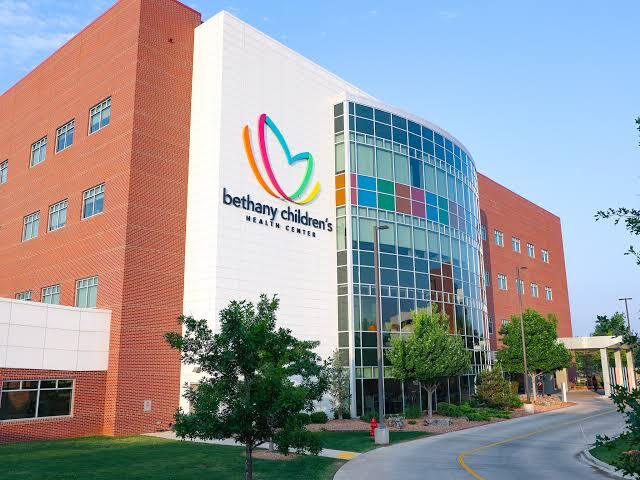
Bethany Children's Health Center is a leader in pediatric rehabilitation and 24-hour complex care, and the only inpatient pediatric rehabilitation facility in Oklahoma. The 160-bed center serves children ages 0 to 21 across inpatient and outpatient care, with an average length of stay of about 2 years, making the documentation demands very different from an acute-care hospital. Its mission stays constant as it grows: to serve children and families with compassion, excellence, integrity, stewardship, and service.
Executive Summary
Bethany Children's deployed Commure Ambient AI and Patient Intake across one of the most complex, long-stay pediatric populations in the country. Their visits run long and often draw on several specialists at once, so the value shows up in how well the technology handles that acuity and pulls together information from across the care team.
Since launch, 40 providers have generated more than 10,800 notes, nearly 88% of providers use the technology every week, and providers report saving up to 2 hours a day they used to spend charting after shifts.
What sets Bethany Children's apart is breadth. Ambient AI runs across physicians, advanced practice providers, behavioral health, PT, OT, speech therapy, nursing, and referral and case management teams, supported by more than 25 custom templates configured down to the individual provider. Bethany Children’s is also looking to expand beyond point solutions and instead have a single AI ecosystem for their entire AI toolset, a driving factor in their decision to partner with Commure.
Beyond the time savings, encounter capture climbed to 99% and notes are often signed the same day.
The Transformation: Before vs. After
Impact by the Numbers
One Platform, Every Care Setting
Most ambient AI deployments stop at physicians. Bethany Children’s kept going.
Dr. Brannan's early goal was simple: end the multi-pass grind of documenting the same encounter over and over.
That principle, first-pass documentation for any discipline that could benefit, opened the door to use cases that few organizations have tried:
Across Commure's network of more than 130 health systems and 400,000 providers, Bethany Children’s stands out for the range of roles using ambient AI, made possible by a platform that adapts to each specialty and care setting, with templates configured around how each group actually documents.
The equipment clinic is a good example of how fast a new team can get up and running on their own. One physical therapist requested access, got her credentials, and the very next day she had built her own template and was documenting with it.
Each of those evaluations used to take about 90 minutes of analysis and documentation afterward, time the template now removes.
Built for Complex, Long-stay Patients
Bethany Children’s uses a team-based care model, meaning several specialists may treat the same patient, sometimes together in one room. Commure Ambient AI separates that shared conversation into each provider's own template, so the neurologist's note and the physiatrist's note each capture what their specialty needs.
Bethany Children’s patients are among the most complex anywhere, with multi-month stays and outpatient visits that can run an hour. Median encounter duration actually went up after adoption: inpatient from 4.0 to 5.4 minutes and outpatient from 20.6 to 22.9 minutes between Q3 2025 and Q1 2026.
For most administrators, longer visits raise a red flag. At Bethany Children’s, it's the opposite signal.
The figures measure encounter time, not documentation time. Providers grew more confident with the ambient workflow and started capturing richer detail as templates matured, while shedding the 1 to 2 hours of post-encounter charting that used to follow a complex rehab visit. The longer encounter reflects deeper engagement with the patient and the family, with the charting already done.
Faster Notes, Faster Billing
Complex referrals and prior authorizations stall when notes go unsigned. The billing team felt the difference immediately with same-day note signing.
Key Success Drivers
- Champions over mandates. Bethany Children’s started with 5 pilot users spanning complex care pediatrics, neurology, physiatry, and behavioral health, including a clinician already familiar with a free ambient tool. Avid early users set the tone.
- Peer proof beats persuasion. The most resistant staff came around by watching colleagues, not through top-down pressure. One former skeptic is now a top-five user.
- Self-service templates. Clinicians can build and own their own templates, which made the tool feel approachable and created organic momentum among new users.
- Co-development with forward-deployed engineering. Commure puts engineers shoulder to shoulder with Bethany Children’s teams, so problems get identified, built, and shipped quickly, with custom workflows built specialty by specialty rather than one-size-fits-all.
- The MEDITECH Alliance. Bethany Children’s, MEDITECH, and Commure work together, with Commure offering more MEDITECH Expanse integration options than most, including modern API write-back for newer priority packs.
Looking Ahead
Bethany Children’s is exploring next steps and use cases for Ambient AI to possibly include nursing for handoff, patient education, admission and discharge, broad support for handheld devices to put ambient capture in more hands, and deepening MEDITECH Expanse integrations to pull patient data into a unified clinical view.