



.avif)
In physics, "escape velocity" is the speed needed to break free from a massive body's gravitational pull. For decades, the healthcare industry has been held down by the heavy gravity of administrative bottlenecks, fragmented data, and operational inefficiencies.
2025 was the year we began removing them at scale.
With record-breaking adoption of generative AI and purpose-built automation, we are approaching escape velocity. Beyond theoretical optimisms, there is measurable acceleration in real numbers, real adoption, and real relief for clinicians across the country.
Commure now serves tens of millions of appointments with its clinical intelligence solutions, processes more than $25 billion in annualized payments, and integrates with over 60 EHRs. Agents have become a reality, and some of the nation's largest AI deployments in healthcare are well underway.
Proof Healthcare Is Rejecting the Status Quo
The demand for change is undeniable. Our growth this year proves that healthcare organizations are shedding the drag of legacy workflows and systems, and propelling themselves toward a new operating system for care.
We have moved decisively from pilot programs to enterprise-wide deployments, adding tens of thousands of clinicians to our end-to-end RCM platform this year across modular solutions. Perhaps most notably, more than 1% of all appointments in the U.S. now run on Commure Ambient AI.
This momentum extends to our entire ecosystem. Athelas, powered by Commure, deployed the first AI-native EMR, Athelas AIR, across more than fifty practices throughout the country. With Insights, Athelas is helping practices generate more than 10% additional revenue via optimized RCM. They’ve demonstrated that scalable, repeatable AI workflows can be deployed for practices everywhere, regardless of their size or specialty.
Our impact was further recognized when we were named to the Fortune Future 50. As one of only two healthcare technology companies on the list, we are proud to stand alongside industry shapers like Anthropic, Samsara, Palantir, and Databricks.
Solutions: Delivering the Tools Healthcare Actually Needed
Over the past year, customers drove our focus on building a unified infrastructure for an end-to-end revenue cycle, grounded in a single data model. Our modular solutions span the front, middle, and back stages of the revenue cycle. This mirrors the full patient journey, from first touch to final dollar.
At the front of the revenue cycle, we launched Commure Agents to expand and improve patient access and intake, handling patient navigation, referrals, scheduling, and call center workflows with new efficiency.
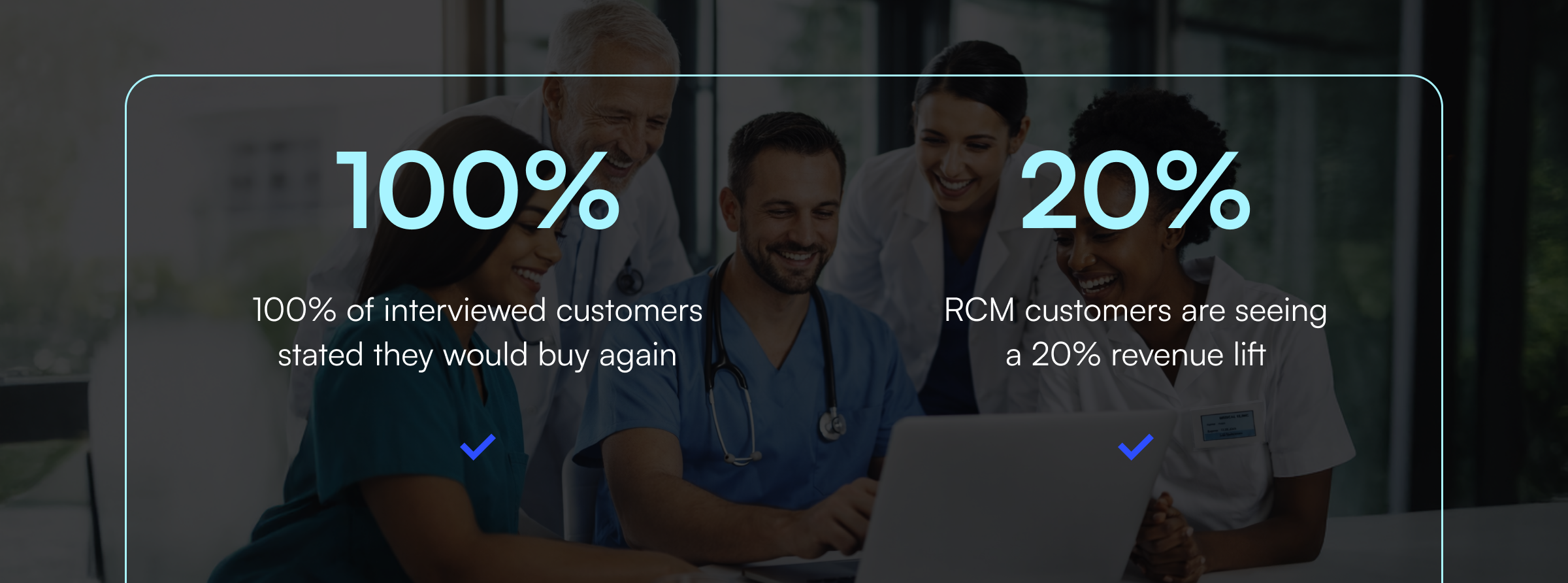
We made significant strides driving impact at the middle of the revenue cycle. Our Ambient AI impact was validated by the KLAS First Look report, which gave us straight ‘A’ marks across customer satisfaction, quality, and effectiveness. The most telling stat: 100% of interviewed customers stated they would buy again. Solution customization, white-glove support and responsiveness, and seamless integrations were all strengths reported by customers. We also launched Autonomous Coding to clinicians and coders valuable time by automatically generating CPT codes, ICD-10 diagnosis, and modifiers from clinical documentation.
On the backend of the revenue cycle, our RCM customers are seeing a 20% revenue lift, driven by robust charge capture, timely filing denials, and patient collection automation. We also expanded Commure Agents into RCM optimization with claims processing and denial resubmission agents.
In July, we also signed an important partnership that brings the benefits of Strongline staff safety, powered by Canopy, to more customers to jointly protect over 350,000 clinicians.
Customer Impact: The Only Scoreboard That Matters
The true measure of our success is the time returned to care providers.
Across HCA Healthcare, we are deployed broadly with Ambient, supporting clinicians across multiple regions. At Medical City Dallas (HCA Healthcare), we are handling over 5,000 notes per week via Ambient AI. This has resulted in an 18% reduction in H&P documentation time, restoring critical hours back to the clinicians’ week. The impact of these efforts is being realized across Medical City in North Texas, where Ambient AI is being utilized by nearly 200 providers.
Compassus is using Ambient AI documentation across over 1,500 clinicians, seeing 70% time savings and 70% adoption in home health IDG note workflows. As one user put it, the solution has "given them their Saturdays back."
Ob Hospitalist Group (OBHG) is rolling out our Autonomous Coding solution enterprise wide to over 2,000 clinicians at 200 sites. Within months of launching Commure’s technology at pilot sites, the organization saw 85%+ of charges coded using AI and an 83% reduction in clinician time spent entering charges.
At North East Medical Services (NEMS), the shift was described as "keyboard liberation," while Val Verde Regional Medical Center is proving that rural systems extend their capacity with the right tools. From establishing a major platform partnership with the Hughston Clinic for orthopedics to streamlining physical therapy workflows, the results are consistent: when you remove the administrative burden, care improves.
.png)
Forward Deployed Engineering: The Last-Mile Difference
Standard software rollouts in healthcare are often slow, painful, and disconnected from clinical reality. We chose a different path: Forward Deployed Engineering (FDE).
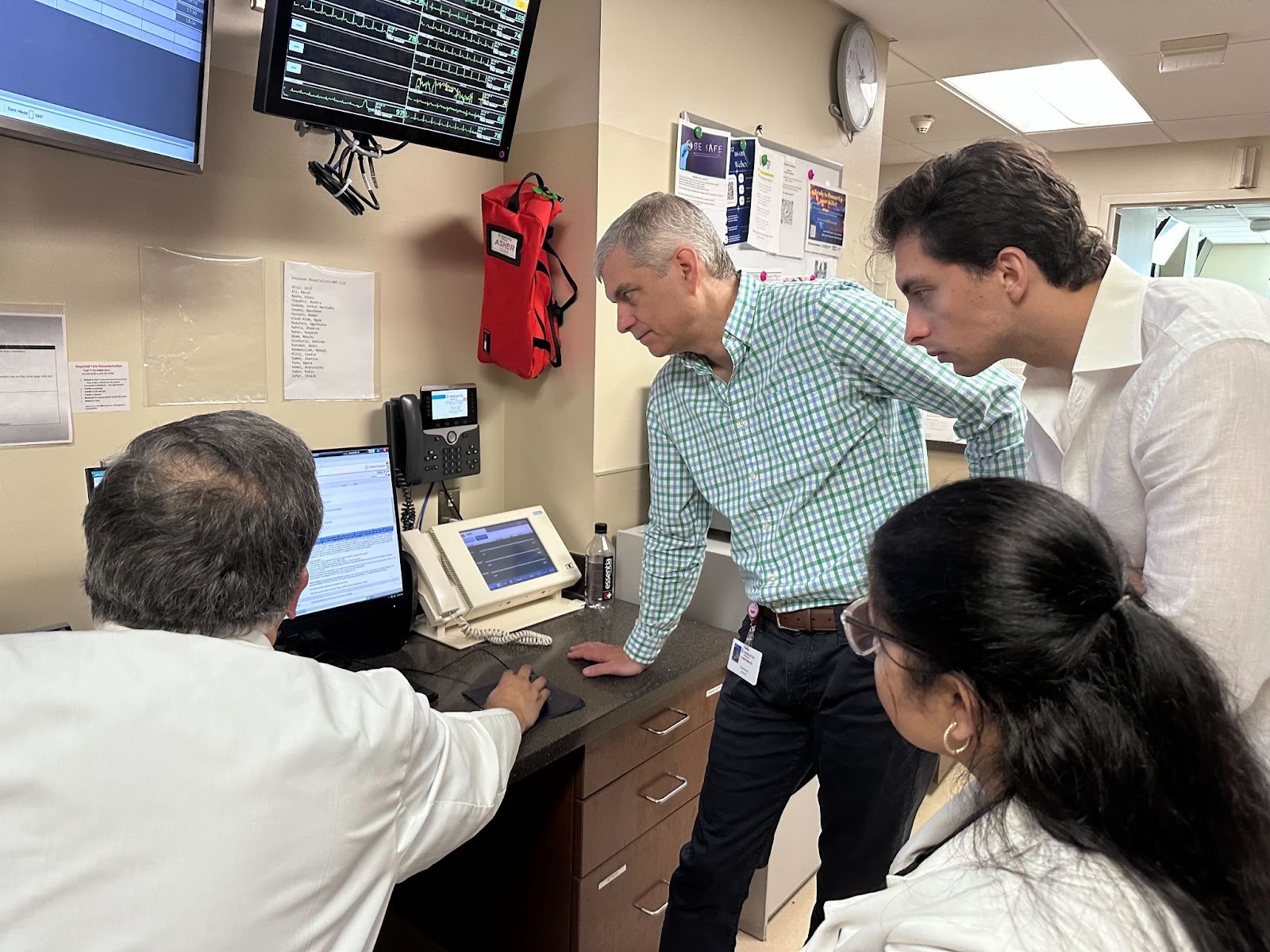
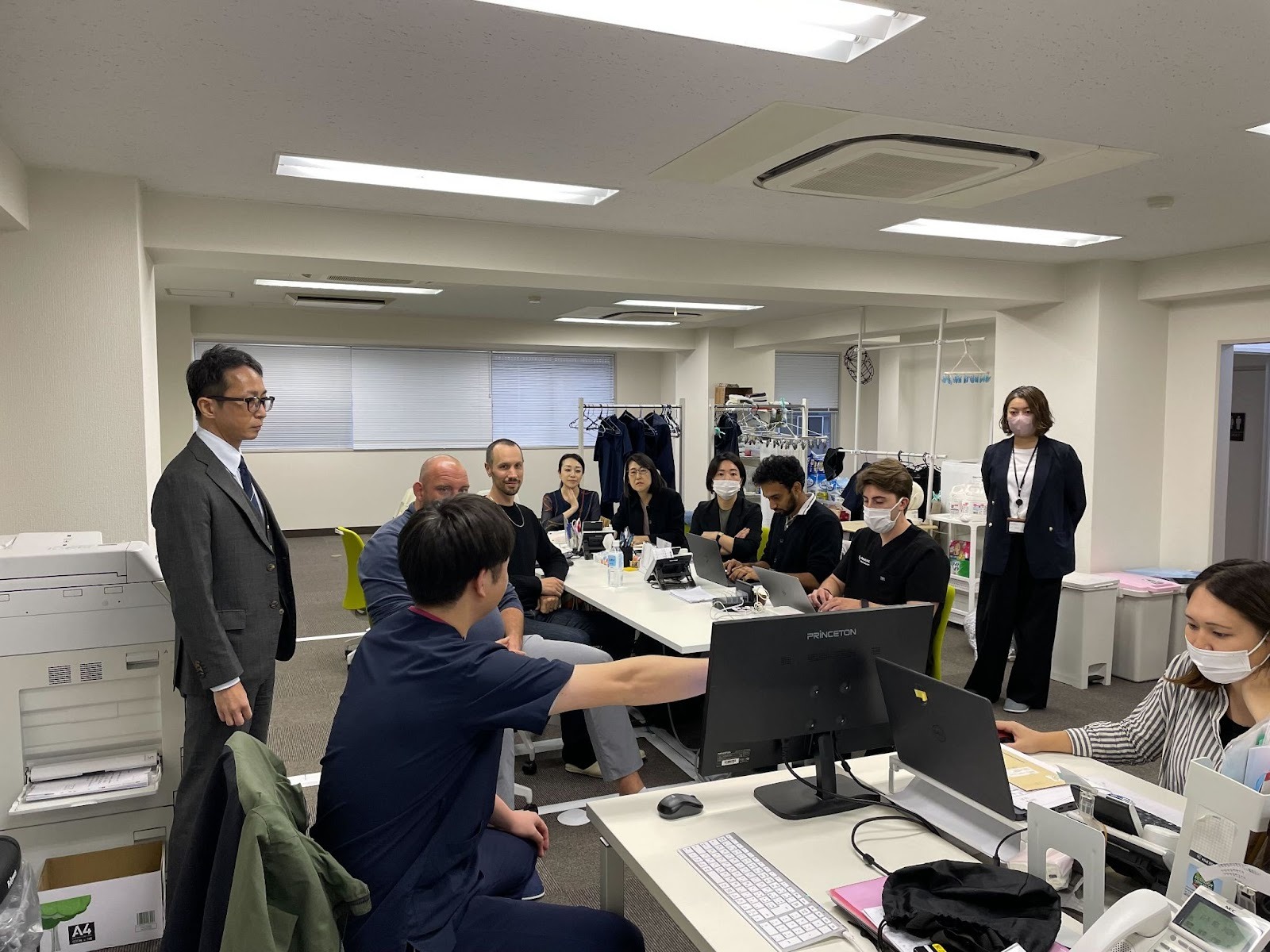
Rather than building from a distance, our FDE teams embed onsite alongside clinicians. This replaces slow, abstract feedback loops with real-time iteration. Working shoulder-to-shoulder with providers, our engineers identify and solve the problems that surface in the moment. This ensures our solutions perform in the complexity of live clinical environments, not just controlled testing conditions.
Customers consistently point to FDE as a decisive reason they partner with us. It is the difference between software that technically works and systems that hold up under real-world care delivery.
In 2025 alone, FDEs travelled more than 500,000 miles on airplanes–or the equivalent of nearly 20 times around the circumference of Earth–bringing engineers to the point of care.
Partnerships: The Network Effects Begin
This year, we meaningfully advanced our strategic alliances, enabling broader deployments across some of the nation’s largest healthcare providers and creating tangible network effects for our customers.
Our partnership with AWS continues to deepen. It strengthens the reliability of our infrastructure at scale while unlocking frontier AI capabilities across speech recognition and generative AI. By leveraging advanced models, including multiple Claude-on-Bedrock variants, we are delivering strong performance and offering health systems greater flexibility in implementation, integration, and scaling.
We also advanced our alliance with MEDITECH to make ambient documentation a fully native experience within MEDITECH Expanse and Expanse Now. This work reflects a shared commitment to embedding AI directly into clinical workflows, now serving over twenty MEDITECH provider groups, from the largest private health system in the country (HCA) to vital rural healthcare providers like Val Verde.
Through our integration with Epic Toolbox, we are expanding our ability to meet clinicians where they already work. We were especially proud to be one of a small group of select vendor partners invited by Epic to participate in Epic UGM 2025. Commure is fortunate to work alongside Epic teams to deliver the latest in healthcare AI to our mutual enterprise partners.
Ease of adoption and speed to scale remain central to our partnership strategy. Our collaboration with Vizient helps health systems across the U.S. more efficiently assess, diligence, contract, and deploy our Ambient AI technology. This partnership reduces friction and accelerates access for thousands of member hospitals.
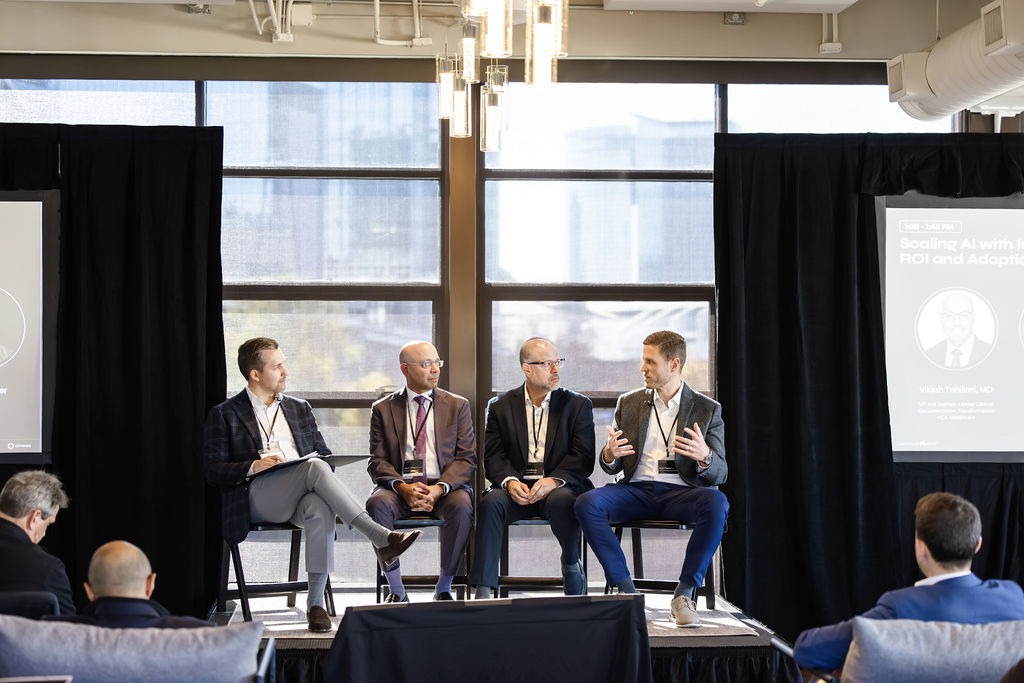
Beyond corporate alliances, we are seeing a community form around a new vision of healthcare operations. Our Nexus events served as a gathering place for forward-thinking leaders shaping the future of healthcare, bringing together over 110+ health executives across the ecosystem.
Breaking Barriers in 2026
The administrative burden is no longer a law of nature; it is a solvable engineering problem.
Our mission remains unchanged: build the AI infrastructure that eliminates the documentation burden, brings patients and providers closer together, automates revenue, and transforms healthcare end to end. In 2025, we saw clear signs of approaching escape velocity. In 2026, we cross it: making AI the infrastructure healthcare finally depends on.
Share this story




.png)


.jpeg)