



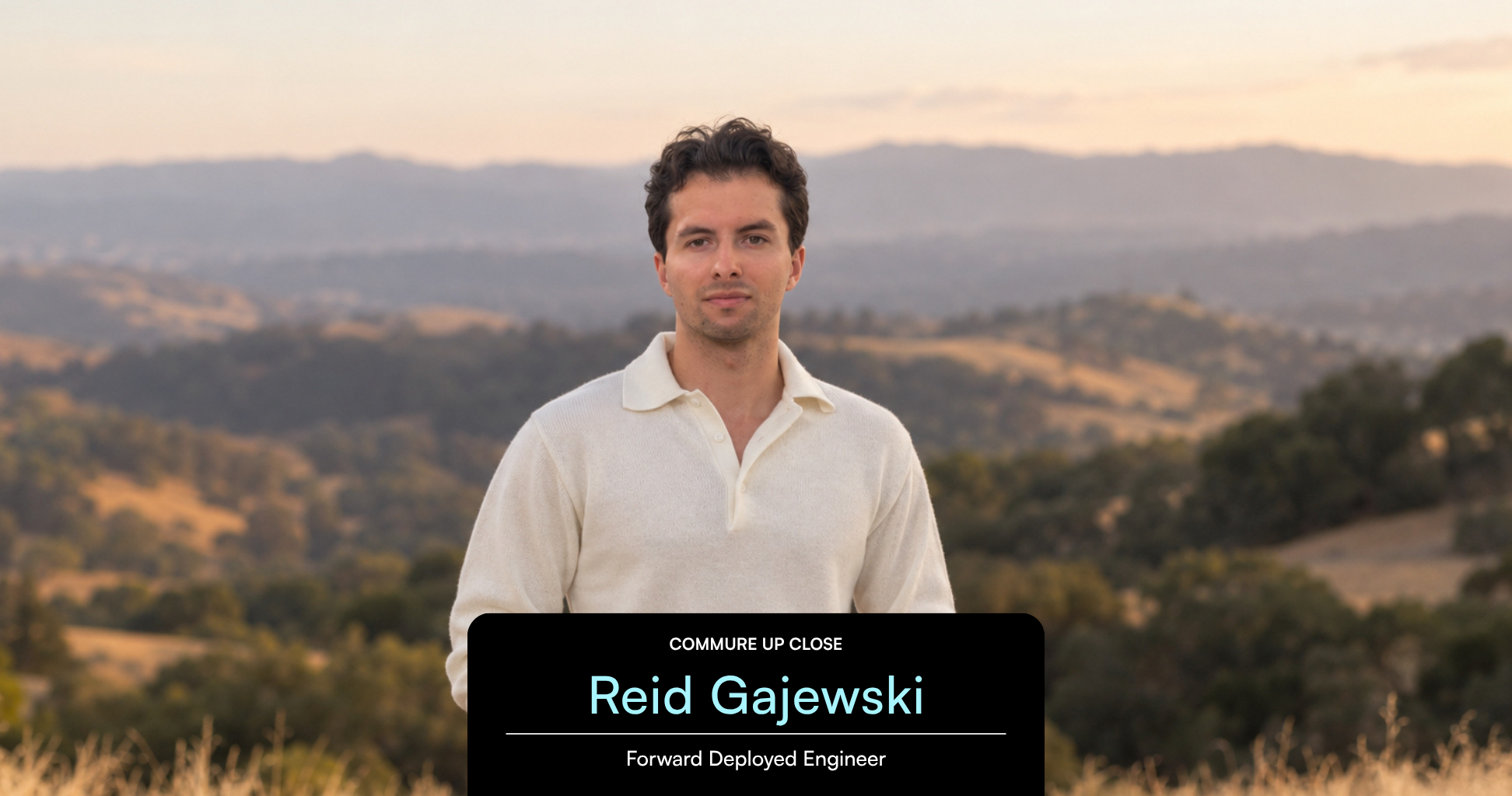
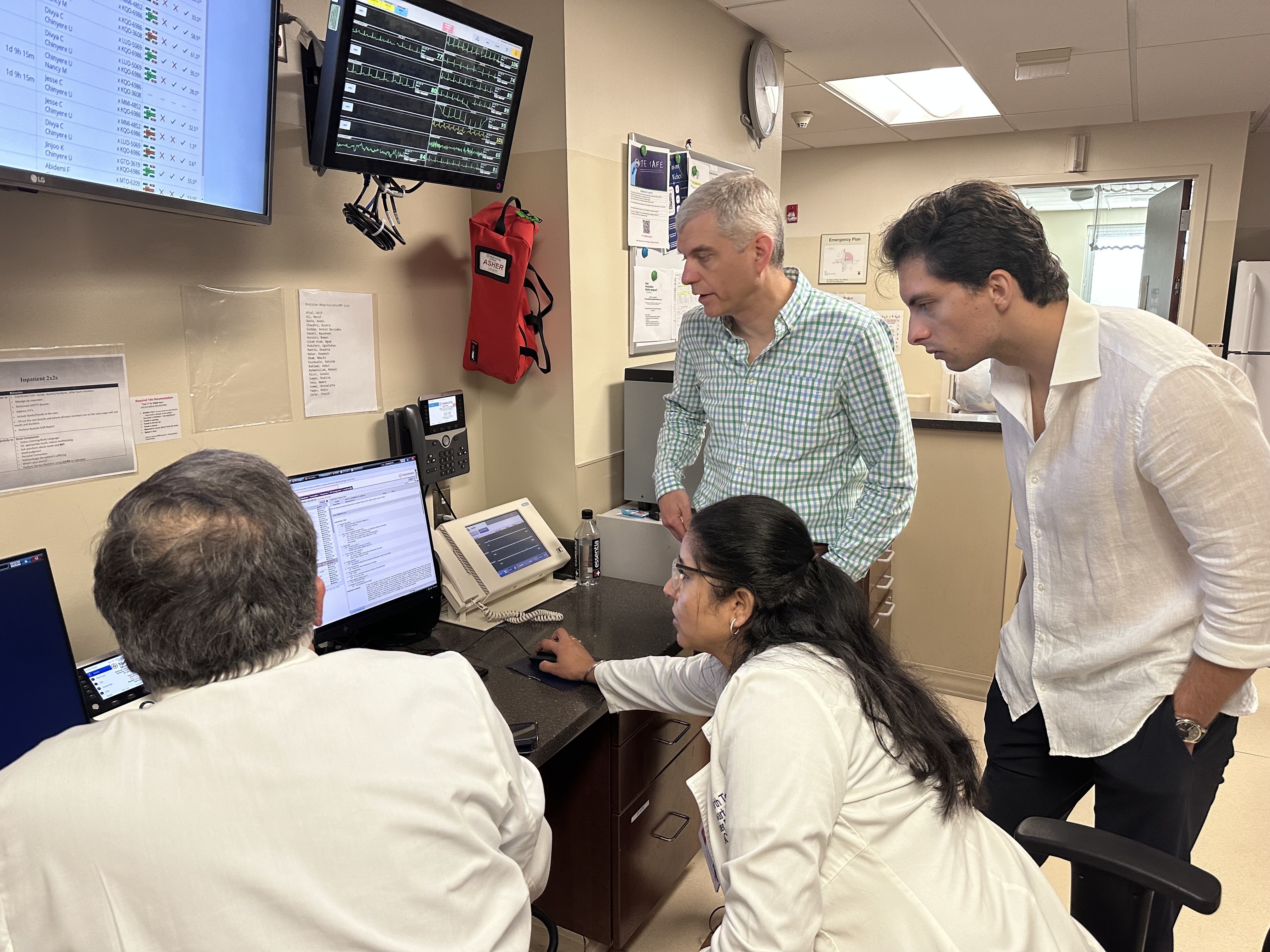
Reid Gajewski was onsite at a hospital when he realized the magnitude of his role at Commure. He had just handed Commure's Ambient AI tool to a cardiologist with the busiest schedule he'd ever seen, a doctor who was literally running from room to room. The provider started a recording, walked into a patient's room, stopped it on the way out, and a few minutes later looked at the finished note. He told Reid it was perfect, and said he’d actually be able to spend time with his kids now. Then he turned to the health system executive standing next to them and said, "You better not take this away from us. Ever."
Reid is a Forward Deployed Engineer at Commure, a little over a year into his first job out of college, and moments like that are why he loves what he does.
His route here took some turns. In middle school, he wanted to be a politician. By high school, he was producing electronic music, buying synthesizers, learning how records were made, and eventually ghost-producing tracks for a few larger artists. Then he started selling products online and fell in love with digital marketing. The strategy behind positioning a product, finding the right audience, and making every dollar of ad spend work harder was fascinating to him. Still, the old political ambition carried him into college, where he studied political science and international relations, until he decided he'd rather build things than debate them.

The turn that stuck came in the spring of 2022, when he had an idea for a software product. He knew it could go viral, and he knew exactly how to market it. He just had no idea how to build it. So he taught himself to code, and through that process was pulled into the world of startups. Through college, he built a handful of small internet businesses; what he loved most was the full arc of deciding what was truly essential for a first version, getting it in front of people fast, and iterating until someone became the first customer. The job titles he imagined kept changing, but the theme never did. He wanted to build things from scratch and turn ideas into something people love.
"I was looking for a role where I could build, strategize, and own an outcome from beginning to end."
That theme is what made a conventional path feel wrong. Coming out of college, he was grinding coding interview prep for standard software engineering roles, and the more he thought about it, the less he wanted to spend his early career working on a small piece of a much larger system. He wanted to understand why something should be built, not just how. He wanted to sit with the people experiencing the problem, be held accountable for whether his solution worked, and grow beyond engineering into earning customer trust, communicating with executives, and making calls when information was incomplete.
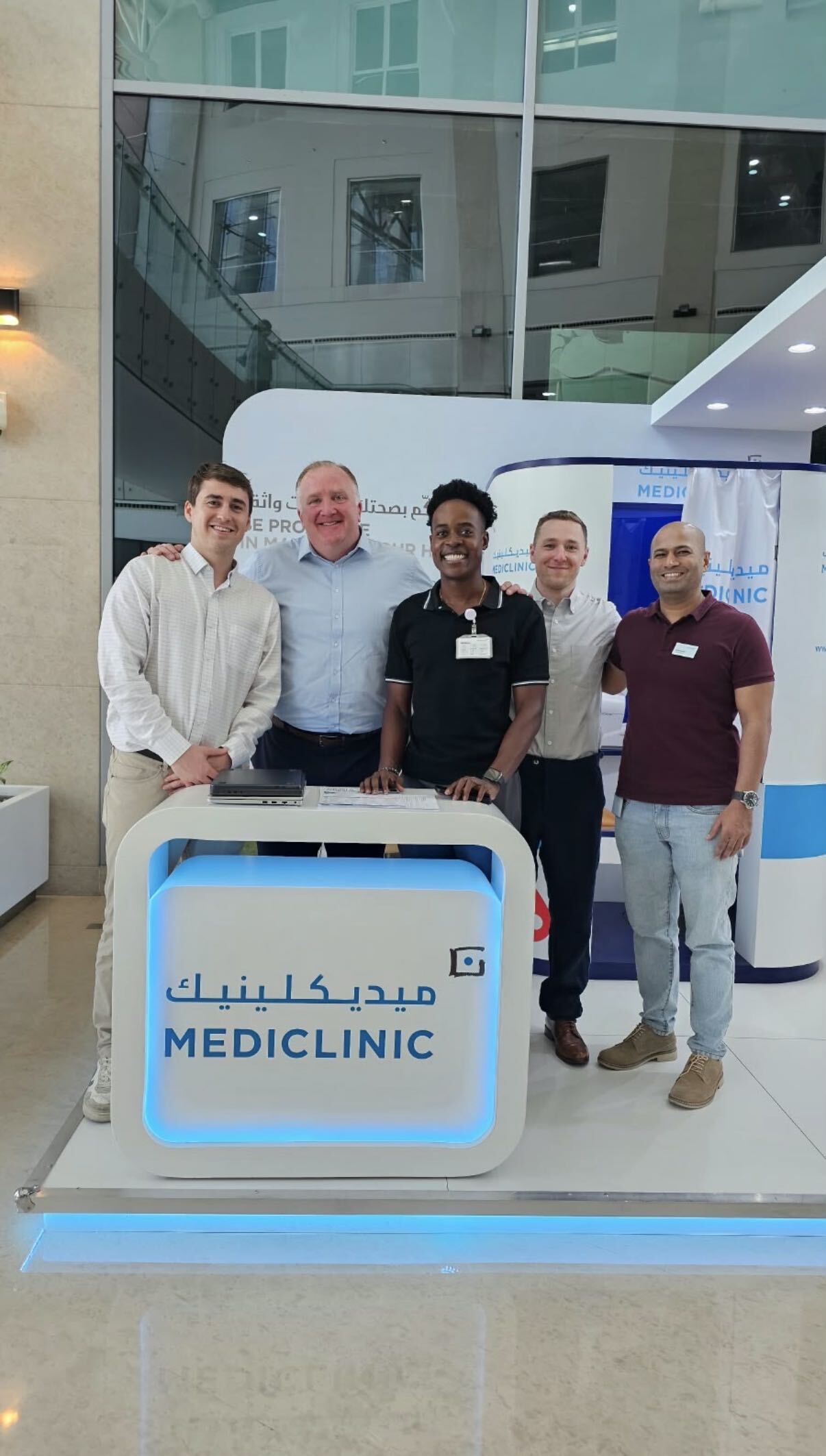
That is essentially the job description of a Forward Deployed Engineer at Commure. FDEs build the product, then go on site with the clinicians and administrators who use it, own the outcome end to end, and act as their own product managers, shaping product direction rather than just executing on it. In a single day, Reid might work through complex billing scenarios with a coding team, brief a CFO on the revenue impact of reducing claim denials, and speak with Commure's CEO about where to attack next. After one conversation with Max Krueger, who leads the team, Reid knew immediately this was where he should be.
"There's almost never a detailed plan or a clear set of instructions, but there are hard problems to solve, ambitious goals to reach, and the trust and resources you need to make an impact."
Early on, Reid found himself in a frustrating loop with a customer: make the changes, get enthusiastic approval, then receive a new set of requests that seemed to contradict what they’d just approved. After several rounds, he stepped back to examine how clinicians beyond the pilot group actually worked. The problem became clear: he’d been tailoring the product to preferences that weren’t representative of the broader customer base. He brought the evidence to the customer, changed the rollout strategy, and saw adoption take off. Reid discovered that being responsive isn’t enough if you’re solving the wrong problem. Sometimes progress means questioning the feedback loop itself.
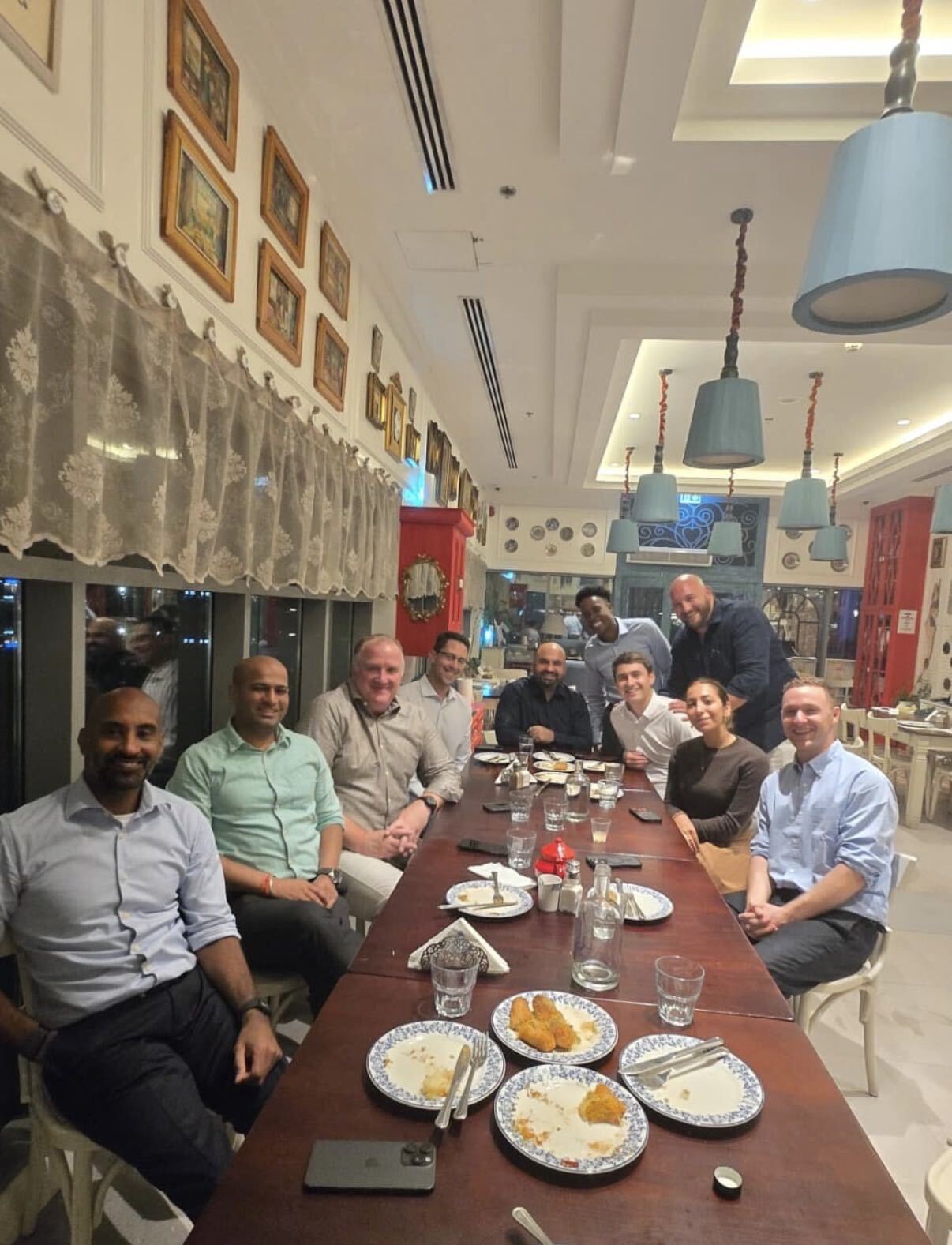
He thinks about the discipline required for the role, too. At a dinner with forward-deployed engineers from other companies, one veteran of the field described building an FDE organization that amounted to one-off modules for individual customers, none of it generalizable, none of it scalable. Reid sees that as the trap the role has to avoid. Commure works against this by identifying what each customer wants, triangulating it across other pilots, and turning it into something repeatable that can simply be switched on for the next customer who needs it.
The part of the job Reid says he loves the most is the payoff of all that work. FDEs build up deep, specific knowledge of whatever problem they're working on, then they get to walk into a room of doctors and healthcare executives as genuine domain experts and watch those people understand the value of what's been built. There's a very short distance between seeing a problem, deciding what should exist, and putting a working solution in front of the customer, something Reid says you rarely find at any company, and almost never in healthcare. Whether that's hours back in a physician's day or real money back in a health system's business, overseeing the implementation and the impact is what he joined Commure for.
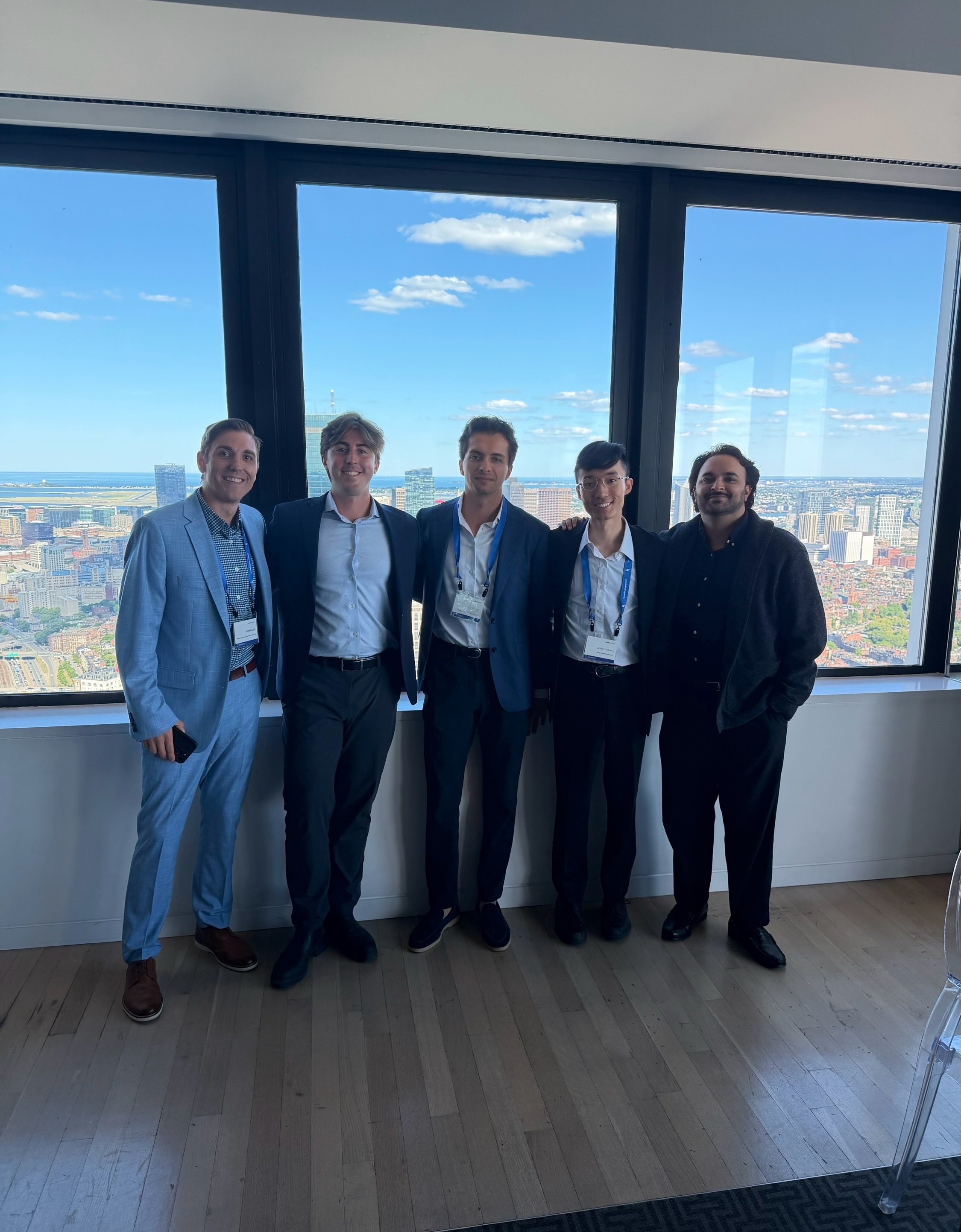
The FDE role is not an easy one, so it helps that the Bay Area gives him somewhere to reset. You'll often find Reid on the Stanford Loop Trail at 7 am before work, driving through the mountains on weekends, or on skis, which he's been on longer than he can remember.
More than a year in, Reid says the role has exceeded his expectations coming in. Commure handed him real accountability, ambiguous problems, and the freedom to find his own path forward, the exact environment he was looking for to start his career. Again and again, he stepped into situations he didn’t feel ready for, building confidence each time until he found himself operating in rooms he never imagined he’d reach this early in his career. It's the same environment waiting for the next person who'd rather own an outcome than execute a spec.
Interested in a career building the next generation of healthcare technology powered by AI? We are always looking for talented people across our departments.
Explore Career Opportunities
Share this story




.png)




.jpeg)
.png)