




For the third year running, more than 60 executives from organizations like MEDITECH, HCA Healthcare, Willis Knighton Health, Lifepoint Health, WellNow Urgent Care, Summit Behavioral Healthcare, and Nathan Littauer Hospital gathered at Commure Nexus for a full day of sessions, roundtables, and candid conversations. The discussions spanned the front door to final payment, and every point of administrative friction in between.
Commure CEO Tanay Tandon opened the day by highlighting a core thesis at Commure: Healthcare has a work tax problem. Providers spend 15-30 minutes before every visit manually building the clinical picture they need, and another 15-30 minutes after on clinical documentation, for every patient. Layer on the back-end: every prior auth chased, every claim resubmitted, every administrative hour spent on billing complexity instead of care. That friction carries a price.
At the industry level, it adds up to an estimated $1 trillion in administrative costs annually, with providers absorbing a 10-15% cost to transact. The rest of the modern economy runs at roughly 3%. That gap is a structural failure, and that was the center of conversation among healthcare leaders who gathered at Commure Nexus in Boston.
A Tribute to Jim Merlin
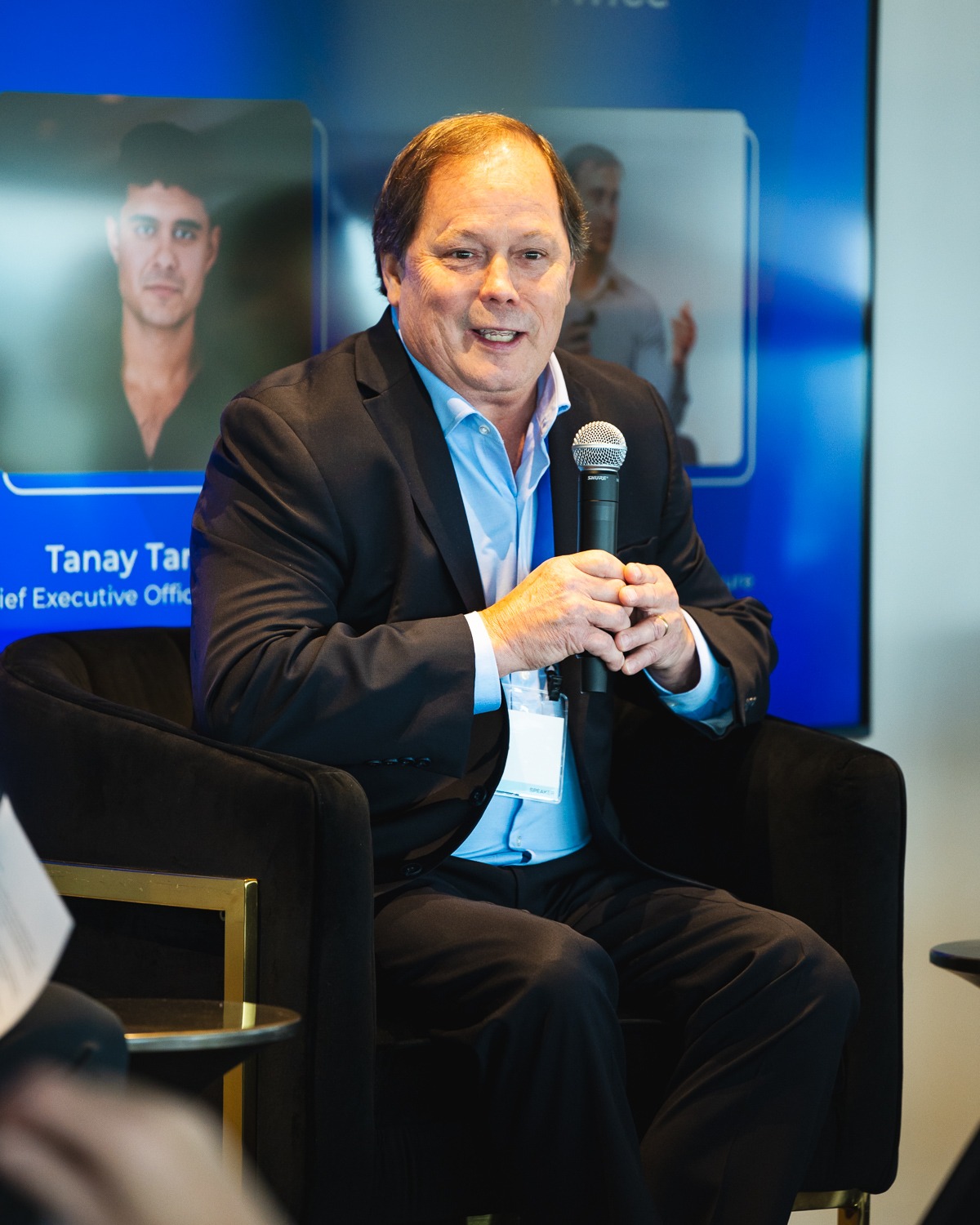
This year's Nexus opened with a keynote called “Never Stop Inventing” alongside MEDITECH, and we want to honor the man who made that conversation what it was. Jim Merlin, 40-year veteran of MEDITECH and one of the most respected voices in health IT, passed away shortly after Nexus. Jim brought the kind of earned conviction to this work that only comes from decades in the field. We are grateful he was with us in Boston, and we hold his memory with tremendous respect.
Jim shared the story of how MEDITECH pioneered the health IT category and modern day EHR, how they continue to help lead the industry. That spirit of innovation set the stage for the conversations that followed.

From Missed Calls to Admitted Patients: How Summit Behavioral Health Transformed Its Call Center
Every missed call is a missed patient. Across healthcare, front-desk capacity constraints, including hold times, after-hours gaps, and overwhelmed staff, mean that patients who can't get through often don't try again. In behavioral health, where that first call may be the hardest one a patient ever makes, the stakes are even higher.
Commure COO Deepika Bodapati opened with a live demo of Commure's AI call center agent, which offers 24/7 coverage, intelligent call routing, scheduling, and intake, handled without staff involvement. Then Caleb Rich, SVP of Patient Acquisition and Admissions for Summit Behavioral Health, walked through how the organization is transforming their call center experience with an AI agent.
Summit BHC is one of the fastest-growing behavioral health networks in the country, with 38 facilities nationwide, serving a highly diverse patient population across its nationwide network of psychiatric hospitals and addiction treatment centers. The administrative burden at the front door, including missed calls, delayed intake, lost admissions, is acute. With Commure's AI agent, Bella, live across their network, Summit achieved more inquiries handled and higher admissions conversion within the first three months of deployment. That's more people getting into treatment when they need it most, not lost in a queue.

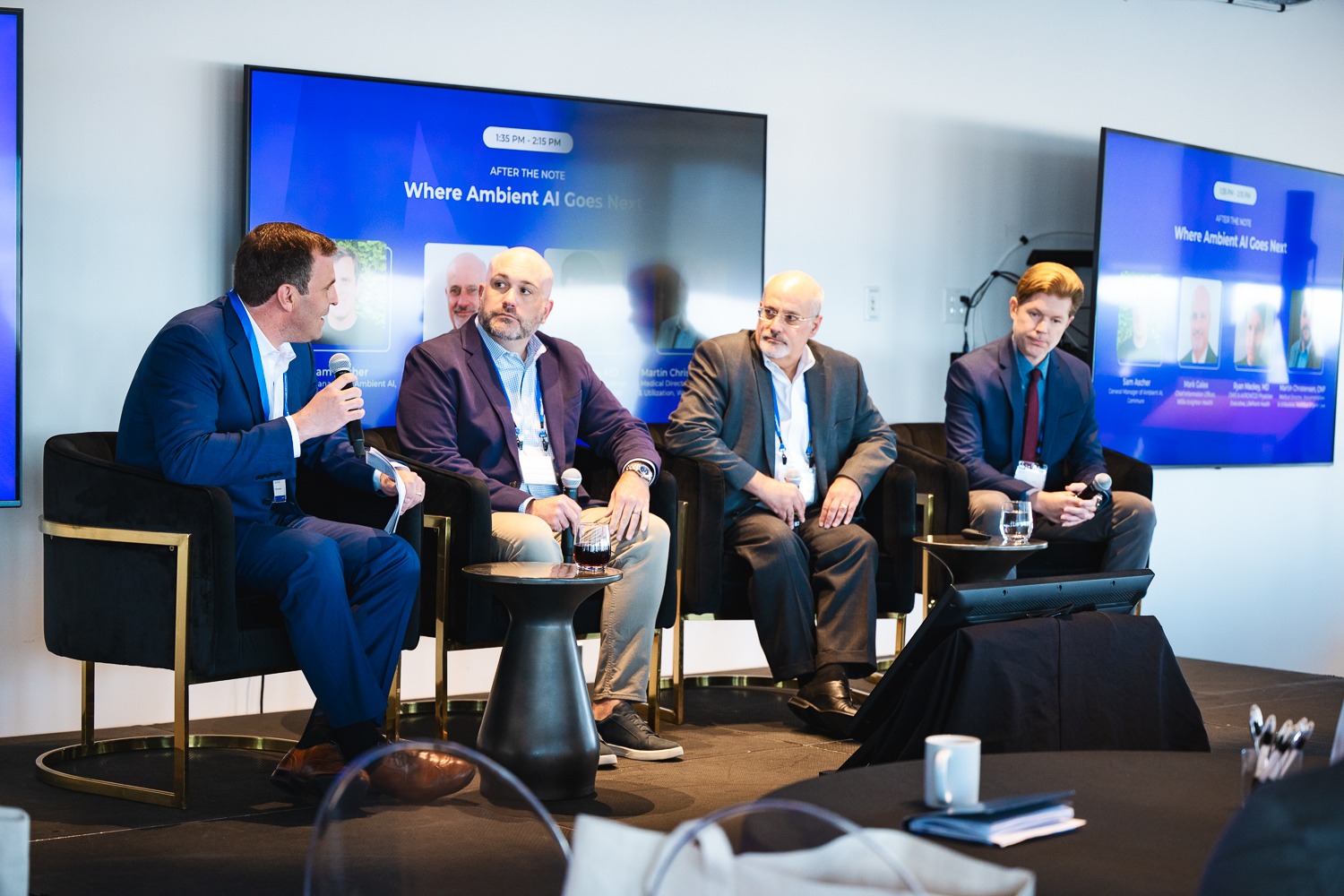
After the Note: Where Ambient AI Goes Next
Documentation is both a burnout problem and revenue problem. If it isn't documented, it didn't happen; not for the patient record, and not for the claim. Leaders from Lifepoint Health, Willis Knighton Health, and WellNow Urgent Care shared ground-level perspectives on deploying AI-powered clinical documentation across their organizations.
The session pushed further than ambient clinical documentation. The real value lives in what comes before and after the note: pre-visit summaries, pre-charting, real-time patient record queries, charge-note reconciliation.
The compounding advantage belongs to health systems that connect the note to the full clinical and financial workflow, not those who stopped at transcription. Documentation feeds coding. Coding feeds claims. Claims feed intelligence that improves the next encounter. That loop, running continuously on one data model, is where the structural advantage builds.
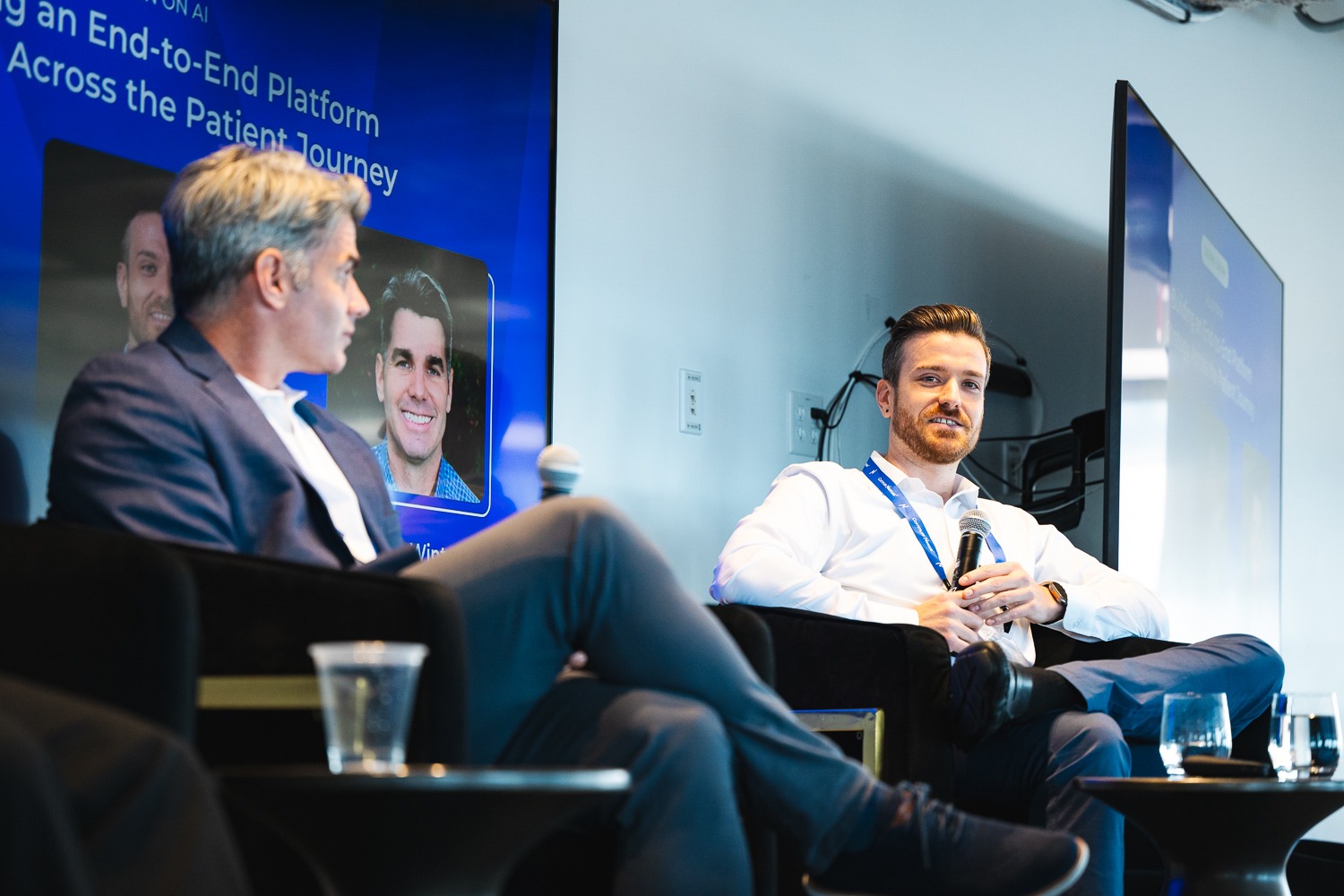
All In on AI: Building an End-to-End Platform Strategy Across the Patient Journey
Point solutions address individual moments of friction. A platform closes the loop. That was the argument at the center of the day's final panel, featuring two health systems at different points on the same path.
Ross Rigdon, COO at Raleigh Orthopaedic Clinic, brought the RCM story to life, unearthing the “work tax” with back end revenue cycle workflows. Raleigh Orthopaedic has built one of the most comprehensive full-platform Commure Athelas deployments in the ambulatory space, handing off the complete revenue cycle to an AI-native platform and capturing gains across charge acuity, denial rates, and time-to-payment. The bet was strategic: when documentation, coding, and claims run on a shared data model and continuously learn from one another, every encounter makes the next one more accurate and more efficient.
James Wellman, VP & CIO at Nathan Littauer Hospital, laid out their own roadmap to full-platform, making the case that integrated AI infrastructure across the patient journey isn't a long-term aspiration. It's a decision health systems are making right now. Nathan Littauer's strategy spans four interconnected pillars: ambient clinical documentation, AI call center agents, Patient360 real-time chart querying, and full-cycle revenue cycle management. The vision is a connected set of rails: one intelligent data model, running from the patient's first call to final payment, where each layer of the platform makes every other layer smarter.

Compounding Intelligence: The Commure Platform Future
Tanay opened the day with a clear goal: reduce the cost to transact in healthcare. Max Krueger, Head of Forward Deployed Engineering, closed it with a look at what comes next.
The platform already spans the full revenue cycle (front, mid, and back) on one intelligent data model. The roadmap compounds what's working: documentation feeds coding, coding informs charge reconciliation, claims data trains denial prevention upstream, and voice agents capture information at the front door that flows cleanly through every step that follows.
The destination: health organizations paid in 1-2 days, not 30+. Near real-time settlements. Staff focused on care, not chasing payments. A financial foundation stable enough to grow from.
That future requires infrastructure, not a collection of tools: the same kind of shared rails that made credit card networks transformative. Health systems that build on this platform accumulate a data and intelligence advantage that point-solution buyers simply can't close.

The Work Tax Has a Fix
The name Nexus has always meant something to us: a point where things converge. This year, what converged was a shared conviction that the work tax crushing American healthcare is not an immovable structural reality but a solvable engineering problem. And the health systems in that room are proving it, one deployment at a time.
We are grateful to Jim Merlin for helping open this conversation with the wisdom of someone who has seen what it actually takes to change how medicine is practiced. His voice will stay with this work.
We'll see you at the next Nexus.
Share this story



.png)



.png)