



Best EMR for Pediatric Practice in 2026: 7 Options Compared
A features-first comparison of the top pediatric EMR options in 2026, including what to look for, which systems lead in KLAS, and how AI scribing fits into pediatric documentation workflows.
Written by the Commure Scribe Team
Published: July 7, 2026
•
10 min read
Updated July 7, 2026
PCC (Pediatric Comprehensive Care) is the best overall electronic medical record (EMR) for dedicated pediatric groups. KLAS Research has named it Best in KLAS for pediatric EMR eight straight years as of 2026. Office Practicum fits vaccine-intensive practices, Develo suits independent practices and athenahealth fits groups of 25 or more providers. DrChrono suits tech-forward small groups, and KidsCharts fits one to three providers. CureMD suits groups that put integrated billing first.
What You Need to Know About EMRs for Pediatric Practices
- A pediatric EMR is a clinical notes system built for child health. It handles VFC vaccine tracking, developmental screenings, and well-child visit templates.
- 75% of pediatricians report EHR charting as a major or moderate burden. A 2025 JAMIA Open study found an AI scribe cut notes time by 2.8 minutes per visit.¹
- This guide compares seven pediatric EMR systems by specialty fit, key features, and best-fit setting.
Choosing the best emr for a pediatric practice means evaluating systems on pediatric-specific workflows, not just general clinical features. It differs from a general-purpose EMR in three core ways: it handles VFC vaccine workflows natively, supports multi-speaker well-child encounter documentation, and provides AAP Bright Futures-aligned templates out of the box. The seven options below are ranked and formatted to help pediatric teams compare quickly.
How We Selected These EMRs
Selecting the best emr for a pediatric practice requires more than checking a feature list. Each system in this guide was evaluated on six criteria:
- Pediatric-specific workflow support (VFC eligibility screening, immunization lot tracking, and state registry submission)
- KLAS ratings where publicly available for the pediatric EMR category
- Well-child visit templates aligned with AAP Bright Futures guidelines
- Built-in developmental screening tools (M-CHAT, ASQ, Vanderbilt)
- Practice size fit (solo through large multi-specialty groups)
- Pricing structure transparency.
Systems without meaningful pediatric differentiation from their general-purpose platforms were excluded. The best ones reduce documentation burden specific to child health encounters, not by checking general EMR boxes.
The Best EMRs for Pediatric Practices
Seven systems stand out for pediatric-specific charting. Each serves a different slice of the market. For a broader look at how these platforms compare outside of pediatrics, see the guide to best EMR software.
1. PCC (Pediatric Comprehensive Care): Best Overall for Dedicated Pediatric Groups
PCC is built solely for pediatrics and is widely regarded as the best emr for pediatric practice by independent researchers and peer groups. Per KLAS Research, it earned Best in KLAS for pediatric EMR eight straight years as of 2026.
- Best for: Solo and small-to-midsize dedicated pediatric groups
- Pediatric features: VFC eligibility tracking, immunization lot tracking, state registry submission, AAP Bright Futures-aligned well-child templates, growth charts with specialty overlays, developmental screening (M-CHAT, ASQ, Vanderbilt)
- KLAS rating: Best in KLAS, pediatric EMR category, eight consecutive years as of 2026
- Telehealth: Add-on available
- Billing: Bundled software, support, and training removes common surprise costs; pediatric billing workflows included
- Limitations: Pricing can be harder to absorb for groups under two providers. Not designed for multi-specialty or enterprise health systems.
2. Office Practicum: Best for Vaccine-Intensive Workflows
Office Practicum is a focused pediatric emr software option built around vaccine management. Its features matters for teams where immunization workflow volume drive the most charting time. Its VacLogic+ engine handles the full VFC workflow from eligibility to registry submission.
- Best for: Solo and group pediatric practices with high vaccine volume
- Pediatric features: VacLogic+ vaccine inventory engine, VFC charting and eligibility tracking, state registry submission, Bright Futures-aligned forms, growth charts
- KLAS rating: N/A (not separately rated in current KLAS pediatric EMR category)
- Telehealth: Add-on available
- Billing: Integrated billing with pediatric coding support
- Limitations: Less name recognition outside vaccine-intensive settings. Integration depth with large health system infrastructure is limited.
3. Develo: Best for Independent Pediatric Practices
Develo is a general-purpose pediatric EMR designed specifically for independent pediatric practices. For solo and independent group providers looking for options outside the large enterprise platforms, Develo offers a purpose-built alternative. It supports team charting and tracks growth milestones over long patient timelines.
- Best for: Independent pediatric practices outside large enterprise platforms
- Pediatric features: Growth milestone tracking across long timelines, well-child forms, immunization tracking, team charting workflows
- KLAS rating: N/A
- Telehealth: Built-in
- Billing: Integrated billing module
- Limitations: Smaller market presence than PCC or Office Practicum. Support resources are more limited for complex integration needs.
4. athenahealth: Best for Larger Multi-Specialty Groups
athenahealth is a general-purpose EMR with a pediatric module suited for larger groups and health-system-affiliated teams. For multi-specialty groups that need enterprise-scale revenue cycle and population health tools, it is a viable option within a broader health system context.
- Best for: Groups of 25 or more providers; pediatric departments inside health systems
- Pediatric features: Immunization registry links, growth chart tools, well-child templates; these are module-based and may require setup
- KLAS rating: Rated in general EMR category; not separately ranked in pediatric-specific KLAS category
- Telehealth: Built-in
- Billing: Enterprise-grade revenue cycle management; FHIR-based data sharing
- Limitations: Not pediatric-first. VFC and immunization registry depth lags behind PCC and Office Practicum. Pediatric ehr software features need configuration work for smaller teams.
5. DrChrono: Best for Smaller, Tech-Forward Pediatric Groups
DrChrono is a flexible general EMR with a strong mobile workflow. For budget-conscious solo and small-group providers, it is a credible alternative for pediatric practices when workflow customization and lower cost matter more than out-of-the-box pediatric depth. Pediatric providers can configure note forms for well-child visits and developmental screenings.
- Best for: Solo and small-group providers who want workflow control at lower cost
- Pediatric features: Customizable well-child visit forms, developmental screening note templates, mobile-first workflow
- KLAS rating: N/A
- Telehealth: Built-in
- Billing: Integrated billing; pricing suited to smaller groups
- Limitations: VFC and immunization registry depth lags behind PCC and Office Practicum. Requires more setup to reach pediatric-ready workflows. For a broader comparison of options for smaller practices, see the guide to the best EMR for small practices.
6. KidsCharts: Best EMR for Small Pediatric Practice Teams
KidsCharts is a cloud-based pediatric emr systems option for smaller teams. For solo providers or very small groups, KidsCharts offers a lightweight entry point with pediatric-ready features and no enterprise pricing overhead.
- Best for: Solo providers and very small groups (one to three providers)
- Pediatric features: Immunization tracking, growth charts, well-child forms
- KLAS rating: N/A
- Telehealth: Add-on
- Billing: Basic billing included
- Limitations: Support depth and range of connections are more limited than PCC or Office Practicum. Not suited for multi-location or enterprise use. Solo pediatricians can also review the guide to the best EHR for solo practices.
7. CureMD: Best for Groups Needing Integrated Billing
CureMD is a general-purpose EMR with a pediatric module and built-in billing. For groups where revenue cycle integration is the primary selection driver, CureMD functions as a viable choice when notes and billing consolidation outweigh the value of a pediatric-first platform.
- Best for: Small-to-midsize groups prioritizing billing integration alongside clinical notes
- Pediatric features: Immunization tracking, well-child forms, parent portal
- KLAS rating: N/A
- Telehealth: Built-in
- Billing: Native billing management is CureMD's primary differentiator; supports pediatric coding
- Limitations: Some pediatric-specific tools require additional setup. Not pediatric-first.
What to Look for in a Pediatric EMR
Finding the best emr for pediatric practice requires a focus on pediatric-specific capabilities. General-purpose EMRs are built around single-provider adult encounters. Pediatric care diverges from that model in ways that matter for documentation burden, compliance, and patient outcomes. Pediatric practices should consider platforms that meet the requirements below.
VFC and immunization registry setup. VFC requires eligibility tracking, lot number charting, and state registry filing at every qualifying visit. Look for built-in VFC workflows and direct registry links. Systems that route this through manual steps add time and introduce error risk.
Growth charts with specialty overlays. Standard weight-for-age charts do not apply to every patient. A strong pediatric EHR includes charts for premature infants, Down syndrome patients, and other groups with distinct growth norms.
Well-child visit templates aligned with AAP Bright Futures. Well-child visits follow AAP Bright Futures guidelines. Those guidelines set out developmental screenings, guidance topics, and documentation needs by age. Templates built to this standard cut charting time significantly.
Developmental screening tool setup. M-CHAT, ASQ, and Vanderbilt assessments should be built into workflows, not outside the chart. Score capture and follow-up documentation must live inside the same system.
Parent portal with adolescent confidentiality controls. Parents access records through the portal. Minor patients who consent to their own care for private health issues have confidentiality rights under HIPAA and most state laws. Any portal must let providers control which records a parent can and cannot see.
KLAS rating. KLAS Research rates EMR systems based on direct customer feedback. For pediatric care teams, KLAS's pediatric EMR group gives a useful outside benchmark. Per KLAS Research, PCC has earned Best in KLAS in the pediatric EMR category for eight straight years as of 2026.
How the 21st Century Cures Act Affects Adolescent Confidentiality
The 21st Century Cures Act creates a direct conflict in pediatric EMRs, and it is a compliance consideration for any best emr for pediatric practice selection: its mandate to share records quickly and at no cost can expose sensitive adolescent services to parent view, even when minors have consented to their own care under HIPAA and state law. For most patients, this creates no problem.³ For adolescent patients, it creates a serious one.
Minors who consent to their own sensitive care have privacy rights under HIPAA and most state laws. Those services include mental health (including mental health questionnaire screenings), substance use, and reproductive health. These protections can conflict with the Cures Act's access mandate. Researchers found that the rule's harm exception does not resolve this conflict. It does not let providers block teen records from parent view.³
The AAP issued a policy statement in 2025 asking EHR vendors to build flexible portal settings so providers can control which records a parent can see.⁵ This is a vendor selection question and a differentiating factor when choosing the best emr for pediatric practice for adolescent-serving teams. When reviewing any pediatric ehr system or parent portal, ask the vendor whether it can set which record types are visible to a parent versus the patient only, whether it flags sensitive visit types for confidentiality review, what defaults apply to adolescent records if no setting is configured, and how it handles parent requests for records the provider has marked confidential. The ehr for pediatrics you choose sets how much control you keep over adolescent record access.
Can AI Scribing Reduce Documentation Time for Pediatric Providers?
A 2025 JAMIA Open study tested an AI medical scribe with pediatric providers. It found note time dropped 2.8 minutes per visit and burnout fell from 54.9% to 33.3%.¹ The study used Abridge, a separate ambient AI tool. The results reflect the category benefit of AI scribing in pediatric settings.
Pediatric visits involve multiple speakers: the parent gives the history, the child may add detail, and the clinician records the clinical impression. AI scribes with multi-speaker recognition handle this better than single-speaker systems. For a ranked breakdown by setting, see the best AI scribe for pediatrics guide.
How Commure Scribe Works with Pediatric EMRs
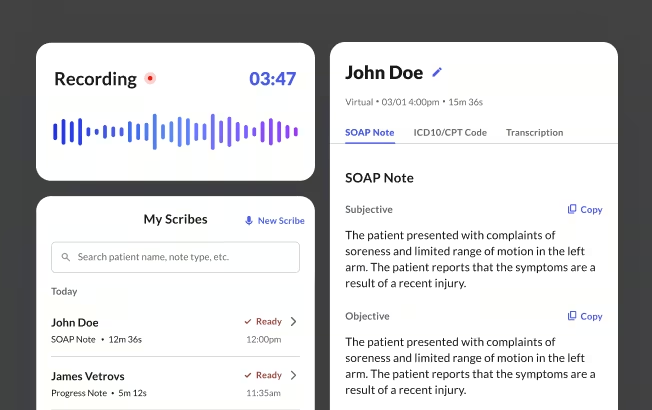
Commure Scribe records pediatric encounters including multi-speaker sessions. Within seconds of clicking End Recording, a structured note appears with suggested ICD-10 and CPT codes in a separate tab. The clinician always has the option to review and approves before anything enters the chart. More than 90% of providers reduce documentation time; 91% report feeling less fatigued.
Commure Scribe connects with 60+ EHR systems, including AdvancedMD, athenahealth, and eClinicalWorks. It is HIPAA compliant, System and Organization Controls 2 (SOC 2) certified, and audio is not used for AI training. Solo providers start with a 7-day trial, no credit card required. For larger groups, one-click EHR sync is available.
This article is for informational and educational purposes only. It does not constitute legal, medical, or professional advice. It does not guarantee any specific documentation outcome or regulatory compliance.
Frequently Asked Questions
The best EMR for pediatric practice in small group settings is PCC or Office Practicum. Both are built for pediatrics and include Vaccines for Children (VFC) tracking, registry links, and Bright Futures forms. KidsCharts is a lower-cost option for solo or very small groups. For groups that also need billing tools, CureMD is worth a look.
Pediatric EMR use varies by practice size, and no published count ranks systems by volume. Many solo and small pediatric groups use PCC, drawn by its KLAS rankings and pediatric-only focus. Large multi-specialty groups and health system pediatric teams often run athenahealth. Office Practicum holds a strong position in vaccine-intensive settings.
Among options for the best EMR for pediatric practice, PCC can be worth the cost for small groups. It suits groups that value KLAS-rated support and pediatric workflows out of the box. Its all-in pricing bundles software, training, and support, which removes many surprise costs. Solo pediatricians may find the pricing harder to absorb and can look at KidsCharts or DrChrono as lower-cost options.
athenahealth supports pediatric care through its module-based structure, though it was not built ground-up for pediatrics. Immunization registry links and growth chart tools are available but require setup. Teams inside health systems or large multi-specialty groups get more value from athenahealth than small solo practices do. Among options for the best EMR for pediatric practice, it ranks behind pediatric-first systems.
AI scribes with multi-speaker support track who is speaking. For pediatric visits, the parent's history and the clinician's notes are captured as separate items. Not all AI scribes handle this equally. When reviewing AI scribing tools, ask vendors how well they track each speaker.
Sources
- Pelletier JH, Watson K, Michel J, McGregor R, Rush SZ. "Effect of a generative artificial intelligence digital scribe on pediatric provider documentation time, cognitive burden, and burnout." JAMIA Open. 2025;8(4):ooaf068. https://academic.oup.com/jamiaopen/article/8/4/ooaf068/8185096
- American Academy of Pediatrics. "US Pediatricians' Perspectives on Reducing Administrative Tasks." PLACES Survey. https://www.aap.org/en/research/pediatrician-life-and-career-experience-study-places/results-and-publications/us-pediatricians-perspectives-on-reducing-administrative-tasks/
- Arvisais-Anhalt S, Lau M, Lehmann CU, Holmgren AJ, Medford RJ, Ramirez CM, Chen CN. "The 21st Century Cures Act and Multiuser Electronic Health Record Access." Journal of Medical Internet Research. 2022;24(2):e34085. https://www.ncbi.nlm.nih.gov/pmc/articles/PMC8895284/
- AAP. "Confidentiality in the Care of Adolescents: Technical Report." Pediatrics. 2024;153(5):e2024066327. https://publications.aap.org/pediatrics/article/153/5/e2024066327/197125/Confidentiality-in-the-Care-of-Adolescents
- AAP. "Principles for Health Information Technology to Support and Protect Adolescent Confidentiality: Policy Statement." Pediatrics. 2025;157(3):e2025075747. https://publications.aap.org/pediatrics/article/157/3/e2025075747/206452/Principles-for-Health-Information-Technology-to
.jpeg)

.jpeg)
.jpeg)

.jpeg)