



.avif)
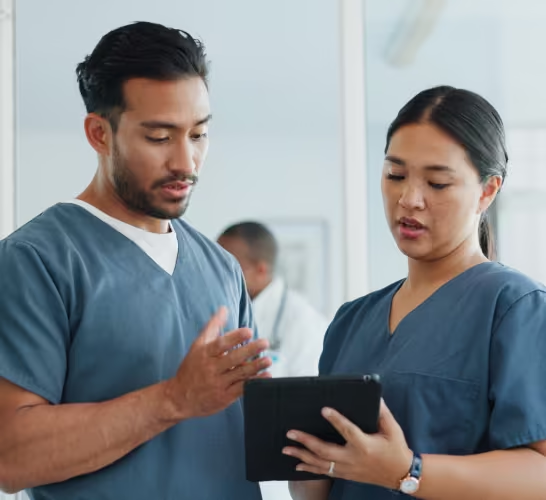
Ask any nurse what they spend their shift doing, and documentation will land somewhere near the top of the list. A 2025 study published in JMIR Nursing found that nurses spend an average of 31% of a 12-hour shift documenting in flowsheets alone, and that's before accounting for narrative notes, handoffs, or the charting that spills over after a shift ends.
That number tells us something important: nursing documentation isn't a smaller version of physician documentation. It's a fundamentally different workflow challenge. And as ambient AI adoption moves from providers to nurses, the vendors, health systems, and clinical leaders who recognize that difference are the ones who will thrive.
We sat down with Kelum Fecht, Enterprise Sales Director at Commure and a nurse by training, to talk about what makes nursing documentation distinct, where ambient AI can move the needle, and what it actually takes to build a solution that works.
Documentation doesn't clock in and out
When a physician sees a patient, the documentation work is concentrated around a 20- to 30-minute encounter with some pre- and post-charting on either side. Nursing doesn't work that way.
"In a 12-hour shift, that burden is there constantly," Kelum told us. A nurse might be caring for up to nine patients at once, returning to each one repeatedly, fielding interruptions, and capturing information across hundreds of small interactions. The frequency is higher, the conversations are more varied, and the documentation lives in flowsheets, which Kelum describes as "an Excel spreadsheet with dropdowns, radial buttons, and free text", rather than narrative notes.
That structural difference is why bolting nursing onto an existing physician ambient AI tool doesn't work. And the cost of getting it wrong shows up in places that don't always make it into the ROI deck.
"When a nurse should be checking out at 7 p.m. after a 12-hour shift, if they're not done with documentation, they're often spending another 30 minutes to an hour after handoff going back in to make sure everything's charted, and that overtime is real dollars for healthcare organizations."
This documentation bottleneck quickly becomes a retention, safety, and margin problem all at once.
Why ambient AI for nursing and why now
Health systems have tried to solve nursing documentation before. Workstations on wheels, bedside computers, mobile devices; each one promised to bring documentation closer to the point of care, but none of them addressed the underlying tension.
"Patient comes first, patient first always. So even the nurses that are most routine at being able to pull up their computer, their workstation on wheels, or whatever technology platform they have, there is still always that burden of how do I document while I'm taking care of a patient."
Ambient AI is the first technology with a credible answer: capture the conversation, generate the documentation, and let the nurse keep their eyes on the patient. The biggest immediate wins, Kelum believes, are in shift handoffs (where critical context routinely gets lost between nurses) and in admission and shift assessments (where the structure of the interaction maps cleanly to what Ambient AI can capture).
There's also a second-order benefit that mirrors what we've seen on the physician side: when clinicians narrate their care out loud, patients get more information, and nurses surface details that would otherwise stay locked in their heads.
When we asked Kelum how ambient AI changes what it means to be a nurse over the next three to five years, his answer reframed the question:
"It doesn't change anything because it makes nursing what it's always meant to be. What we as nurses always learn is to care for the patient, understand the patient, and be an advisor to the patient. Ambient AI can only strengthen that because enabling nurses to spend more one-on-one time having conversations and having eye contact during their care, that's what nursing was a hundred years ago, before EMRs and all this technology was thrown in front of us."
The integration problem most vendors haven't solved
Generating a note from a recorded conversation has become table stakes. What hasn't is generating the right documentation in the right place inside the EHR, especially for nursing.
"Generating a note is easy. Generating a high-quality note is challenging."
Physician notes can often be written back through a handful of API fields. Nursing flowsheets are a different beast: structured grids, discrete data elements, and EHR-specific quirks. Any vendor serious about nursing ambient AI has to engineer for all of them and engineer it deeply enough that the integration holds up across shift changes, edge cases, and the realities of a 12-hour day.
That's why we're co-developing Commure's ambient AI for nursing alongside health systems rather than shipping a finished product and asking nurses to adapt. The workflows that matter are best designed with nurses at the table, not after the fact.
Beyond documentation
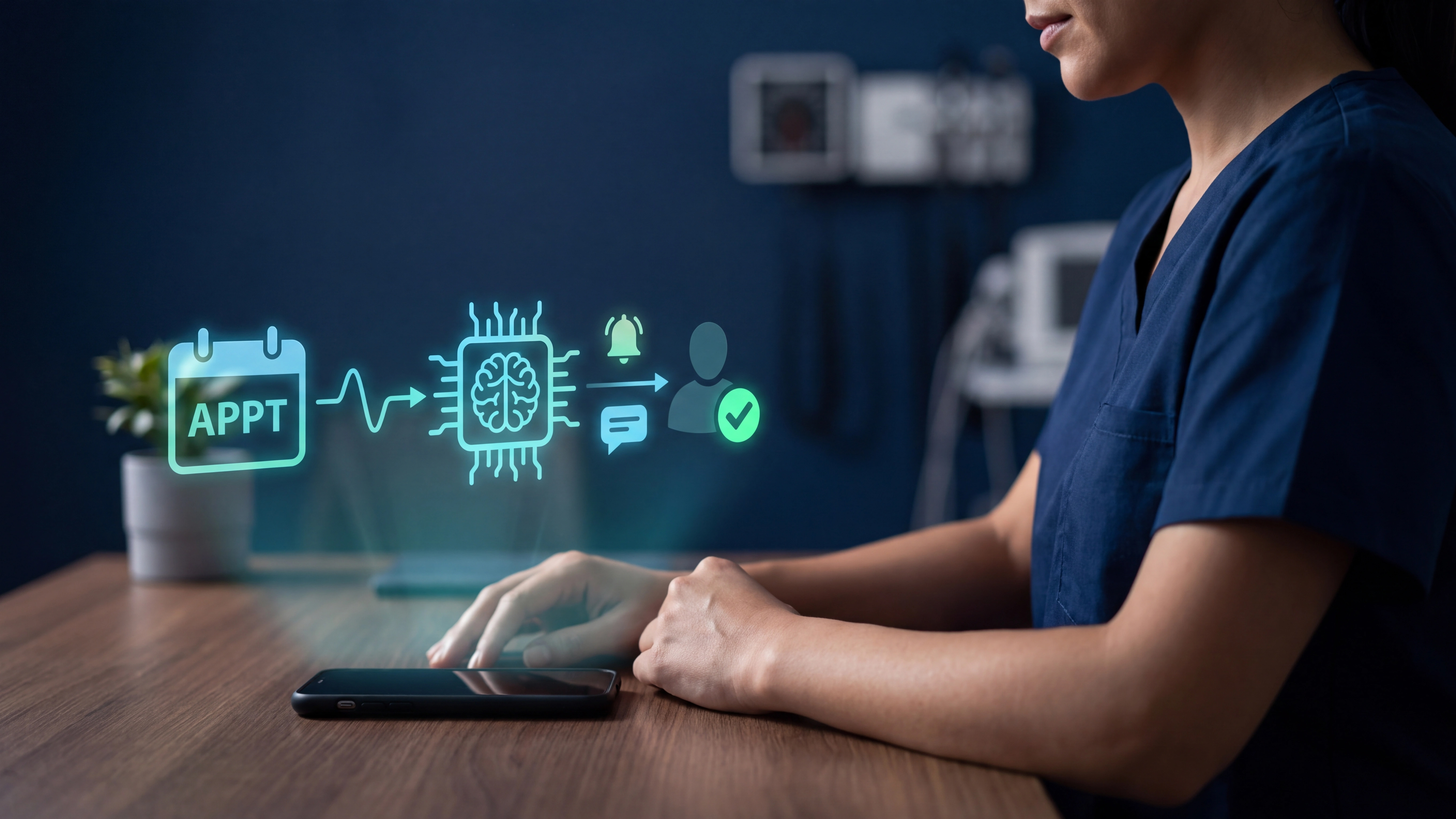
The same ambient layer that captures a conversation can power smart prompts, what we at Commure call CareCues (such as a reminder to follow up on a wound check), surface relevant orders a nurse hasn't seen yet (such as an MRI scheduled for a patient she's caring for), and automate communication between care team members who today rely on chasing each other down.
The throughline is the same one that drew Kelum to this work in the first place: give nurses back the time and attention that documentation has been quietly taking from them, and let them do the job they trained for.
Want to see what ambient AI for nursing looks like in your environment? Book a demo with the Commure Ambient AI team.
Share this story



.png)


.jpeg)