




Ambient AI has the potential to give clinicians something many of us thought we had lost: time.
Time to look patients in the eye instead of the computer screen, to think more carefully about clinical decisions, or to finish a shift without hours of documentation waiting at the end. But like any clinical tool, the value you get from ambient AI depends on how you use it.
As a hospitalist who uses ambient AI regularly, one lesson has become clear: the quality of the note is only as good as the input we provide. It’s not enough to press “record” when you walk into the room and stop when you leave. The best results come when you institute a few minor changes to your workflow to more fully take advantage of the power of ambient AI technology. Here are five simple habits that can dramatically improve the quality, accuracy, and completeness of AI-generated clinical notes.
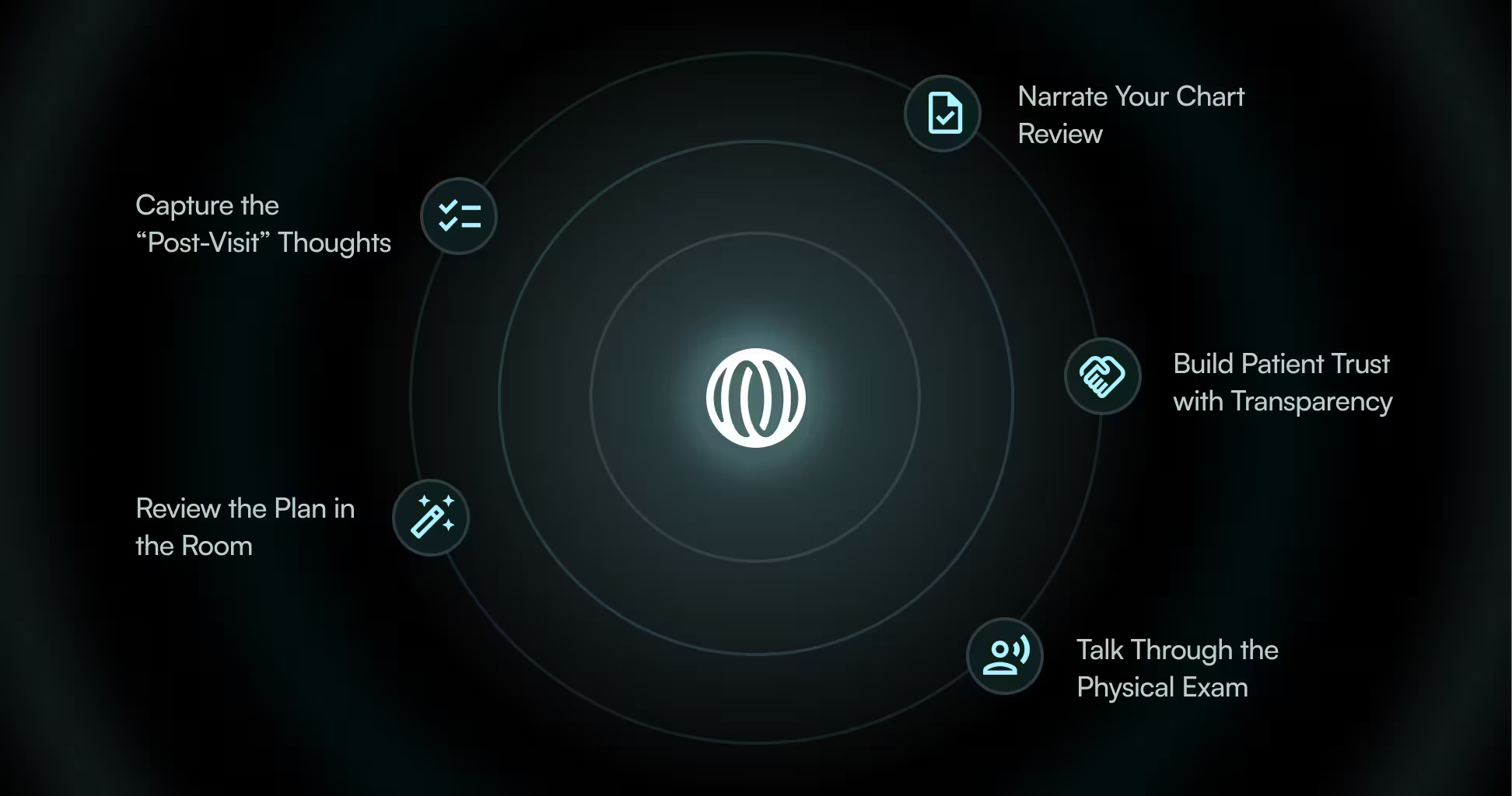
1. Narrate Your Chart Review
The documentation process doesn’t start when you enter the patient’s room. Before I step inside, I start recording while reviewing the patient’s chart in the EHR. As I scan labs, imaging, and medications, I verbalize the relevant findings.
For example: “Patient admitted with pneumonia. White blood cell count trending down. Chest X-ray shows improving consolidation. Currently on ceftriaxone and azithromycin.”
This helps the AI capture the clinical context—the why behind the visit—before the patient conversation begins. It often produces a stronger HPI and clinical background without any extra work later.
2. Builds Patient Trust with Transparency
Patients are generally curious about the technology when they see it. Even if consent is already documented, I always ask for verbal permission at the start of the encounter and briefly explain what the tool is doing.
Something simple works well: “I use a tool that records our conversation and helps generate my clinical note so I can focus on our conversation instead of typing. Is that okay with you?”
Patients almost always appreciate the explanation. More importantly, they understand why I’m able to maintain eye contact instead of staring at a screen. Transparency turns the technology into a trust-building moment rather than a distraction.
3. Talk Through the Physical Exam
One habit that improves both documentation and patient understanding is thinking out loud during the physical exam. For instance: “Your heart sounds are normal. I’m hearing a little wheezing in the right lower lung.”
This approach accomplishes two things simultaneously. It keeps the patient informed and it gives the AI clear, structured data for the physical exam section of the note. Instead of trying to reconstruct the exam later, the documentation writes itself in real time.
4. Review the Plan in the Room
One of the most common causes of patient messages after discharge is simple confusion about the plan. To prevent this, I walk through the assessment and plan with the patient, and often their family, before the visit ends. Discussing the next steps out loud provides clarity for patients and allows the AI to capture a thorough plan directly from the conversation.
When done well, the plan section of the note is already complete when the visit ends.
5. Capture the “Post-Visit” Thoughts
Sometimes there are elements of clinical reasoning you may prefer not to discuss in detail while the patient is present. In those situations, I simply keep the recording running for about 30 seconds after leaving the room and dictate a quick summary of my thinking.
This brief “brain dump” captures the medical decision-making while it’s still fresh and ensures the cognitive work behind the plan makes it into the note.
Better Input, Better Output
When clinicians first adopt ambient AI, the instinct is to treat it like a passive recorder.
In practice, the technology works best when clinicians actively narrate the clinical encounter. With a few simple habits—verbalizing chart review, explaining findings, and summarizing plans—you can dramatically improve the output while simultaneously enhancing the experience for patients.
Because of these minor changes to my workflow, when I walk out of the exam room the patient is more informed as to their clinical situation and plan of care. And I have a clinical note that is 95% complete. That means less time documenting, and more time face-to-face with my patients.
Share this story


.png)


.png)