



Best EHR for Mental Health Private Practice (2026) Guide
Seven EHRs purpose-built for behavioral health private practice, compared on therapy note formats, telehealth, prescribing, and the add-on costs vendors rarely advertise.
Written by the Commure Scribe Team
Published: April 17, 2026
•
14 min read
Updated April 17, 2026
Seven electronic health records (EHRs) rank as the best for mental health private practice in 2026. SimplePractice, TherapyNotes and ICANotes are built for therapy. Each lists a flat monthly price under $100 for non-prescribing clinicians, from $45 for ICANotes part-time. AdvancedMD, Tebra and CureMD suit groups that need integrated billing and prescribing. CharmHealth offers a free plan below 50 encounters a month.
What You Need to Know About the Best EHR for Mental Health Private Practice
- This guide covers private-practice behavioral health: therapists, psychologists, psychiatrists, LCSWs, and APRNs in independent settings. For general small-practice EMRs, see Best EMR for Small Practice.
- Solo pricing spans $49/mo at SimplePractice¹; CureMD does not publish rates, but industry estimates place its EHR near $195–$295 per provider per month depending on modules².
- These 7 platforms are purpose-built for behavioral health workflows: therapy note templates, telehealth, prescribing controls, and HIPAA confidentiality compliance.
How Do the 7 Best Mental Health EHRs Compare?
The table below compares each mental health EHR on practice-size fit, note formats, telehealth, prescribing, and published starting price. Starting prices are list prices from each vendor's pricing page and change often. Confirm current figures on each vendor's site before buying.
Three patterns stand out across these mental health EHR platforms. The therapy-native trio, SimplePractice, TherapyNotes, and ICANotes, publish flat monthly prices under $100 for non-prescribing clinicians.
The medical-grade platforms, AdvancedMD, Tebra, and CureMD, price per provider and climb fast as modules stack. CharmHealth sits apart among EHR for mental health options with a free entry tier that converts to paid pricing as encounter volume grows⁹.
What Are the Best EHRs for Mental Health Private Practice in 2026?
The best EHRs for mental health private practice in 2026 are SimplePractice, TherapyNotes, ICANotes, AdvancedMD, Tebra, CharmHealth, and CureMD. Each mental health EHR profile leads with what the platform does well. Honest limits for a therapy practice follow.
1. SimplePractice
SimplePractice is a cloud mental health EHR built for private practice. The vendor reports 250,000+ private practice clinicians on the platform.
This EHR for mental health bundles scheduling, notes, billing, telehealth, and a client portal in one login. Plans start at $49/mo Starter, $79/mo Essential, and $99/mo Plus¹.
What Works:
- Easy start. Onboarding is built for solo clinicians without IT support.
- Video included. Telehealth comes with all plans and launches from the calendar¹.
- Client experience. The portal handles intake forms, self-scheduling, and payments.
Limitations:
- Claims are gated. The Starter plan does not file electronic claims. Essential includes 10 free claims a month and Plus includes 35, then per-claim fees apply¹.
- AI notes cost extra. The Note Taker add-on runs $35/mo per clinician¹.
- Standalone by design. Third-party interoperability is limited.
For practices using SimplePractice that also want AI documentation, see the best AI scribes for SimplePractice.
2. TherapyNotes
TherapyNotes is a notes-first behavioral health EHR for solo and small group practices. As a mental health EHR, it puts note quality before everything else.
Solo pricing runs $69/mo⁵. Group practices pay $79/mo for the first clinician plus $50/mo per added clinician⁵. Its template library covers individual therapy, group therapy, family sessions, and psychiatric evaluations.
What Works:
- Guided notes. Templates walk clinicians through behavioral health structure, not free-text boxes.
- Billing depth. Psychotherapy CPT support with claim tracking. Non-clinical staff accounts are unlimited on group plans⁵.
- Prescriber-ready. eRx is included for prescribers, and basic telehealth is included.
Limitations:
- Add-ons stack. Premium telehealth costs $15/mo per clinician. The TherapyFuel AI add-on runs $40/mo per clinician⁵.
- Per-claim fees. Electronic claims, ERAs, and eligibility checks bill at 14 cents each⁵.
- Small-team reporting. Multi-site groups will outgrow it.
3. ICANotes
ICANotes is a behavioral health EHR with one of the deepest template libraries in the specialty. The menu-driven engine of this mental health EHR assembles narrative notes from clicks.
Non-prescriber plans start at $45/mo part-time and $75/mo for a full EHR⁶. Prescribers pay $213/mo plus a one-time $99 activation fee⁶.
What Works:
- Template depth. Coverage spans psychiatric evaluations, therapy progress notes, and group notes.
- Prescriber bundle. The prescriber plan includes eRx, lab ordering, and medication tracking⁶.
- Published discounts. Group, nonprofit, and new-practice pricing is listed, not negotiated⁶.
Limitations:
- Steeper learning curve. The interface reflects its clinical depth.
- Note caps. Prescriber plans include up to 100 notes per month⁶.
- Interface style. Clinicians used to newer web apps may find it slower at first.
4. AdvancedMD
AdvancedMD is an all-in-one EHR for mental health, practice management, and billing with a dedicated mental health edition. It is one of the few large vendors with a behavioral health EHR edition for 1–3 providers.
Pricing starts at $130/mo per provider for small mental health practices⁷. Large or group mental health practices start at $399/mo⁷.
What Works:
- One system. A single application, database, and login covers charting, scheduling, and billing.
- Prescriber support. eRx and controlled-substance prescribing are built in.
- Room to grow. A small group can scale into multi-site management without switching.
Limitations:
- Modules add up. AI tools run $100/mo per provider or 99 cents per encounter⁷.
- Billing service cost. Managed billing prices at 4–8% of collections⁷.
- Setup load. Setup takes more work than therapy-native tools.
For practices using AdvancedMD that also want AI documentation, see the best AI scribes for AdvancedMD.
5. Tebra
Tebra, formerly Kareo, is a general EHR that mental health practices adapt rather than a therapy-native system. It combines clinical notes, billing, and patient marketing for independent practices. Pricing ranges from $49 to $799 per provider per month depending on modules⁸.
What Works:
- All-in-one scope. EHR, billing, scheduling, and reputation management share a single login.
- AI drafting. Built-in note drafting speeds charting, and eRx with EPCS is supported.
- Low-volume pricing. Practices submitting 100 or fewer claims a month pay less⁸.
Limitations:
- Shallower templates. Clinical notes run thinner than behavioral-health-focused platforms.
- Opaque quotes. The published range is wide, and the real figure depends on a sales-configured bundle⁸.
- Generalist roadmap. Behavioral health is one of 45+ specialties⁸, not the design center.
6. CharmHealth
CharmHealth is a modular cloud EHR for mental health and several other specialties, including psychiatry. Practices add just the modules they need.
Small practices with fewer than 50 encounters a month can use the free plan⁹. Past that threshold, the account auto-upgrades to paid encounter pricing⁹.
What Works:
- Free entry tier. A new practice can start at no software cost⁹.
- Prescribing reach. Its eRx connects to a 70,000+ pharmacy network, with LabCorp and Quest links.
- Flexible video. Charm Telehealth supports multi-user sessions, useful for family work.
Limitations:
- Growth costs. Per-provider pricing applies as volume rises. Non-physician providers list at $200/mo⁹.
- AI scribe add-on. Charm AI Scribe costs $125/mo per provider, or $2 per encounter with a $20 monthly minimum⁹.
- Template setup. Behavioral health formats take more setup work than therapy-native tools.
7. CureMD
CureMD is a cloud EHR, practice management, and billing platform covering 30+ specialties, per the vendor². Psychiatry and behavioral health EHR workflows are part of that set. The vendor reports 109,000 users across 50 states².
CureMD does not publish rates; industry estimates place the EHR near $195–$295 per provider per month depending on modules². Billing services price at a percentage of collections².
What Works:
- Prescriber tooling. Condition-specific templates, smart order sets, and eRx with EPCS.
- Clean-claim focus. An integrated clearinghouse and AI claim review target denial-prone claims.
- Scale path. The platform spans solo practices through large multi-site groups.
Limitations:
- Highest estimated entry price. At an estimated $195+/mo per provider per published industry figures², it is the costliest platform on this list for a solo therapist.
- Shared roadmap. Behavioral health competes with 30+ other specialties for features.
- Format gaps. DAP and BIRP formats take template customization.
What Makes an EHR Different for a Mental Health Private Practice?
A mental health EHR has to chart, bill, and protect records in ways general medical software does not. Therapy notes follow formats like DAP, BIRP, and SOAP rather than problem-oriented medical notes.
Billing runs on psychotherapy CPT codes, such as 90837 for a 60-minute session, not standard office-visit codes. CPT codes update every year, so confirm current editions before billing. Out-of-network therapists can hand clients a superbill template that carries these CPT codes for direct reimbursement from their insurer.
Confidentiality rules also cut deeper. HIPAA gives psychotherapy notes a separate, stricter shield when they are kept apart from the rest of the record³.
Practices that treat substance use disorders may also fall under 42 CFR Part 2, a federal rule with its own consent demands⁴. Consent and confidentiality requirements vary by state, so check your state's specific rules.
Measurement-based care adds one more layer. Screening tools like the PHQ-9 and GAD-7 should score inside the chart, not on paper.
A general EHR can be bent to fit these needs. Each mental health EHR compared below was built or adapted for them. That is why pricing, note formats, and add-on costs get equal weight in this comparison.
How Were These Mental Health EHRs Evaluated?
Each mental health EHR was scored on five criteria that map to how a therapy practice runs. The criteria favor what a solo or small group practice can check before signing a contract.
The five criteria:
- Behavioral health note formats. Native templates for DAP, BIRP, and SOAP notes, treatment plans, and psychiatric evaluations. Generic medical templates scored lower.
- Telehealth. Built-in, HIPAA-supportive video that launches from the calendar. Extra fees for video, or for a premium video tier, are flagged.
- eRx and EPCS. Electronic prescribing, including controlled substances, for practices with prescribers. Therapy-focused practices can skip this line.
- Billing fit. Support for psychotherapy CPT codes, claim submission, and ERA tracking. Per-claim fees count toward real monthly cost.
- Price transparency. Published prices and self-serve trials scored higher than sales-gated quotes. Hidden add-on fees get their own section below.
Prices for each EHR for mental health in this comparison come from the vendor's published pricing page. Vendors change pricing without notice, so confirm current figures before buying. Where a vendor publishes no figure, the profile says so rather than guessing.
No mental health EHR won on each line. The profiles flag trade-offs. Match the EHR for mental health work to your caseload, payer mix, and prescriber count.
What Hidden Costs Do Mental Health EHRs Carry?
The advertised mental health EHR price is rarely the real monthly price. Four add-on categories drive the gap, and each varies by vendor.
The figures below come from vendor pricing pages. They change without notice.
- Telehealth add-ons. Basic video may be included while the premium tier costs extra. TherapyNotes lists premium telehealth at $15/mo per clinician⁵. SimplePractice includes telehealth on all plans¹. Check what "included" means at each vendor.
- Per-clinician fees. Group pricing scales by seat. TherapyNotes adds $50/mo per added clinician⁵. CharmHealth lists non-physician providers at $200/mo on its provider plan⁹. A three-clinician group should price the third seat.
- AI note add-ons. AI progress notes are usually a paid layer, not a plan feature. SimplePractice's Note Taker runs $35/mo per clinician¹. TherapyNotes' TherapyFuel costs $40/mo per clinician⁵. Charm AI Scribe lists at $125/mo per provider or $2 per encounter⁹. AdvancedMD bundles AI tools at $100/mo per provider or 99 cents per encounter⁷.
- Claims and billing fees. Per-claim charges follow caseload. TherapyNotes bills 14 cents per electronic claim, ERA, and eligibility check⁵. SimplePractice caps free claims at 10 on Essential and 35 on Plus, then charges per claim¹. Managed billing at AdvancedMD prices at 4–8% of collections⁷.
A worked mental health EHR example shows the stakes. A solo prescriber on a $69/mo plan⁵ who adds premium telehealth and an AI note layer can roughly double the monthly software bill. Price the setup you will run, not the entry tier.
How Do You Choose and Switch With Minimal Disruption?
Run a structured trial of each mental health EHR before signing, then plan the migration in phases. Most platforms on this list offer a free trial or demo. That is enough to test the workflows that matter.
Use this checklist during the trial:
- Write one real note in each format you bill. Draft a DAP note, a BIRP note, and an intake. Time each against your current tool.
- Score a Patient Health Questionnaire-9 (PHQ-9) and Generalized Anxiety Disorder-7 (GAD-7) inside the chart. Scores should trend over time and flow into the note. Both instruments are public domain, so no licensing fee should apply.
- Test psychotherapy note separation. Ask the vendor to show where psychotherapy notes sit apart from the general record. HIPAA's stronger protection applies when they are kept separate³.
- Submit a test claim with a psychotherapy CPT code. Confirm the platform handles add-on codes and the telehealth modifiers your payers want.
- Price the full setup. Add the telehealth tier, AI notes, claims volume, and each clinician seat before comparing totals.
- Ask about data export. Confirm you can export client records in a usable format if you leave.
For the EHR for mental health switch itself, run both systems in parallel for a short period. Move active clients first. Archive closed charts on a slower track.
Schedule the cutover for your lightest week, and tell clients before portal links change.
Practices with prescribers should also confirm EPCS identity-proofing timelines. Re-enrolling can take longer than the software setup itself.
Where Does Commure Scribe Fit Alongside a Mental Health EHR?
Commure is not an EHR vendor, so this comparison carries no self-ranking stake. Commure Scribe is an AI medical scribe that works alongside the EHR a practice already uses, including every platform on this list, so the EHR decision and the documentation decision can be made separately.
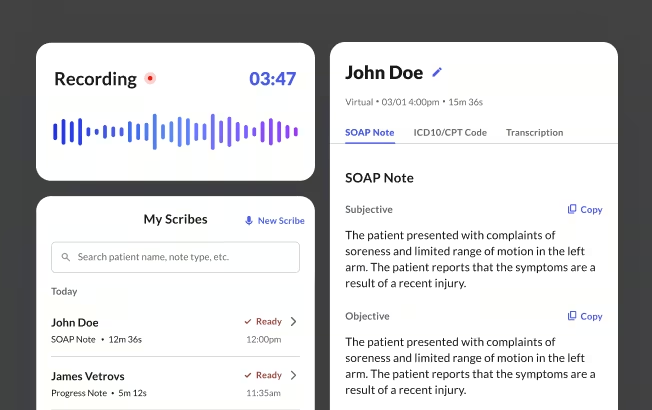
The workflow is Capture, Edit, Finalize. After End Recording, a structured Subjective, Objective, Assessment, Plan (SOAP) note appears within seconds, with suggested ICD-10 and CPT codes generated. The clinician always has the option to review before finalizing, which for therapy is where risk language and session content get confirmed. During the session, the clinician can put down the computer and actively listen.
Commure Scribe offers 60+ EHR integrations; solo and small practices (1–5 providers) move notes by copy/paste, and medium and large groups can access one-click sync. Verified integrations include three platforms reviewed above: AdvancedMD, SimplePractice, and Tebra. Pricing is published at $89/mo (most up-to-date pricing), or $59/mo billed annually, for solo and small practices, with custom pricing for groups. It is HIPAA compliant and System and Organization Controls 2 (SOC 2) certified, with onshore data storage.
The 7-day unlimited trial needs no credit card, so it can run inside the same window as an EHR trial. Clinicians can try Commure for psychiatry against a real week of sessions. For more, see the guides to AI therapy notes and the best AI scribe for psychiatry. For a ranked breakdown across specialties and practice sizes, see the AI medical scribe pillar and the best AI medical scribes guide.
This article is for informational and educational purposes only, does not constitute legal, medical, or professional advice, and does not guarantee compliance with HIPAA, 42 CFR Part 2, or any payer's billing requirements.
Frequently Asked Questions
Many independent therapists and small groups use SimplePractice or TherapyNotes, two mental health EHRs built for private practice. SimplePractice reports 250,000+ private practice clinicians, per the vendor. Both pair therapy note templates with billing and telehealth. The best EHR for mental health private practice still depends on prescriber needs and payer mix.
Mental health EHR pricing starts at $45/mo for a part-time non-prescriber at ICANotes.⁶ CureMD is the highest-cost option here, with industry estimates near $195–$295/mo per provider and rates available by quote only.² Add-ons raise the real total. SimplePractice's AI notes cost $35/mo per clinician.¹ TherapyNotes charges $40/mo per clinician for its AI notes.⁵ Premium telehealth or per-claim fees stack on top.
Mental health EHRs typically sell AI progress notes as a paid add-on rather than a base feature. SimplePractice's Note Taker costs $35/mo per clinician.¹ TherapyNotes' TherapyFuel runs $40/mo per clinician.⁵ Charm AI Scribe lists at $125/mo per provider.⁹ Review each AI draft before it enters the record.
Yes, one EHR for mental health on this list has a free tier. CharmHealth publishes a free plan for practices with fewer than 50 encounters a month, which auto-upgrades to paid pricing past that volume.⁹ Most other vendors offer time-limited free trials instead. Budget for paid software once a caseload becomes steady.
Most behavioral health EHR platforms on this list support outcome measures, and both instruments are public domain. Support depth varies: some score and trend results inside the chart, others store a PDF. Test scoring during the trial using the checklist above, since measurement-based care depends on trended results.
Sources
- SimplePractice. Pricing and Plans. https://www.simplepractice.com/pricing/.
- CureMD. EHR EMR Pricing. https://www.curemd.com/price.asp.
- U.S. Department of Health and Human Services. HIPAA Privacy Rule. https://www.hhs.gov/hipaa
- U.S. Department of Health and Human Services, Office for Civil Rights. Understanding Confidentiality of Substance Use Disorder (SUD) Patient Records or "Part 2." https://www.hhs.gov/hipaa/part-2/index.html
- TherapyNotes. Pricing Plans. https://www.therapynotes.com/pricing/.
- ICANotes. Pricing. https://www.icanotes.com/pricing/.
- AdvancedMD. Software Pricing. https://www.advancedmd.com/software-pricing/.
- Tebra. Pricing. https://www.tebra.com/pricing.
- CharmHealth. EHR Pricing. https://www.charmhealth.com/ehr/ehr-pricing-us.html.
- Office of the National Coordinator for Health Information Technology. What is the difference between an EMR and an EHR? https://www.healthit.gov/faq/what-difference-between-electronic-medical-records-and-electronic-health-records
.jpeg)
.jpeg)
.jpeg)

.jpeg)