



Free Letter of Medical Necessity Template (With Example)
A section-by-section breakdown of every field, step-by-step filling guidance, and the compliance requirements clinicians need to know before submitting.
Written by the Commure Scribe Team
Published: June 13, 2026
•
4 min read
A letter of medical necessity is a signed statement from the treating provider. It tells a payer why a treatment, medication or device is clinically needed. Its nine sections start with provider and patient details, plus letter and service dates. Next come the diagnosis with its International Classification of Diseases, Tenth Revision (ICD-10) code and the requested treatment. The medical justification, prior treatments tried, expected duration and frequency, and the provider's signature with credentials follow. It supports coverage requests, prior authorization and health savings account or flexible spending account reimbursement.
What You Need to Know About a Letter of Medical Necessity
- A letter of medical necessity is a formal provider statement explaining why a specific treatment is medically required.
- Practices complete an average of 39 prior authorization requests per physician per week, spending 13 hours on related paperwork¹.
- A complete letter of medical necessity template, covering diagnosis, treatment plan, and justification, reduces insurer resubmissions.
Download the Free Letter of Medical Necessity Template
Note: This template is for informational purposes only and does not constitute legal or medical advice. Have your compliance officer review it before clinical use.
- Download the Letter of Medical Necessity Template: editable DOCX, all nine required sections included
What Is a Letter of Medical Necessity and When Do You Need One?
A letter of medical necessity is a signed statement from a treating provider explaining to a payer why a particular treatment, medication, or device is clinically required for a patient. You need one whenever an insurer or benefits administrator asks for justification before covering or reimbursing a service. It is written for a payer, not for the medical record. It tells an insurer that a specific service is medically required for your patient.
Clinicians write letters of medical necessity in three situations:
- To get insurance coverage for a service the plan does not cover automatically
- To support a prior authorization (PA) request before a treatment or procedure begins
- To help a patient get reimbursed from an HSA (health savings account), FSA (flexible spending account), or HRA (health reimbursement arrangement)
The IRS requires a letter of medical necessity for some HSA and FSA expenses. Not every health expense qualifies automatically². Payers often ask for a letter of medical necessity before approving non-standard services.
The sections below explain what to put in each field of the template.
What Does a Letter of Medical Necessity Include?
A complete letter of medical necessity has nine sections. Each one gives the insurer what it needs to make a coverage decision.
Provider information. Your name, NPI (national provider identifier), practice address, phone, and fax. This tells the insurer who filed the request and how to reach you.
Patient information. The patient's name, date of birth, insurance ID, group number, and policyholder name. Check the patient's insurance card. Use the exact details from it.
Date of letter and service dates. The date you are writing the letter and the dates the treatment is planned. Missing dates are a common reason for rejection.
Diagnosis with ICD-10 code. The patient's diagnosis and the matching ICD-10 code. Be specific. A general code is less convincing than a precise condition code. ICD-10 codes are updated each year. Check that you are using the current version.
Treatment or service requested. The exact treatment, medication, procedure, or equipment. Include frequency, dosage, and duration.
Medical justification. Why this treatment is medically necessary for this patient. This is the most important section. Cite supporting clinical guidelines when you have them. Describe the patient's condition and the effect on daily function. Explain why this treatment is the right choice.
Prior treatments attempted. Any treatments already tried and why they did not work. Insurers want to see that lower-cost options were considered first.
Expected duration and frequency. How long the treatment will last and how often it is needed. A vague answer ("as needed") is weaker than a specific plan ("three times per week for eight weeks").
Provider signature and credentials. Your signature, printed name, license number, and date. The signer must be a licensed provider. They must be actively managing the patient's care.
How Do You Fill Out a Letter of Medical Necessity?
Fill out a letter of medical necessity by working through the nine sections in order, starting with the patient's file open in front of you so each field is drawn directly from the record. You will need their insurance card, diagnosis codes, and any prior treatment records. Much of this detail is first captured on patient intake forms, so a complete intake record makes filling out the letter faster.
Step 1: Fill in the header fields first. Copy the patient's name, date of birth, and insurance ID exactly from their card. A transposed digit or missing group number is a common reason for rejection.
Step 2: Enter the diagnosis and ICD-10 code. Use the most specific code for the patient's condition. Only use an unspecified code when no specific code exists. Check that the code is from the current ICD-10-CM edition.
Step 3: Describe the requested treatment clearly. Name the exact treatment, drug, procedure, or equipment. State the frequency and duration. "Physical therapy, three times per week for eight weeks" is clearer than "physical therapy as clinically indicated."
Step 4: Write the medical justification. This section carries the most weight. Include:
- The patient's diagnosis and key clinical findings
- The effect of the condition on daily function or health
- Why this treatment is the right choice
- Supporting clinical guidelines
- Why alternatives are not suitable for this patient
Step 5: List any prior treatments. Name each treatment tried, the dates, and why it did not work. Insurers often ask for this before they approve higher-cost options.
Step 6: Add expected duration and frequency. Be specific. A defined plan is easier to approve than an open-ended one.
Step 7: Sign and date the letter. Print your name, include your NPI and license number, and date the letter. Do not backdate.
What Are the Compliance Requirements for a Letter of Medical Necessity?
The compliance requirements for a letter of medical necessity span five areas: HIPAA privacy rules, HSA and FSA reimbursement standards, prior authorization and Centers for Medicare & Medicaid Services (CMS) timelines, state-specific rules, and document retention. Because a letter of medical necessity contains PHI (protected health information), HIPAA rules govern much of how you handle it. PHI is health information linked to a patient's identity. HIPAA rules apply to how you write, store, and send it. Reviewing your safeguards against a HIPAA compliance checklist helps confirm you are handling this PHI correctly.
HIPAA minimum necessary standard. Only include information relevant to the coverage request (45 CFR 164.502). Do not include clinical details that are not related to the requested treatment. Handle PHI in the letter like any other part of the medical record. See our HIPAA compliant checklist for more information.
HSA and FSA reimbursement. Some health expenses do not qualify as medical expenses without a letter of medical necessity². Your patient's plan administrator may have its own format requirements. Check with them before submitting.
Prior authorization and CMS rules. For Medicare Advantage and Medicaid plans, the payer must send a decision within 7 calendar days for standard requests. For urgent requests, the deadline is 72 hours. This is required under CMS-0057-F (published January 2024; payer compliance deadline January 1, 2026)³. A complete letter of medical necessity supports faster review.
State variability. Some states have rules about what a letter of medical necessity must include or how it must be submitted. Requirements vary by state. Check your state's guidelines before you send the letter.
Document retention. Letters of medical necessity are part of the medical record. State law governs how long medical records must be kept. Check your state's requirements before disposing of these records.
This template is designed with HIPAA and CMS requirements in mind. Have your compliance officer review it before use.
How Commure Scribe Works With Your Letter of Medical Necessity
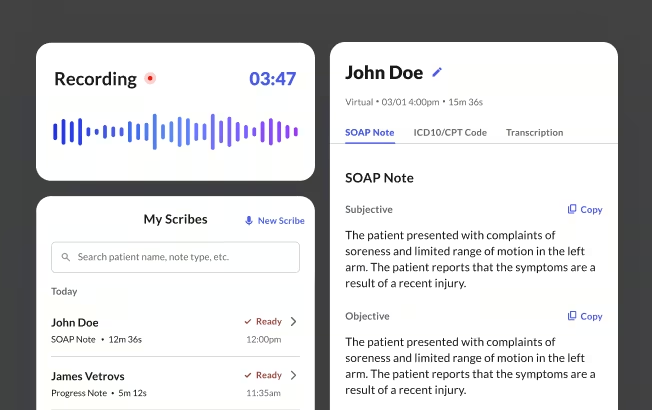
The strength of a letter of medical necessity rests on the clinical record behind it: the diagnosis, the key findings, the prior treatments tried, and the effect of the condition on daily function. Commure Scribe captures that encounter as it happens and generates a structured note, so the visit detail that justifies the request is documented accurately while it is fresh, not reconstructed later from memory.
That note becomes the source you draw on when you fill out the medical justification and prior-treatments sections of the template. Scribe also surfaces suggested ICD-10 and CPT codes from the encounter, which gives you a starting point for the diagnosis field. To be clear, Scribe documents the visit. It does not auto-generate the legal letter. You still write and sign the letter, but you start from a complete record rather than a blank page.
90%+ of providers using Commure Scribe reduce clinical documentation time and digital fatigue. The complete guide to AI medical scribes covers how the technology works and what to look for when choosing a tool.
This article is for general informational and educational purposes only. It does not constitute legal, medical, or professional advice and does not guarantee compliance. Requirements vary by state, payer, and clinical setting and can change over time. Verify current details with your own compliance officer, legal counsel, or the relevant authority before relying on this information.
Letter of Medical Necessity Template Download
Download a copy of this template
Thanks! Your letter of medical necessity template is ready.
Click below to download.

Frequently Asked Questions
A complete letter of medical necessity covers nine sections. These include provider information, patient demographics, the diagnosis with ICD-10 code, and a signed provider statement. The medical justification carries the most weight. It explains why the treatment is clinically appropriate for this patient.
A letter of medical necessity must be written and signed by a licensed healthcare provider who is actively managing the patient's care. Depending on the insurer or program, eligible signers may include: Physicians; Nurse practitioners; Physician assistants; Other licensed clinicians. Check with the specific payer for their provider eligibility requirements.
No. A letter of medical necessity supports a coverage or reimbursement request; it does not guarantee approval. Insurers evaluate the letter against their own coverage criteria and clinical policies. A well-documented letter of medical necessity with specific ICD-10 codes and prior treatment history improves the likelihood of approval.
This template covers the core elements required by most insurers. Individual payers may have additional format or content requirements. Check with each payer before submitting. Clinical details and medical justification language should be customized for the specific patient, condition, and treatment being requested.
A prior authorization is a request for advance approval from an insurer before a treatment begins. A letter of medical necessity is a clinical document that supports that request. Many prior authorizations require a letter of medical necessity as part of the submission. A letter of medical necessity can also be used independently for HSA/FSA reimbursement and insurance appeals.
Sources
- American Medical Association. “Fixing prior auth: Nearly 40 prior authorizations a week is way too many.” Tanya Albert Henry. AMA, 2025. https://www.ama-assn.org/practice-management/prior-authorization/fixing-prior-auth-nearly-40-prior-authorizations-week-way
- Internal Revenue Service. "Publication 969, Health Savings Accounts and Other Tax-Favored Health Plans." https://www.irs.gov/publications/p969.
- Centers for Medicare & Medicaid Services. "CMS Interoperability and Prior Authorization Final Rule (CMS-0057-F)," fact sheet. https://www.cms.gov/newsroom/fact-sheets/cms-interoperability-prior-authorization-final-rule-cms-0057-f