Introducing Commure Ambient for Nursing in Epic Rover
Commure Team
|
November 17, 2025
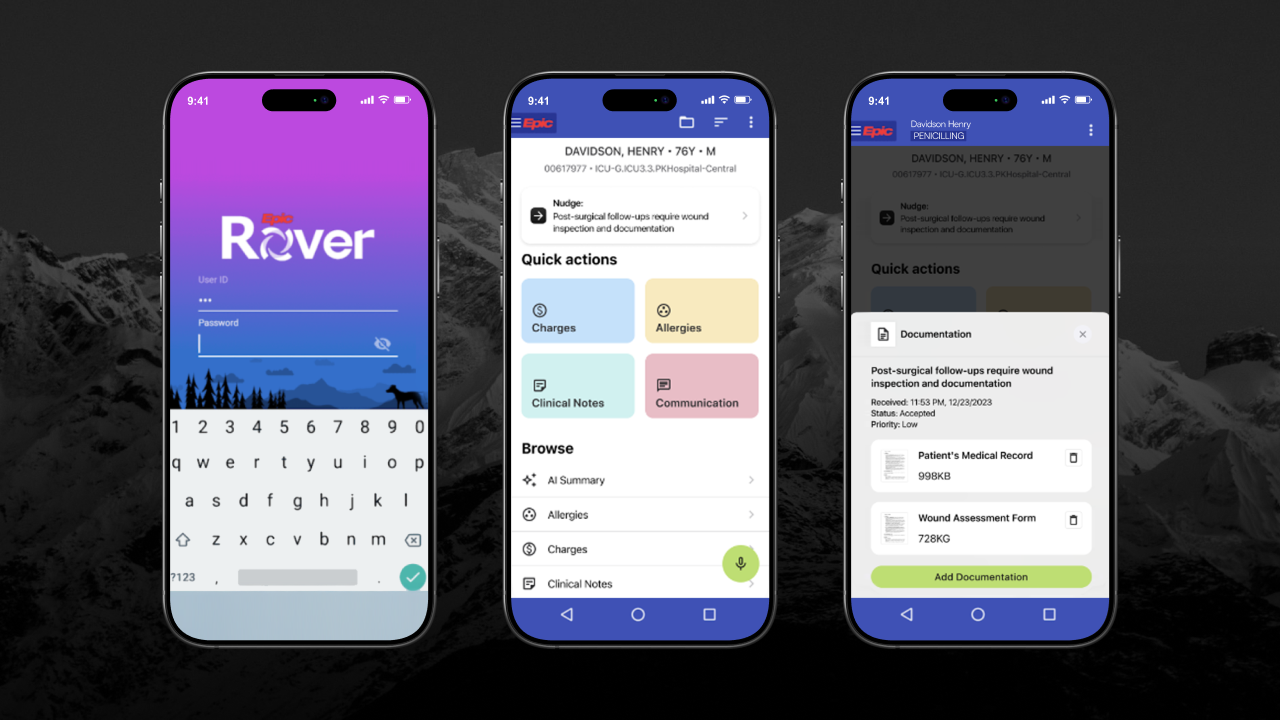
Nurses today juggle relentless documentation requirements on top of direct patient care. To help health systems reduce this burden, we are excited to share that Commure Ambient for Nursing can now be integrated as part of Epic’s Ambient Voice Recognition Toolbox, enabling a native, in-workflow ambient experience directly inside Epic Rover.
This integration allows nurses to document patient interactions simply by speaking during the encounter. Commure’s ambient AI securely captures the conversation, converts it into structured flowsheet and LDA suggestions, and surfaces it in Epic for nurse review and filing. The entire experience is embedded in Rover, so nurses stay in the tools they already use without extra steps or separate apps.
Bringing Commure Ambient into Epic Rover unlocks several advantages. Nurses can center more of their workflow around patient conversations instead of manual data entry. Structured fields populate faster and more consistently, supporting higher documentation quality. Because the experience lives directly inside Rover, organizations gain a unified workflow that reduces toggling, minimizes friction, and supports quicker adoption.
Ambient AI helps nurses reduce repetitive charting tasks and frees time for direct care, whether during admission assessments, rounding, or reviewing devices and lines. Instead of typing in the moment or catching up at the end of a shift, nurses can focus on clinical decision-making while Commure’s AI assists in the background.
With this Epic Toolbox integration, Commure can now deliver an integrated ambient experience in Epic Rover that supports accurate documentation and a more efficient, patient-first workflow.
Trademark Statement: Epic and Rover are registered trademarks of Epic Systems Corporation.
Ambient AI clinical documentation is one of the most rapidly adopted AI solutions in healthcare, proving invaluable to reduce documentation time and improve accuracy. With over 50+ ambient AI solutions in the market, hospitals and health systems are looking beyond basic functionality. They require a partner equipped to support clinical documentation across care settings and specialties, integrate deeply within MEDITECH, and extend value well beyond the note through downstream automation, structured data capture, and enterprise-grade customization designed to scale.
This is especially true in the wide MEDITECH ecosystem, where organizations of all types are turning to Commure Ambient AI: from HCA, the nation’s largest for-profit health system, to vital rural community hospitals. As a trusted MEDITECH Alliance partner, Commure Ambient AI is integrated into both MEDITECH Expanse and Expanse Now.
Commure’s position in the MEDITECH market reflects breadth of deployment and depth of experience. Commure has earned Straight A’s from KLAS for ambient documentation, was the first-to-market pioneer of the ambient AI space within healthcare, and today supports more MEDITECH providers than any other ambient documentation partner currently available.
Scale That Spans the Spectrum of Care
Commure is currently deployed across a diverse map of care settings throughout the U.S., with proven impact in deployments across inpatient and outpatient settings, and countless specialties including hospitalists, cardiology, emergency medicine, orthopedics, and more.
Enterprise Scale: We are proud to support the largest MEDITECH organizations in the U.S., including HCA Healthcare, deploying solutions that withstand the pressure of high-volume, high-complexity environments.
Regional Powerhouses: Mid-sized and regional health systems, such as DRH Health and Bethany Children’s, are utilizing our platform to standardize care and streamline operations across ambulatory and specialty departments.
Community & Rural Impact: At facilities like Val Verde Regional Medical Center, Commure is a force multiplier, allowing clinicians in resource-constrained environments to focus entirely on patients rather than screens.
Measurable Impact Across MEDITECH Organizations
The impact of Commure Ambient AI is reflected in both operational metrics and how clinicians describe their day-to-day work after adoption. Across MEDITECH organizations of varying size and complexity, the platform has delivered measurable improvements in documentation efficiency, clinician satisfaction, and care delivery.
Supporting Practice at the Top of License
By shifting the balance away from clerical work, ambient documentation allows clinicians to focus more fully on clinical judgment, patient interaction, and decision-making. At Medical City Dallas, part of HCA Healthcare’s North Texas Region, the introduction of Commure Ambient AI resulted in:
18% reduction in time spent completing histories and physicals
11% increase in H&Ps signed within one week
“I never want patients to feel like I'm rushed. This helps make sure they don’t.” — Dr. Geoffrey Burnham, Hospitalist Director, Medical City Dallas
Streamlining Longitudinal Chart Review
The operational value of Ambient AI extends beyond drafting documentation. Forward-thinking health systems are recognizing that documentation is only one component of administrative burden inside the EHR.
At Valley Health System, leadership has emphasized that information retrieval and chart navigation often consume as much time as writing the note itself.
“Of the time spent in the EHR on administrative tasks, documentation is one part of it,” said K. Nadeem Ahmed, MD, System Chief Medical Information Officer at Valley Health System. “Searching for information and reviewing the medical record consumes far more time—and cognitive burden—than simply writing the note.”
Commure delivers measurable value not merely by accelerating note creation, but by synthesizing patient context, reducing time spent navigating the record, and supporting clinical decision-making within the native MEDITECH workflow.
Improving Clinician Retention and Satisfaction
For many clinicians, documentation burden is a deciding factor in whether they remain in practice. At Pioneers Medical Center, Commure Ambient AI has helped restore sustainability to clinical work by reducing after-hours charting and cognitive load.
“I was getting to the point where I was considering changing my career because I had no life… I’m now incredibly happy. I left for a two-week vacation with absolutely nothing on the table and could walk away without any stress.” — Andrea Hazelton, Nurse Practitioner, Pioneers Medical Center
Saving Meaningful Time at Scale
Time reclaimed during the clinical day compounds quickly in high-volume environments. At Salina Regional Health Center, clinicians report measurable reductions in documentation time per encounter, translating into hours returned each week.
“The solution is super user friendly and easy to navigate. Seeing 30 patients a day, it saves around three minutes per chart—roughly 90 minutes every day. That’s time that can be spent doing something more valuable.” — Dr. David Dupy, Urgent Care Physician, Salina Regional Health Center
These outcomes reflect what happens when Commure Ambient AI is deployed with sufficient integration depth and operational rigor to be an infrastructure that clinicians can rely on.
Enhancing Note Quality and Accuracy
For regional health systems, the value of Ambient AI extends beyond efficiency. At DRH Health, adoption of Commure Ambient AI was framed as a strategic investment in elevating the standard of clinical documentation across the organization:
“Commure’s Ambient AI offers an intuitive, clinician-centered solution that eliminates administrative burden while enhancing the quality and accuracy of every note. For a regional system like ours, it’s an important investment in both our people and the patients we serve.” – Roger Neal, Vice President and Chief Operating Officer at DRH Health
Leadership teams are increasingly focused on the integrity, completeness, and clinical accuracy of the medical record, recognizing that documentation quality underpins compliance, coding precision, continuity of care, and long-term patient outcomes.
Deeply Embedded Within MEDITECH Workflows
Commure Ambient AI operates inside MEDITECH Expanse and Expanse Now, supporting the full lifecycle of clinical documentation. It spans from pre-visit context through chart completion and downstream use, without requiring clinicians to leave their native workflows.
Rather than treating the note as an isolated artifact, Commure supports the full clinical documentation lifecycle: preparation, encounter capture, chart completion, and downstream use.
Adaptive Ambient AI documentation that reflects clinical practice Providers retain control over note structure, detail, and formatting based on specialty and personal workflow. The system learns from edits over time, enabling consistency without enforcing rigid templates or standardization.
Configurable carry-forward logic to reduce redundancy User-defined rules determine what information persists across encounters and how it is presented, minimizing repetitive documentation while preserving clinical accuracy.
Inline clinical guidance during chart completion As documentation is finalized, the platform surfaces real-time Ambient CareCues for missing elements or quality considerations, supporting documentation integrity and compliance without adding external review steps.
Encounter-level coding intelligence embedded in workflow Autonomous Coding CPT and ICD-10 suggestions are generated directly from the clinical narrative, reducing downstream rework and supporting revenue integrity without increasing clinician burden.
Longitudinal patient context at the point of care AI-powered Assistant feature synthesizes information across the patient chart, allowing clinicians to query history in natural language, receive responses grounded directly in MEDITECH data, guardrail with ensembles of clinical models.
Integration Depth to Support Scale and Complexity
Commure’s integration approach is not one-size-fits-all. Depending on organizational needs, the platform leverages structured data mapping through its API (supporting discrete HPI, ROS, physical exam elements, orders, coding, clinical impressions, and filing patient instructions in A&P or problems to a document) or advanced front-end automation. Forward Deployed Engineering teams work directly with health systems, including on-site engagement when needed, to ensure reliability across complex MEDITECH environments.
The collaboration between Commure and MEDITECH demonstrates the power of uniting Silicon Valley innovation with the pioneers who created and scaled the modern EHR. We are building a future where technology is invisible, but its impact is undeniable.
For provider groups utilizing MEDITECH Expanse, big and small, the question is no longer if they should adopt Ambient AI, but who has the proven scale, security, feature-set, and deep integration to support them for the long haul.
Tell us a little bit about yourself—what do you like to do outside of work?
My name is Thiago, I’m a Brazilian software engineer based in Rio de Janeiro. Today I work as the Team Lead for the Front Office Experience team with Athelas Insights, Commure’s RCM software.
In my free time I like going to the gym, surfing, and, like any true carioca (a Rio local), spending as much time as possible at the beach. I also hang out with my friends a lot and really enjoy trying good restaurants and bars.
As a kid, what did you want to be when you grew up?
When I was a kid I wanted to be a petroleum engineer like my dad, but when I was 13 I started learning how to code and completely fell in love with it. I realized I really enjoyed the technical challenges and the process of breaking down complex problems and figuring out how to solve them.
Describe a day in the life of your role.
My day usually starts with reviewing the team’s open pull requests on GitHub, merging mine, and catching up on pending messages. After that, I block some focused time to work on tickets or make design decisions for ongoing projects. I also try to stay available to answer questions about our features and support the engineers whenever they need help. On top of that, I work closely with cross-functional teams, mainly Product and Operations, to design solutions together and align on expectations, priorities, and timelines.
What made you decide to join Commure?
I joined Athelas in June 2022 because I was looking for complex challenges that were also meaningful for society. The opportunity to help reduce bureaucracy in the U.S. healthcare system through software and AI, and ultimately lower costs for patients and clinics, really motivated me.
From my very first interactions with the company, I could tell I’d be working with a driven and collaborative team. I always say that the best part of my job is being surrounded by amazing people.
How would you describe the Commure company culture?
Commure’s culture is very focused on speed and ownership, which allows us to work across different fronts and create real impact. Before joining, I worked at a large company and realized I wanted to be in a startup environment where I could have more autonomy and responsibility.
Here, the hierarchy is very flat and any engineer is encouraged to bring ideas to improve the product and better serve our customers. That kind of proactivity and ownership is recognized and rewarded.
What advice would you give someone on their first day at Commure?
My advice would be to spend time talking to people who have been working on the product for longer to understand their motivations, goals, and how they think about our customers. Also, ask a lot of questions and stay humble, healthcare is extremely complex and it takes time to really understand the space. The important thing is not to give up!
What has been your greatest accomplishment so far at Commure?
The accomplishment I’m most proud of is building the eligibility system and the patient payment recommendation engine based on their insurance plan. Since I’m not a user of the U.S. healthcare system myself, understanding how everything worked in a different country was a huge challenge.
It took a lot of research and many iterations to get to where we are today. Seeing the product finally display detailed insurance benefits for each patient and generate smart, accurate charge recommendations that actually make sense was incredibly rewarding.
Tell us a little bit about yourself—what do you like to do outside of work?
Sometimes the simplest things are best: spending time with my wife, two daughters, and dog. Commure keeps me busy, but I’m grateful I can still prioritize quality time and silly adventures with them.
I’ve worked part-time as a singer and music educator since 2007, mostly with professional choral ensembles and the occasional collaboration with dance companies and instrumental groups. Ask me about my Grammy or Super Bowl ad for some wild stories.
I co-founded an arts nonprofit in 2015 and have loved growing the organization, which was officially recognized by California last year for 10 years of contributions to the city of San Francisco.
As a kid, what did you want to be when you grew up?
The first problem I genuinely considered tackling was criminal justice reform, which initially put me on a law track: courses at Stanford Law School, a summer at the US Attorney’s Office in Washington, D.C., and a role at a boutique law firm in San Francisco.
Growing up in rural Maryland, I saw circumstances that I wanted to change and that I came to realize were a sample of well-known, complex, systemic issues. I also realized—somewhat quickly, unfortunately—that becoming an individual practicing attorney wouldn’t give me much leverage at scale, and that the legal industry structurally disincentivized technological innovation.
So I moved into the tech startup world, first in education and now healthcare for the past decade. I’d be thrilled if I found myself with another at-bat on criminal justice in my career.
Describe a day in the life of your role.
In my role as Director of Operations, I’ve gotten to build out several functions for our RCM and Athelas Air product lines: customer support, accounts receivable, scaled account management, and churn intervention.
On any given day, my teams and I might be root-causing user frustrations, normalizing fragmented data into new alerting systems, shaping the P&L for a new market segment, or flying out to see users’ workflows in person. At the end of the day, we’re building long-term retention infrastructure while raising the bar on essential functions for today’s customers.
What made you decide to join Commure?
If I have the privilege of choosing what I do for a living, why invest my life in anything but trying to help others in the most leveraged way I can? That philosophy has led me to seek out missions to gain leverage on massive, meaningful problems.
The breadth of Commure’s mission is absurdly ambitious: from “humble” (relatively speaking) beginnings in blood diagnostics to today’s staggering suite of products across ambient AI, provider and asset safety, medical devices, pharmacy, patient engagement, RCM, EHR, and more.
If we execute, upshots include:
Business-in-a-box provider solutions to combat healthcare deserts,
Unlocking AI applications with true end-to-end data of the patient journey,
Earning a seat at the table with payers and policymakers,
Advancing direct-to-consumer, insurance-free care,
And more.
That’s impact at scale, with a proven, hungry team just getting started.
How would you describe the Commure company culture?
Commure is my third tech startup, and the fastest one yet. It’s a unique culture obsessed with getting more shots on goal on every possible surface: sometimes messy, and sometimes in need of recalibration, but the iteration is relentlessly fast for customers.
In all honesty, it’s not the right environment for everyone. But if you’re mission-driven and looking for ambiguous problems, a faster pace than feels comfortable, and outsized ownership, you'll find plenty of opportunity here.
What advice would you give someone on their first day at Commure?
Three things:
At all costs, figure out how things get done at Commure. Have 1:1s across departments and seniority levels. Shadow decision-making. Get on the board quickly with one customer-facing deliverable, no matter how ugly the process. The faster you learn, the quicker the path to real impact.
You have fresh eyes for the first week or two, and then you’ll never have them again. It’s tremendously valuable for new hires to observe, annotate, and question the status quo; it reflects how new customers experience our product, and surfaces technical and operational debt.
Set workback goals. Most new hires hit the ground running, but the best avoid tunnel vision by planning on multiple time horizons—hours AND days AND sprints AND quarters—to maximize their impact.
What has been your greatest accomplishment so far at Commure?
I’d say shifting habits in our midmarket business from resource lobbying to APIs: clear internal service layers with documented processes, SLAs, and escalation paths.
Defining protocols among eng, ops, and sales lets us build on top of reliable stacks, fund critical processes properly rather than off the side of people’s desks, and lower our default operating cortisol so true escalations carry real signal.
That, or the sheer volume of emojis I’ve added to our Slack instance.
Commure today announced Commure Pro, a fully integrated clinical intelligence platform built to help health systems increase revenue and reduce operational costs by improving physician efficiency and optimizing revenue cycle workflows.
Commure Pro brings together Commure’s AI-native capabilities—Ambient AI, Autonomous Coding, Charge Capture & Reconciliation, and Clinical Decision Intelligence—within a single experience powered by a modernized data architecture, integrating with existing EHRs to deliver patient data and advanced AI at the point of care. The result is a cohesive clinical intelligence and operations layer that improves physician efficiency and connects care delivery directly to revenue cycle workflows, including revenue integrity, charge capture, and coding.
While Commure’s solutions can be deployed independently, Commure Pro is the all-in-one, ultimate experience for clinicians. It is built for complex enterprise environments where multiple EHRs, fragmented data sources, and disconnected workflows create friction for clinicians and operational teams alike.
“We’ve built category-leading AI products across clinical documentation and revenue cycle,” said Dan Warner, President of Commure. “Commure Pro brings them together into a unified experience that bridges the complex and fragmented technology footprint of enterprise health systems.”
Commure Pro is the evolution of Commure PatientKeeper
For more than 20 years, leading health systems relied on PatientKeeper to access patient data at the point of care and capture clinical work across environments. Commure Pro builds on that proven foundation, evolving it into a modern, AI-native platform designed for today’s scale and complexity, supporting over 30 million patient encounters annually.
PatientKeeper’s deep experience with interoperability and enterprise adoption now underpins a unified architecture that simplifies a health system’s tech stack, normalizes data across EHRs and systems, and enables AI to operate consistently across the care and revenue lifecycle. This approach is already delivering measurable results for leading health systems:
Medical City Dallas (HCA Healthcare): Reduced H&P documentation time by 18% using Ambient AI, allowing providers to focus on patients rather than administrative work.
Ob Hospitalist Group: Dropped charge entry time by 83% at initial sites, with Autonomous Coding generating 85% of CPT and ICD-10 codes directly from documentation.
Leading NYC Health System: Increased average monthly charges by 20% and cut late filing denials in half by leveraging Charge Note Reconciliation.
What Commure Pro Delivers
Commure Pro aggregates Commure’s modular solutions into a single, connected workflow on top of a unified clinical data repository layer. Available across mobile and web, each capability is powerful on its own, but together they deliver maximum value:
Ambient AI Scribing: Captures complex, multi-speaker encounters, generating high-quality, specialty-aligned notes in real time.
Ambient CareCues & Clinical CoPilot:Surfaces documentation gaps, clinical insights, and context-aware prompts based on the complete patient history.
Autonomous Coding: Automatically produces CPT, ICD-10, and modifiers directly from documentation.
Charge Capture & Note Reconciliation: Continuously compares clinical notes to billing records to prevent missed charges and downstream denials.
Enterprise-Grade Interoperability: Operates across Epic, Oracle Health, MEDITECH, and mixed-EHR environments as a unified, intelligent workflow layer.
Built for the Most Complex Healthcare Environments
Commure Pro is designed for enterprise health systems that need a unified and comprehensive clinical and revenue experience across multiple EHRs.
Tell us a little bit about yourself—what do you like to do outside of work?
My name is Alex Young-Davies and I’m a Canadian product designer living in San Francisco, California. Today, my role is Product Design Lead for Athelas Air, Commure’s EMR offering. I really enjoy this position because, simply put, there is so much opportunity for modern design practices and UX improvements in the healthcare space. This is especially true when it comes to EMR software. Many of the physicians, nurses, schedulers, and staff who care for us every day are being forced to use extremely outdated software because there is simply no alternative. Having the opportunity to shape what could come next in this space is really interesting and exciting.
Outside of work, I like to keep myself busy with other active and creative activities. I’ve been an avid skateboarder since I was a kid, and I still try to get out at least once a week to learn something new or find a new park. I also genuinely enjoy digital design, so I often work on personal projects in my free time. In the last few years, I’ve been using my free time to create an icon library for digital products that is flexible and modern in appearance. Very nerdy, I know, but it brings me a lot of joy, and I love tweaking the tiny details for each pictogram.
As a kid, what did you want to be when you grew up?
When I was a kid, I dreamed about being an architect. My grandfather was an architect, so I was exposed to the craft from an early age. Looking at all his drawings of structures and people was so inspiring. As I grew up, this interest broadened, and eventually I knew I just needed to do something creative for my career. I eventually studied Industrial Design at Carleton University, which introduced me to fabrication, product development, and even a stint in lighting design. That shift toward product design is what ultimately led me to digital design, where I’ve happily stayed ever since.
Describe a day in the life of your role.
My day-to-day will often vary, but it’s usually a mix of designing, strategic problem solving, and exploration. I primarily work in Figma for UI design and determining user flows, Notion for requirements and documentation, and Cursor for building realistic prototypes.
While there is no “standard day” for me, I usually begin by doing a little bit of ideation and open exploration for whatever I’m currently working on. After this, I’ll have discussions with other individuals around the org to work through implementation challenges and plan out the future of where we want to take this modern EMR product.
When I’m not in the office, the team and I will visit real customer sites so we can talk to the people who are using our tools in their day-to-day. These days are incredibly rewarding and valuable because there’s so much to learn from watching people use the tools you design in a real clinical environment.
How would you describe the Commure company culture?
Commure’s culture is one that thrives on speed and ownership. Like many start-ups and Silicon Valley companies, the pace here is very fast, and the mentality of “fail early, fail often” is alive and well. While it can feel chaotic sometimes, it ultimately yields an ability to be much more responsive and nimble when compared to our competitors. This ability to quickly change direction and apply learnings is a fundamental differentiator for us, and is what helps us be the first to give customers exactly what they want.
In addition to the speed, Commure encourages and rewards a good combination of ownership and collaboration. While some companies require layers of management approval or universal consensus to move forward, Commure gives its employees the agency to identify opportunities and take actions on them. Think of it as side-quests. If you can highlightan opportunity that supports product and business goals, you have the agency to dive in, gather a team, and tackle it. Often, this has actually led to new features and even products that get incorporated into the main product offering.
What advice would you give someone on their first day at Commure?
In my opinion, the best way to begin your tenure at Commure is to ask questions and be a student. Given the complexity of healthcare, there is a lot of contextual knowledge that one can acquire. While it may seem daunting initially, building a really strong understanding of who it is we’re building for and what their true needs, challenges, and desires are is invaluable. There isn’t one book or document that will give you everything you need to know; it will come in time from exposure to customers and discussions with colleagues. The key here, though, is to go in with a bias towards wanting to learn and expand your understanding. There is no such thing as a bad question here, and everyone will be more than happy to help you build your knowledge.
What has been your greatest accomplishment so far at Commure?
While ‘greatest accomplishment’ feels very grandiose, I’d say the challenge I enjoyed working on the most was our EMR calendar redesign. Throughout the process of determining, first, what makes a good calendar and, second, what makes a competitive EMR calendar, I discovered that calendar UX is super interesting and unique. The greatest challenge I faced was determining how we could show lots of critical medical details on a calendar block while also reducing its size footprint by at least 50%. While this was challenging, it was so interesting to dive deep into the world of calendars and so rewarding to have real users try out my proposals and return positive feedback.
The most rewarding aspect of this experience was that it was fun. Getting to identify a real problem and take a solution from the initial proposal to implementation was an incredible learning experience. Plus, seeing some of my design work helping real people in their day-to-day life is incredibly humbling, and it motivates me to keep chipping away at the incredible opportunities that a modern EMR presents.
Interested in a career building the next generation of healthcare technology powered by AI? We are always looking for talented people across our departments.
Artificial intelligence is already reducing documentation burden, streamlining coordination, and improving efficiency across clinical and operational workflows. To explore where AI is delivering real value today and where it needs to go next, Commure hosted Interdisciplinary AI Approaches to Enhance Care Coordination and Improve Outcomes, bringing together leaders from medicine, digital innovation, and applied AI:
Jean-Luc Neptune, MD (Moderator) – Executive Medical Director, Commure
Geoffrey Burnham, MD – Hospitalist Medical Director, Medical City Dallas, Envision Healthcare, HCA Healthcare
Edmondo Robinson, MD – CEO and Founder, Downeast Digital; Former Chief Digital Officer, Moffitt Cancer Center
Vikash Gupta, PhD – Senior AI and ML Solutions Architect, Amazon Web Services (AWS)
Below are the key insights leaders should focus on as AI adoption accelerates across health systems. You can view the full discussion on demand here.
AI in healthcare is real and practical today, especially for documentation and workflow automation.
Ambient tools, structured note generation, and task automation are already reducing clinical burden. As Dr. Neptune noted, “Two thirds of a provider’s time is spent in the chart and only one third of that time is actually spent with real patient direct face-to-face interaction.” Redirecting that time back to care teams is one of AI’s most immediate wins.
Take it from Dr. Burnham who’s leveraging Commure Ambient AI at Medical City Dallas, part of HCA Healthcare’s North Texas Division: “Honestly, if I didn’t have it, I’d have a hard time doing my job because of the amount of time it saves and the quality it gives me.”
Trust and transparency in models are essential for clinician adoption.
Ambient AI's success depends on clinicians' understanding what the AI is doing and why. Dr. Burnham explained how his organization builds confidence: "We implemented track changes into our notes where we can actually see what the AI added into the notes. It helps with trust, and it helps with training the model."
While ambient AI reduces documentation burden effectively, precision is critical in healthcare. As Dr. Gupta put it, "Trust is a fragile thing. In the world of AI, if your model is correct 90 percent of the time, that is a great model. In the world of healthcare, a 10 percent error rate is really bad."
A 90% accurate model forces clinicians to spend significant time correcting errors, wasting their time and eroding trust. This underscores why ambient AI solutions must be designed with healthcare-specific accuracy standards and continuous monitoring.
Change management is multi-layered and requires alignment from leadership to frontline staff.
Adoption succeeds when executive sponsorship and grassroots enthusiasm reinforce each other. Dr. Robinson captured the human side of this work: “People are not afraid of change. People are afraid of loss.” Organizations that frame AI as a tool for restoring time and reducing burden rather than replacing jobs see faster buy-in and stronger results.
EMR vendors must evolve; open standards and collaboration are critical.
Interdisciplinary AI work depends on interoperability, shared context, and real-time data availability. Closed systems slow innovation and limit value. Dr. Burham shared, “I’ve worked in EMRs where adding one line turns into 13 extra clicks. Multiply that by 20 patients… it’s exhausting.” Future-ready EMR vendors will embrace open frameworks and partner ecosystems that allow AI tools to work across workflows.
Start small, prove value, then scale; land and expand beats big-bang rollouts every time.
The panel stressed the importance of beginning with a targeted use case, measuring lift, and iterating. Continuous measurement keeps adoption honest. As Dr. Gupta said, “Ask the right kind of questions…get to a quantitative measure and that will derive some changes.”
From there, leaders can broaden the footprint of AI across service lines and functions once early wins are clear.
AI should work at the top of its license to amplify, not replace, clinical expertise.
AI’s role is to elevate clinicians by removing administrative friction and enhancing coordination, not to displace judgment. Dr. Neptune pointed to revenue integrity as one example of high-leverage impact: “If you can get your denials from 5% to 2.5%, you’re talking about fundamental impacts on the financial livelihood of the organization.”
Dr. Geoffrey Burnham added, “Clinician buy-in is key. If they see how it makes their lives easier, adoption happens naturally.
Equity and access must remain at the center of AI’s future in healthcare.
Every advancement needs to be evaluated through the lens of patient access, equitable outcomes, and care quality. Responsible leaders build governance that ensures AI closes gaps rather than widens them, particularly for historically underserved populations. Dr. Gupta underscored this sharing, “AI has the potential to bridge that gap, but only if we design for it intentionally.”
AI in healthcare is becoming a foundational capability for documentation, operational efficiency, and care coordination. The leaders who will get the most value are those who focus on trust, transparency, interoperability, and thoughtful change management while keeping equity at the center.
Want to see the full conversation, examples, and perspectives from the panel?
Healthcare innovation usually takes years. At the most recent Commure Nexus, we measured it in hours. Commure brought health system leaders together for a day of discussion on the future of healthcare. During the Forward Deployed Engineering (FDE) Roundtable, executives broke into small groups to surface persistent challenges across the entire revenue cycle, from referral intake bottlenecks to denial backlogs.
Once the discussions wrapped up, Commure’s Forward Deployed Engineering team took those insights and immediately went to work. Over the next four hours, the team built and extended real applications directly from what they heard, combining new builds with purposeful extensions of existing Commure products. Max Krueger, Head of Forward Deployed Engineering at Commure, then took the stage to walk through what the team built and how it mapped back to the challenges raised in the room. Watch Max's full keynote here, or read below for the highlights.
Front Cycle: Reducing Friction Before Care Begins
Several of the most consistent pain points surfaced early in the revenue cycle, where manual processes and fragmented information slow both staff and patients down.
One focus area was top of cycle patient admissions and referrals. Health systems currently deploy armies of staff to manually transcribe thousands of faxed PDFs into the EHR. The team deployed AI capable of rapidly ingesting unstructured faxes and converting them into structured, actionable data. Instead of staff manually reviewing long, unstructured files, the system synthesizes key information and makes it available for downstream workflows. What had previously required human interpretation at every step becomes immediately actionable for providers at the point of care.
Another recurring theme was care navigation. Patients often rely on generic tools or external search engines to understand symptoms and next steps. In response, the FDE team configured a health system–specific AI assistant that allows patients to describe concerns in natural language and receive guidance grounded in the organization’s own knowledge bases, care pathways, and clinics. From there, patients can be routed directly to appropriate locations and scheduling workflows, preserving the health system’s clinical and brand context throughout the journey.
Transparency was the third front-cycle priority. Executives emphasized the need for patients to clearly understand their coverage, costs, and next steps. The team extended Commure’s patient engagement platform to present insurance details in patient-friendly language, pre-visit + post-visit summaries, and recommend follow-ups. By delivering this information digitally and proactively, the experience shifts away from paper-heavy processes that are often confusing and easily lost.
Mid Cycle: Bringing Financial Context into the Clinical Workflow
In the middle of the revenue cycle, conversations centered on documentation and decision support during care delivery. While many attendees were already familiar with Commure’s ambient documentation capabilities, the roundtable highlighted an opportunity to surface financial and administrative context alongside clinical insights.
The FDE team extended the ambient platform with live Awareness CareCues that provide real-time visibility into patient profiles, including insurance details and checklist-driven prompts during the encounter. These cues appear directly within the ambient workflow, giving clinicians access to information traditionally buried in disparate EHR tabs or siloed in billing software.
A key use case discussed was helping providers understand where a patient is in their financial journey, such as proximity to deductible thresholds or timing considerations that may affect care planning for patient transparency. By embedding this awareness into the ambient experience, providers gain the same visibility that front desk or billing teams typically have, without disrupting the clinical interaction.
Back Cycle: Scaling Denial Management with Language Models
On the back end of the revenue cycle, denial management emerged as a universally manual and time-intensive process. The FDE team focused on how language models can be used not just to analyze individual denials, but to address them at scale.
The solution analyzed denied claims with full historical context, categorizing based on CARC and RARC codes and prior resolution patterns. Instead of guiding billers through one-off fixes, the system identifies groups of similar claims and enables bulk resubmission across entire categories. This approach shifts denial work away from repetitive, linear processing toward high-impact intervention, allowing smaller teams to resolve large backlogs more efficiently.
What This Demonstrated About the FDE Model
These weren't slide decks or mockups. These were working applications, built in four hours, aimed squarely at the P&L initiatives discussed in the round tables. As Max emphasized, these aren't static tools; they are operational starting points for precision software.
The session highlighted what Forward Deployed Engineering is designed to do: embed engineers alongside customers, work directly from real operational constraints, and move from conversation to working software with speed. Rather than forcing organizations to adapt to static tools, the FDE approach adapts technology to the realities of healthcare delivery.
Want to learn more about Commure’s Forward Deployed Engineering model and how it works with health systems?
In physics, "escape velocity" is the speed needed to break free from a massive body's gravitational pull. For decades, the healthcare industry has been held down by the heavy gravity of administrative bottlenecks, fragmented data, and operational inefficiencies.
2025 was the year we began removing them at scale.
With record-breaking adoption of generative AI and purpose-built automation, we are approaching escape velocity. Beyond theoretical optimisms, there is measurable acceleration in real numbers, real adoption, and real relief for clinicians across the country.
Commure now serves tens of millions of appointments with its clinical intelligence solutions, processes more than $25 billion in annualized payments, and integrates with over 60 EHRs. Agents have become a reality, and some of the nation's largest AI deployments in healthcare are well underway.
Proof Healthcare Is Rejecting the Status Quo
The demand for change is undeniable. Our growth this year proves that healthcare organizations are shedding the drag of legacy workflows and systems, and propelling themselves toward a new operating system for care.
We have moved decisively from pilot programs to enterprise-wide deployments, adding tens of thousands of clinicians to our end-to-end RCM platform this year across modular solutions. Perhaps most notably, more than 1% of all appointments in the U.S. now run on Commure Ambient AI.
This momentum extends to our entire ecosystem. Athelas, powered by Commure, deployed the first AI-native EMR, Athelas AIR, across more than fifty practices throughout the country. With Insights, Athelas is helping practices generate more than 10% additional revenue via optimized RCM. They’ve demonstrated that scalable, repeatable AI workflows can be deployed for practices everywhere, regardless of their size or specialty.
Our impact was further recognized when we were named to the Fortune Future 50. As one of only two healthcare technology companies on the list, we are proud to stand alongside industry shapers like Anthropic, Samsara, Palantir, and Databricks.
Solutions: Delivering the Tools Healthcare Actually Needed
Over the past year, customers drove our focus on building a unified infrastructure for an end-to-end revenue cycle, grounded in a single data model. Our modular solutions span the front, middle, and back stages of the revenue cycle. This mirrors the full patient journey, from first touch to final dollar.
At the front of the revenue cycle, we launched Commure Agents to expand and improve patient access and intake, handling patient navigation, referrals, scheduling, and call center workflows with new efficiency.
We made significant strides driving impact at the middle of the revenue cycle. Our Ambient AI impact was validated by the KLAS First Look report, which gave us straight ‘A’ marks across customer satisfaction, quality, and effectiveness. The most telling stat: 100% of interviewed customers stated they would buy again. Solution customization, white-glove support and responsiveness, and seamless integrations were all strengths reported by customers. We also launched Autonomous Coding to clinicians and coders valuable time by automatically generating CPT codes, ICD-10 diagnosis, and modifiers from clinical documentation.
On the backend of the revenue cycle, our RCM customers are seeing a 20% revenue lift, driven by robust charge capture, timely filing denials, and patient collection automation. We also expanded Commure Agents into RCM optimization with claims processing and denial resubmission agents.
In July, we also signed an important partnership that brings the benefits of Stronglinestaff safety, powered by Canopy, to more customers to jointly protect over 350,000 clinicians.
Customer Impact: The Only Scoreboard That Matters
The true measure of our success is the time returned to care providers.
Across HCA Healthcare, we are deployed broadly with Ambient, supporting clinicians across multiple regions. At Medical City Dallas (HCA Healthcare), we are handling over 5,000 notes per week via Ambient AI. This has resulted in an 18% reduction in H&P documentation time, restoring critical hours back to the clinicians’ week. The impact of these efforts is being realized across Medical City in North Texas, where Ambient AI is being utilized by nearly 200 providers.
Compassus is using Ambient AI documentation across over 1,500 clinicians, seeing 70% time savings and 70% adoption in home health IDG note workflows. As one user put it, the solution has "given them their Saturdays back."
Ob Hospitalist Group (OBHG)is rolling out our Autonomous Coding solution enterprise wide to over 2,000 clinicians at 200 sites. Within months of launching Commure’s technology at pilot sites, the organization saw 85%+ of charges coded using AI and an 83% reduction in clinician time spent entering charges.
At North East Medical Services (NEMS), the shift was described as "keyboard liberation," while Val Verde Regional Medical Center is proving that rural systems extend their capacity with the right tools. From establishing a major platform partnership with the Hughston Clinic for orthopedics to streamlining physical therapy workflows, the results are consistent: when you remove the administrative burden, care improves.
Forward Deployed Engineering: The Last-Mile Difference
Standard software rollouts in healthcare are often slow, painful, and disconnected from clinical reality. We chose a different path: Forward Deployed Engineering (FDE).
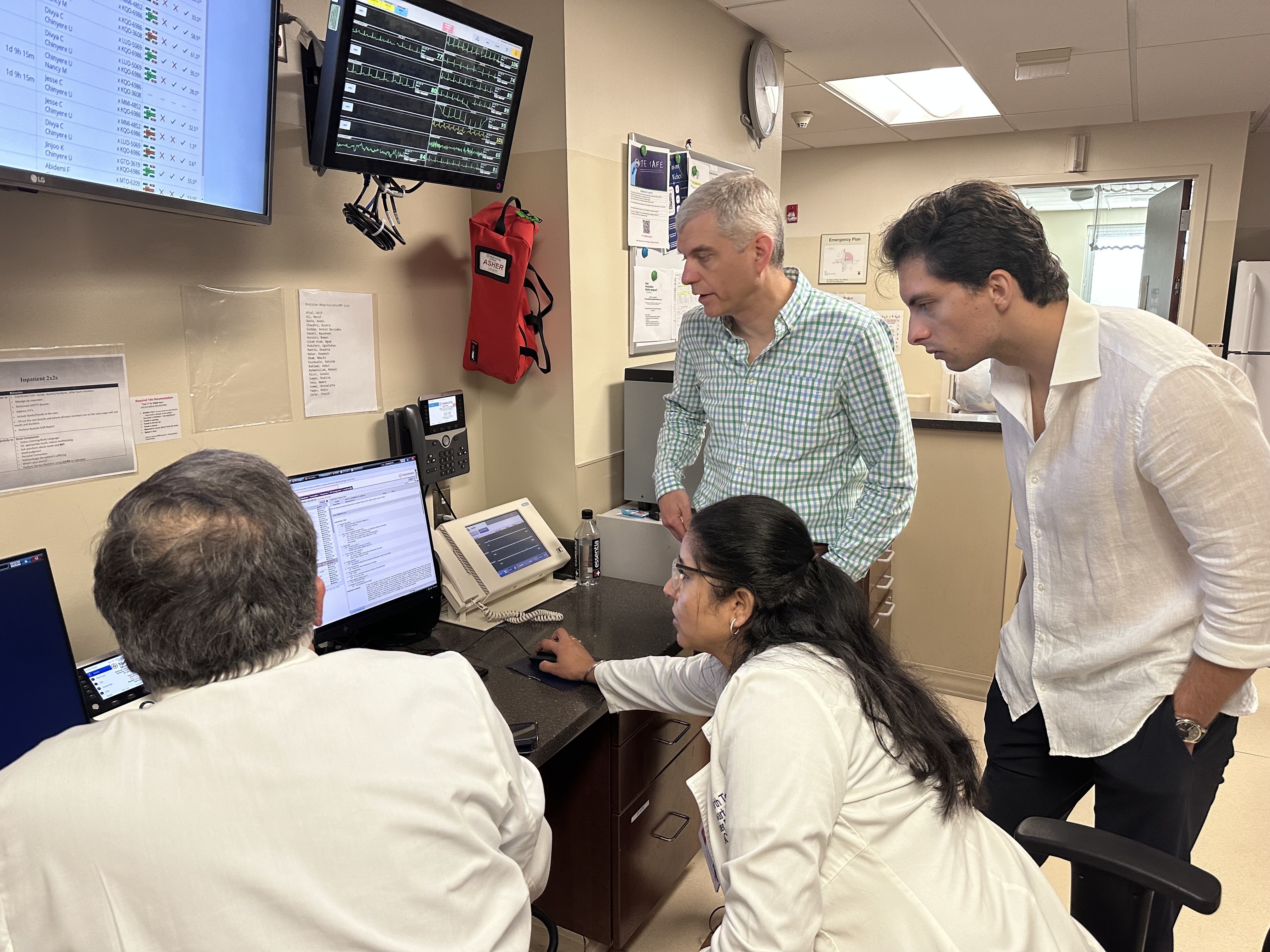
Rather than building from a distance, our FDE teams embed onsite alongside clinicians. This replaces slow, abstract feedback loops with real-time iteration. Working shoulder-to-shoulder with providers, our engineers identify and solve the problems that surface in the moment. This ensures our solutions perform in the complexity of live clinical environments, not just controlled testing conditions.
Customers consistently point to FDE as a decisive reason they partner with us. It is the difference between software that technically works and systems that hold up under real-world care delivery.
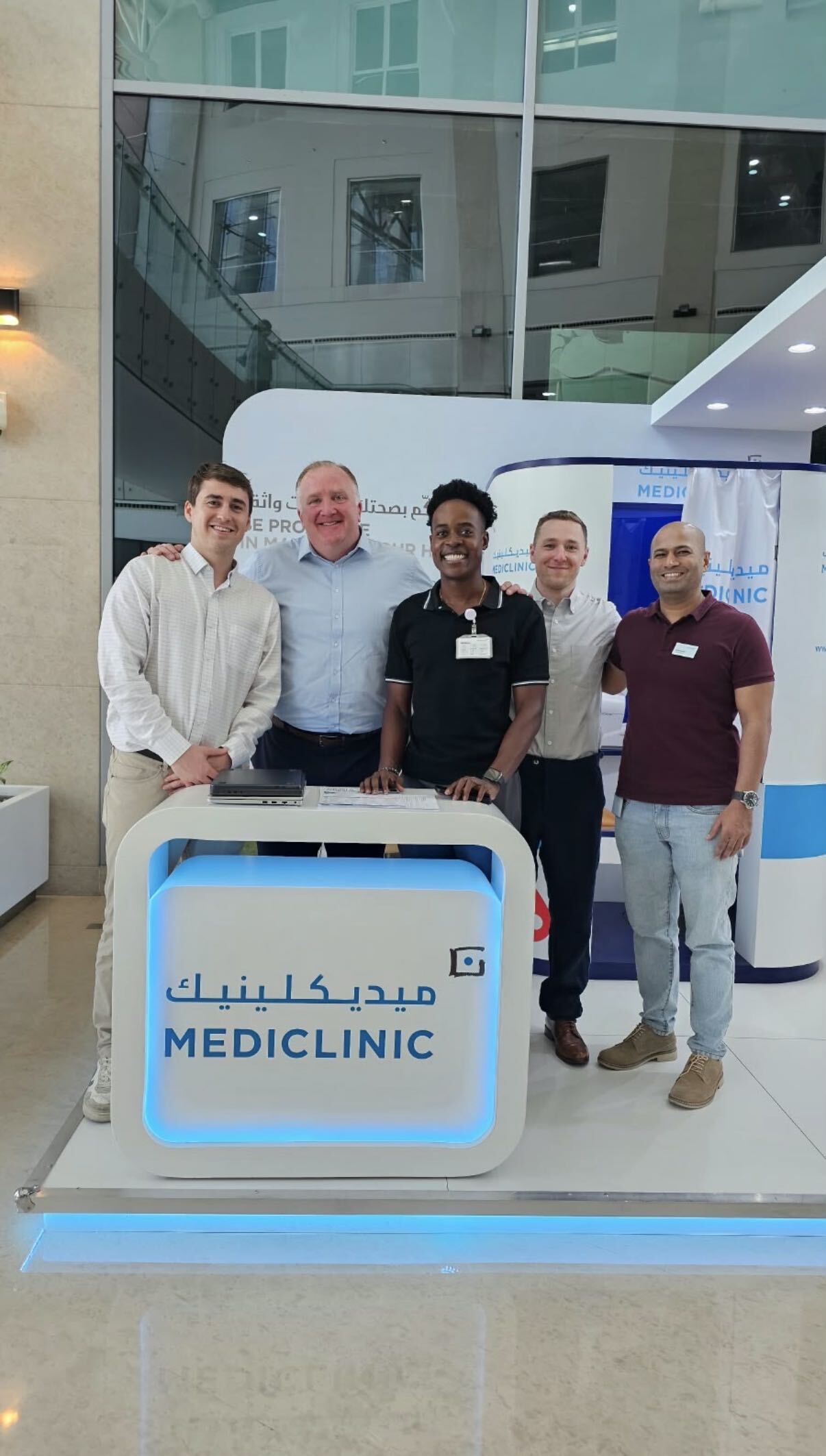
In 2025 alone, FDEs travelled more than 500,000 miles on airplanes–or the equivalent of nearly 20 times around the circumference of Earth–bringing engineers to the point of care.
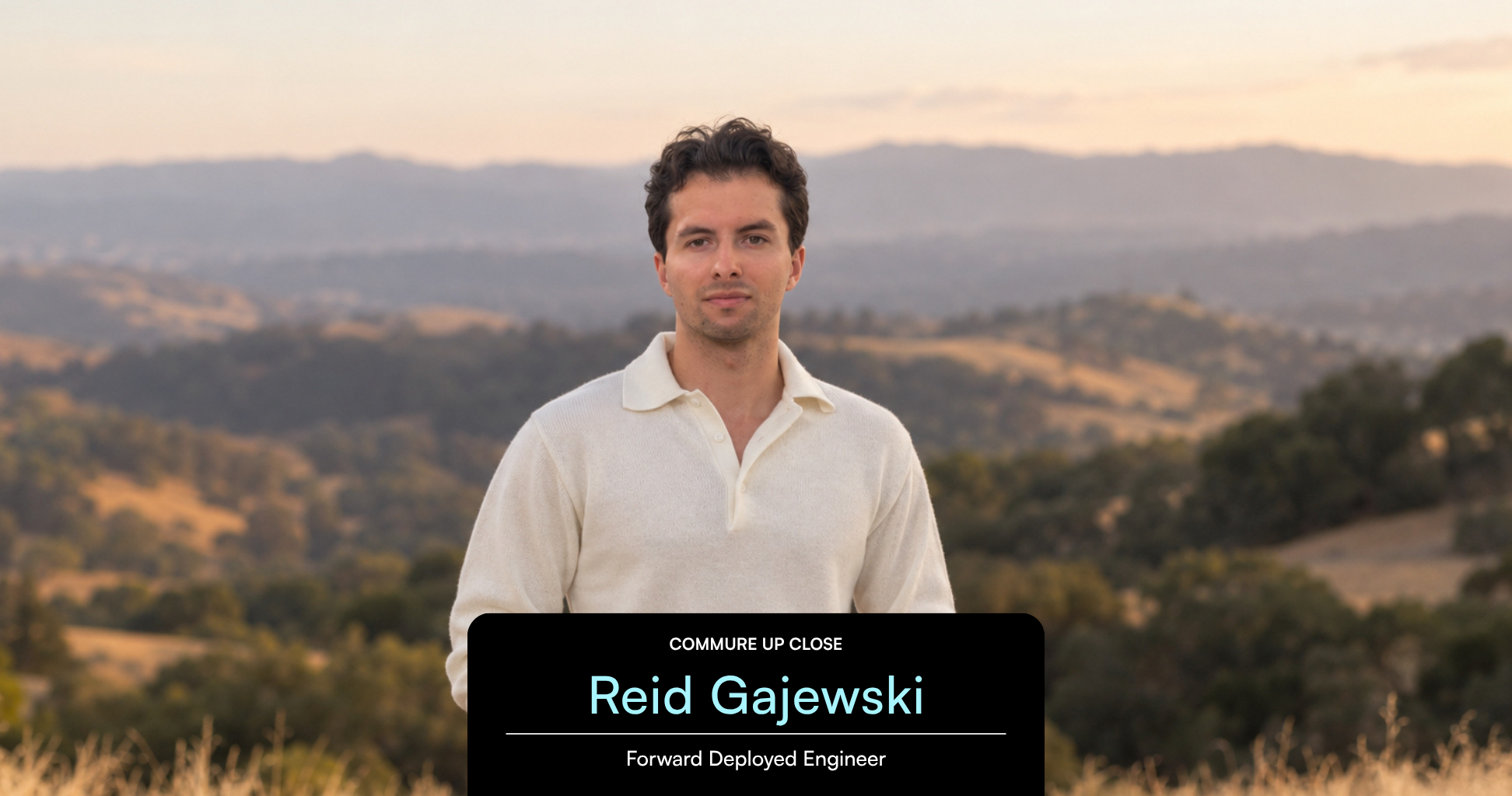
Donald Lazure, PA & Reid Gajewski work onsite with clinicians to fine-tune Ambient AI workflows
Partnerships: The Network Effects Begin
This year, we meaningfully advanced our strategic alliances, enabling broader deployments across some of the nation’s largest healthcare providers and creating tangible network effects for our customers.
Our partnership with AWS continues to deepen. It strengthens the reliability of our infrastructure at scale while unlocking frontier AI capabilities across speech recognition and generative AI. By leveraging advanced models, including multiple Claude-on-Bedrock variants, we are delivering strong performance and offering health systems greater flexibility in implementation, integration, and scaling.
We also advanced our alliance with MEDITECH to make ambient documentation a fully native experience within MEDITECH Expanse and Expanse Now. This work reflects a shared commitment to embedding AI directly into clinical workflows, now serving over twenty MEDITECH provider groups, from the largest private health system in the country (HCA) to vital rural healthcare providers like Val Verde.
Through our integration with Epic Toolbox, we are expanding our ability to meet clinicians where they already work. We were especially proud to be one of a small group of select vendor partners invited by Epic to participate in Epic UGM 2025. Commure is fortunate to work alongside Epic teams to deliver the latest in healthcare AI to our mutual enterprise partners.
Ease of adoption and speed to scale remain central to our partnership strategy. Our collaboration with Vizient helps health systems across the U.S. more efficiently assess, diligence, contract, and deploy our Ambient AI technology. This partnership reduces friction and accelerates access for thousands of member hospitals.
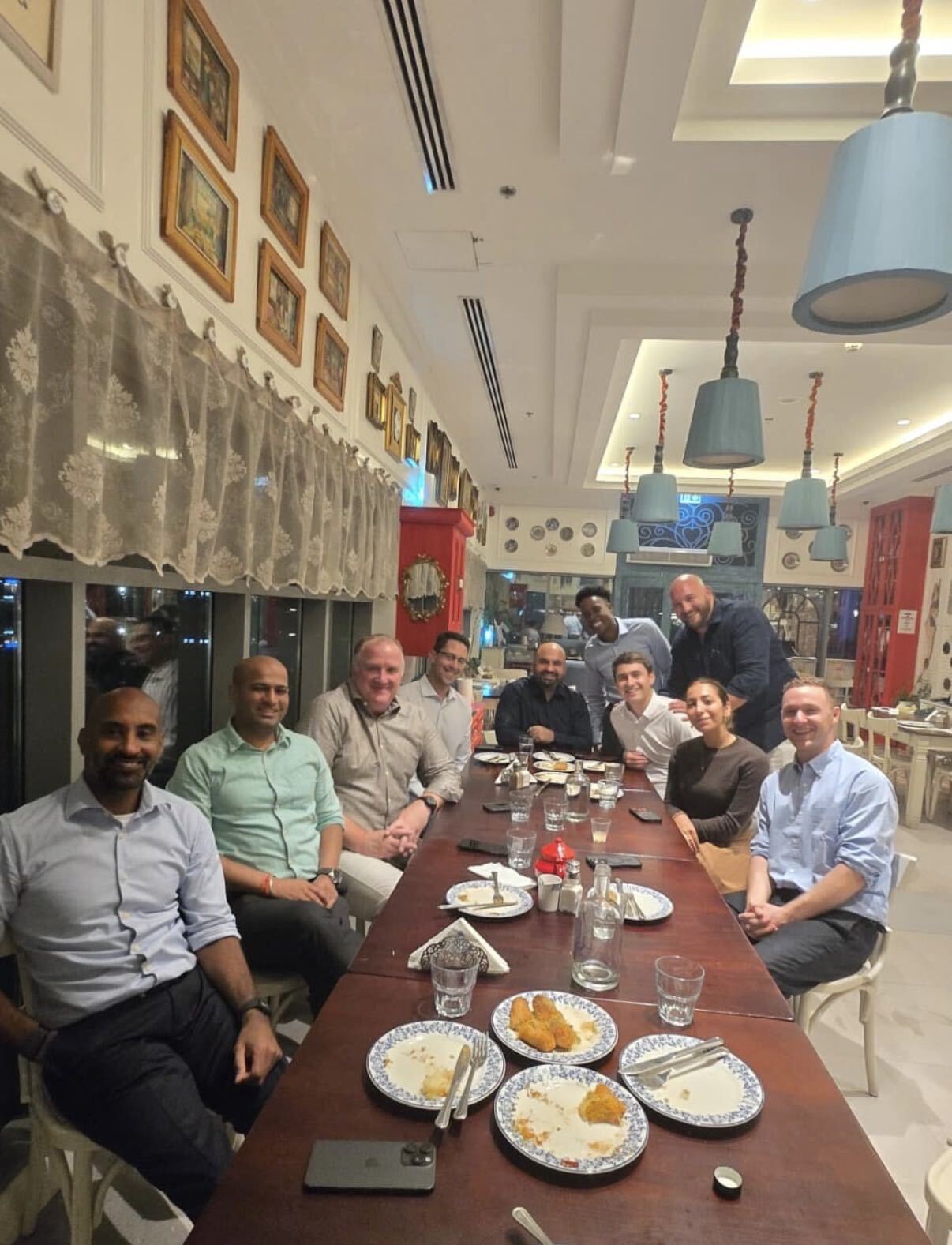
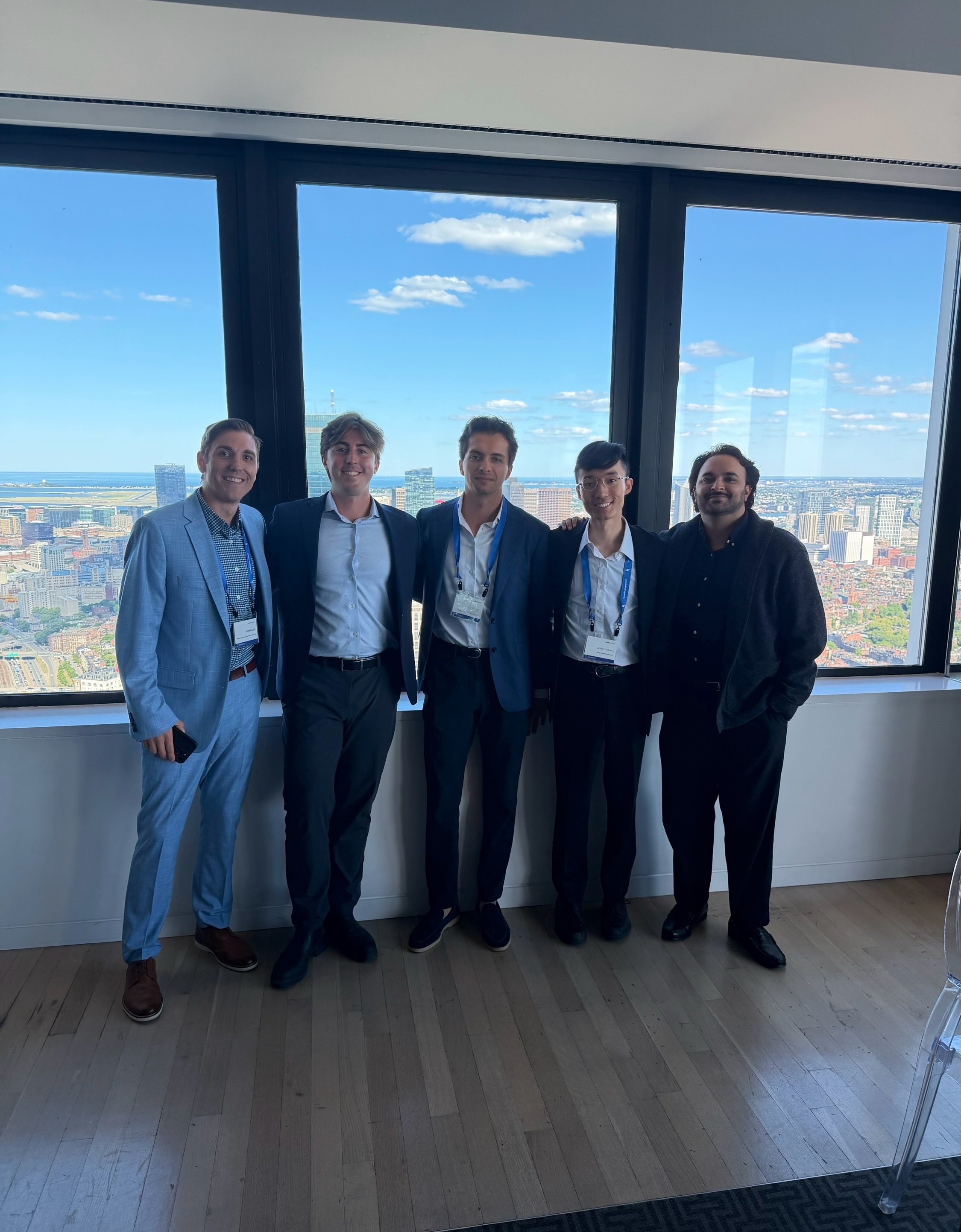
Beyond corporate alliances, we are seeing a community form around a new vision of healthcare operations. Our Nexus eventsserved as a gathering place for forward-thinking leaders shaping the future of healthcare, bringing together over 110+ health executives across the ecosystem.
Commure Nexus featuring Dr. Vikesh Tahiliani (HCA Healthcare), Dr. Kermit Murray (Tenet Healthcare), and Evan Kramer (Compassus)
Breaking Barriers in 2026
The administrative burden is no longer a law of nature; it is a solvable engineering problem.
Our mission remains unchanged: build the AI infrastructure that eliminates the documentation burden, brings patients and providers closer together, automates revenue, and transforms healthcare end to end. In 2025, we saw clear signs of approaching escape velocity. In 2026, we cross it: making AI the infrastructure healthcare finally depends on.