



Best AI Medical Scribes 2026: Top 10 Tools Compared
A fully weighted, fully published scorecard comparing 10 AI medical scribes independent and group practices can buy.

Medically Reviewed by Dr. Jean-Luc "JL" Neptune, Clinical Commercial Leader
Written by the Commure Scribe Team
Published: March 3, 2026
•
16 min read
Updated August 14, 2026
What Is the Best AI Medical Scribe Tool?
- Freed, Heidi Health, and Commure Scribe are tied for first as the best AI medical scribe, based on a weighted scorecard covering published quality controls, EHR write-back, cost, and five other criteria.
- The best tool for clinicians depends on context: a scribe built for primary care won't necessarily work for oncology, and one built for Epic won't necessarily work for athenahealth. Specialty and EHR both change what fits.
- The best AI medical scribe is the one that reduces a clinician's workload, whether that's note-taking or clicks.
How do the leading AI medical scribes compare?
Ten products are scored here: Freed, Heidi Health, Commure Scribe, Nabla, Microsoft Dragon Copilot, Sunoh.ai, Abridge, DeepScribe, Ambience, and Suki, weighted for a practice of 1 to 100 clinicians. The top three finish level at 7.1. Two of the ten, Abridge and Ambience, are sold almost exclusively to health systems, and both are scored on the same eight criteria as everything else. An enterprise-only sales motion is exactly what pulls their cost, trial, and group-administration scores down.
† Scored on company confirmation rather than published documentation. See the placement section below for detail on what this means.
* Sold mainly through enterprise contracts. A practice this size cannot buy these products the way it buys Freed or Heidi. Their low cost, trial, and group-administration scores reflect that sales motion, not weak underlying technology. Suki carries this flag for the same reason Dragon Copilot and DeepScribe do. It sells only through enterprise contracts, with no self-serve signup path for a solo or 1-2 clinician practice.
Scores are rounded to one decimal, then compared. Scores within 0.2 points at that rounded precision are ties. The top three are tied at 7.1. Positions 4 are tied at 5.2 and 5.1. Sunoh.ai stands alone at 4.6. Abridge stands alone at 3.6 and DeepScribe at 3.3. Ambience and Suki are tied at 9th at 2.9 and 2.7.
Quick reference: price, trial, EHR handoff, coding
Confirm current pricing directly with each vendor before contracting. Enterprise vendors typically add setup, IT, and training costs on top of the monthly rate.
What Are the 10 Best AI Medical Scribes in 2026?
The best AI medical scribe for a given team depends on which criteria matter most. The ten profiles below apply the same eight weighted criteria used in the scorecard. Competitor figures come from each vendor's own site or a named third party and are vendor-reported unless a study is cited.
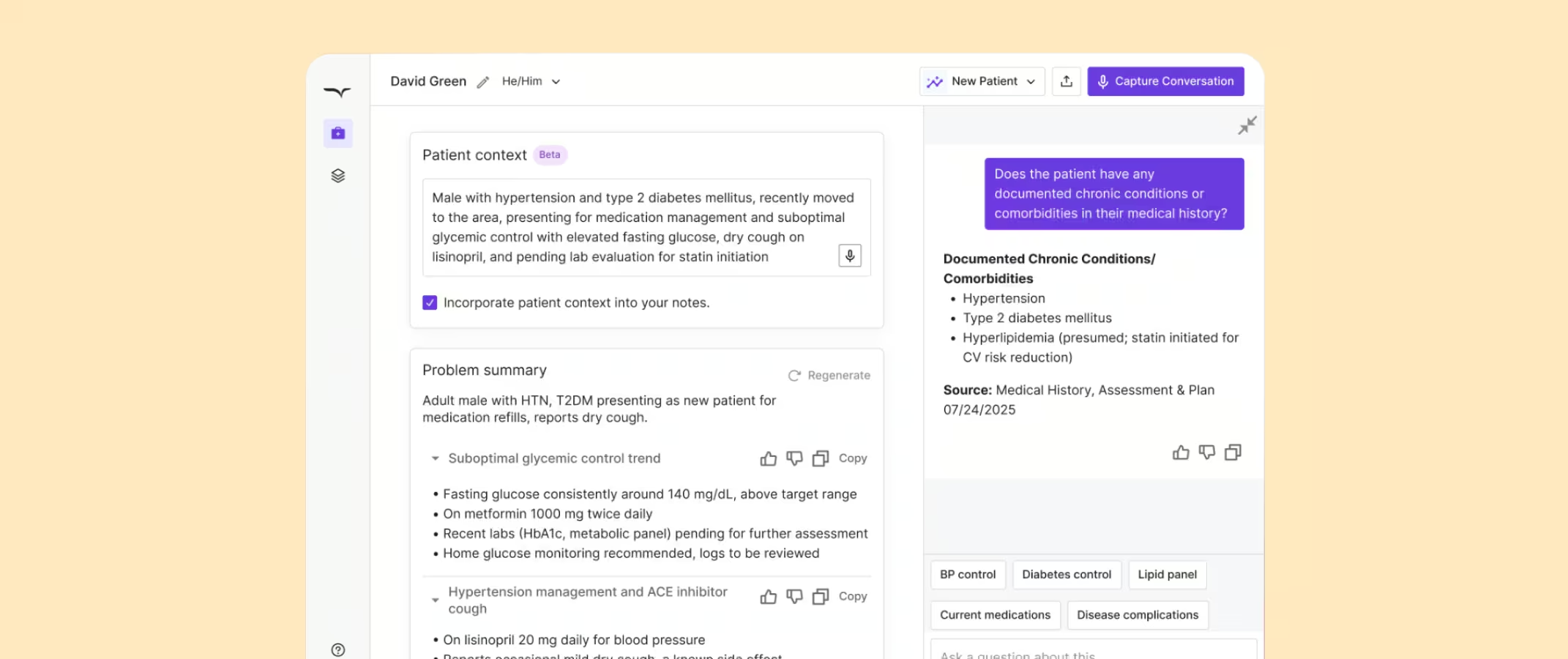
1. Freed
Freed is the best AI scribe for solo and independent clinicians when the priority is the lowest self-serve entry price with no sales call.
Key features:
- 26,000+ clinicians across 1,300+ clinics, per the vendor.⁴
- 90+ languages, including automatic recognition of language changes mid-visit; templates adapt as clinicians edit them.⁵
- Audio deleted automatically after note generation, typically within 60 seconds.⁶
- EHR push is a Premier-tier Chrome extension with no bidirectional sync.⁷
- Coding support on the $119/mo Premier tier, including an editable Codes tab with alternatives per code.³
- Pricing: $39/mo Starter (40 notes), $79/mo Core (unlimited), $119/mo Premier; the 7-day trial needs no credit card.⁸
Best for: Solo clinicians who want the lowest entry price and documented coding support on the Premier tier.
Trade-offs: EHR push has no bidirectional sync, and coding support is limited to the top tier
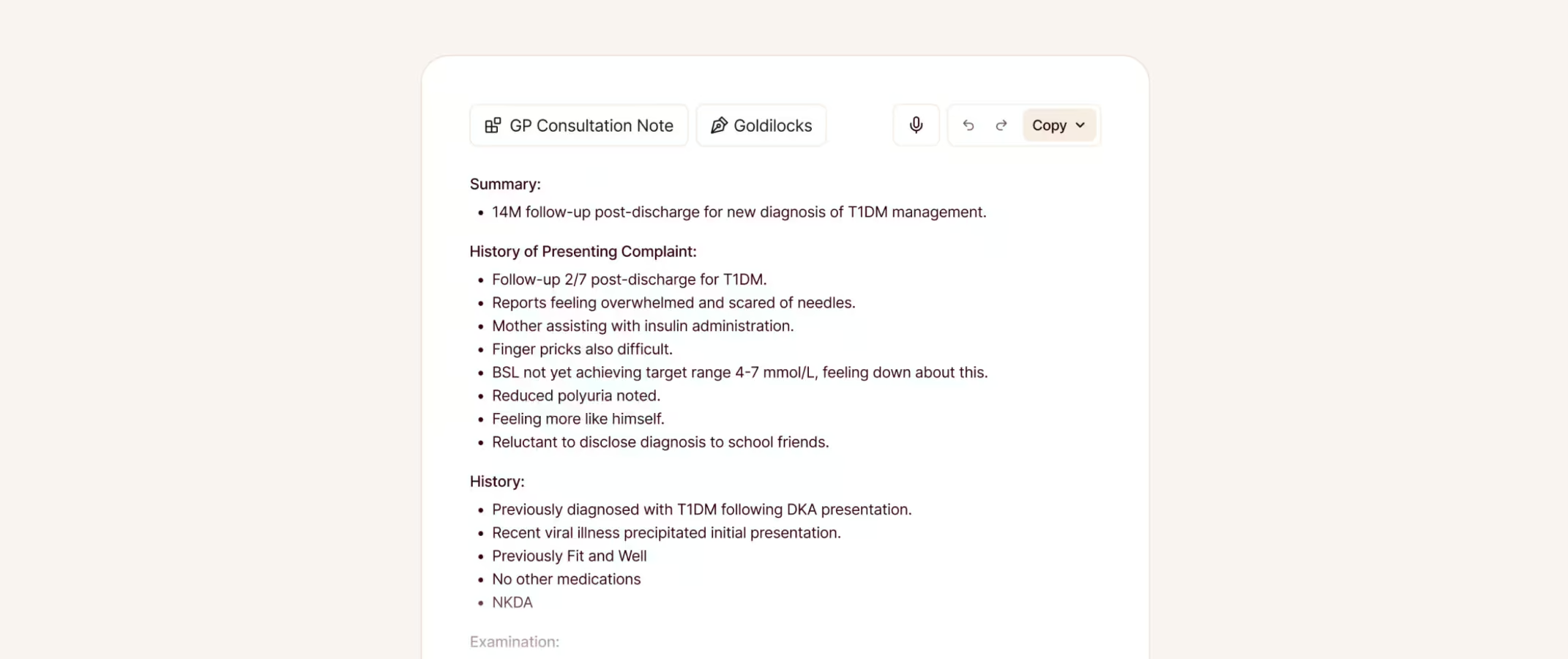
1. Heidi Health
Heidi Health is the best AI scribe for individual clinicians when a permanent free tier and the widest specialty template coverage matter most.
Key features:
- Lists Beth Israel Lahey Health as a named US customer.⁹
- The vendor reports more than 2 million consults per week and 110 languages.¹⁰
- Names roughly 40 EHR and practice-management integrations, including Epic via SMART on FHIR, Oracle Cerner, and athenahealth.¹¹
- Audio is transcribed in real time and discarded, not stored.¹²
- ICD-10 and SNOMED coding are available starting on its Practice tier; CPT is not listed as a supported code set.¹³
- Publishes an anti-fabrication instruction in its templates: content counts only if explicitly mentioned in the transcript, context, or clinical note, and is otherwise omitted entirely.¹⁴
- Covers 200-plus specialties and settings per the vendor, with per-template tuning described in its own documentation.¹⁰ That is the widest specialty coverage on this list.
- Pricing: a permanent $0 free tier with unlimited transcription.¹⁵ The Clinician tier runs $110 to $150 per user per month, depending on billing term, with a 14-day trial. Teams and Enterprise tiers are custom-quoted, with no trial listed.
Best for: Individual clinicians who want a permanent free tier and the widest specialty template coverage.
Trade-offs: CPT is not listed as a supported code set; ICD-10 and SNOMED coding start on the Practice tier.
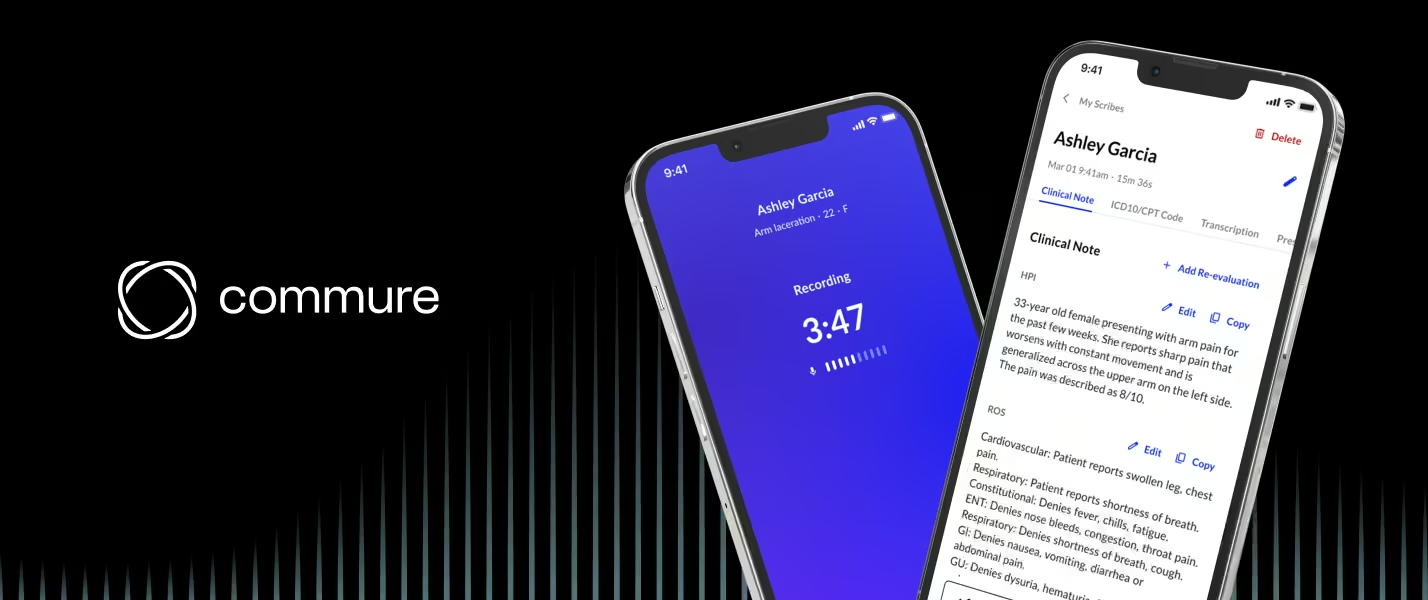
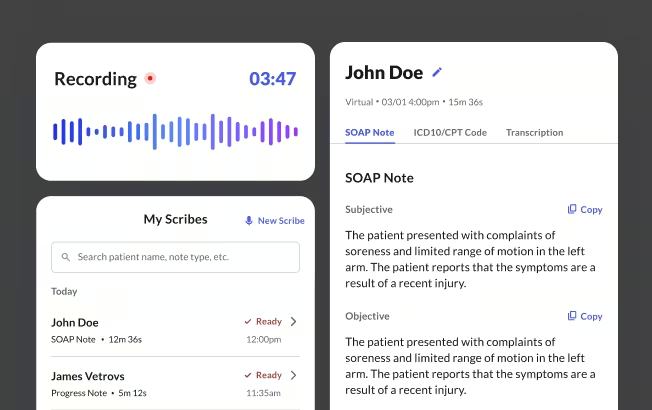
1. Commure Scribe
Commure Scribe is the best AI scribe for solo and small practices on 60+ EHRs when coding support built in now matters most, with a path to one-click sync once the group qualifies.
Key features:
- Used by 75,000+ clinicians across 25M+ patient encounters annually.
- The workflow is Capture, Edit, Finalize: the clinician can review and revise the draft before finalizing it.
- Supports 90 languages with automatic detection. Sessions run up to 2 hours and work on any device, for in-person or telehealth visits.
- 60+ EHR integrations, including athenahealth, eClinicalWorks, and AdvancedMD. One-click EHR sync, custom AI workflows, and ROI analytics are group-plan features; solo and small practices use copy-paste for EHR handoff.
- A Citations feature shows which part of the transcript each piece of the note came from. This is not yet documented publicly, which is why five of Commure Scribe's eight scores are flagged above.
- Pricing: $89/mo, or $59/mo billed annually, for the self-serve entry tier used by solo and small practices; larger groups arrange direct EHR integration through group sales. A 7-day trial needs no credit card.
Best for: Solo and small practices that want coding built in now, with a path to one-click EHR sync once the group qualifies.
Trade-offs: Commure's ambient AI platform reports a 93.3 score from a 2025 KLAS First Look, a preliminary, lower-response report that KLAS does not rank the way it ranks Best in KLAS award categories; this page does not count it as comparable third-party evidence, which is one reason the evidence score is the lowest of Commure Scribe's eight criteria.
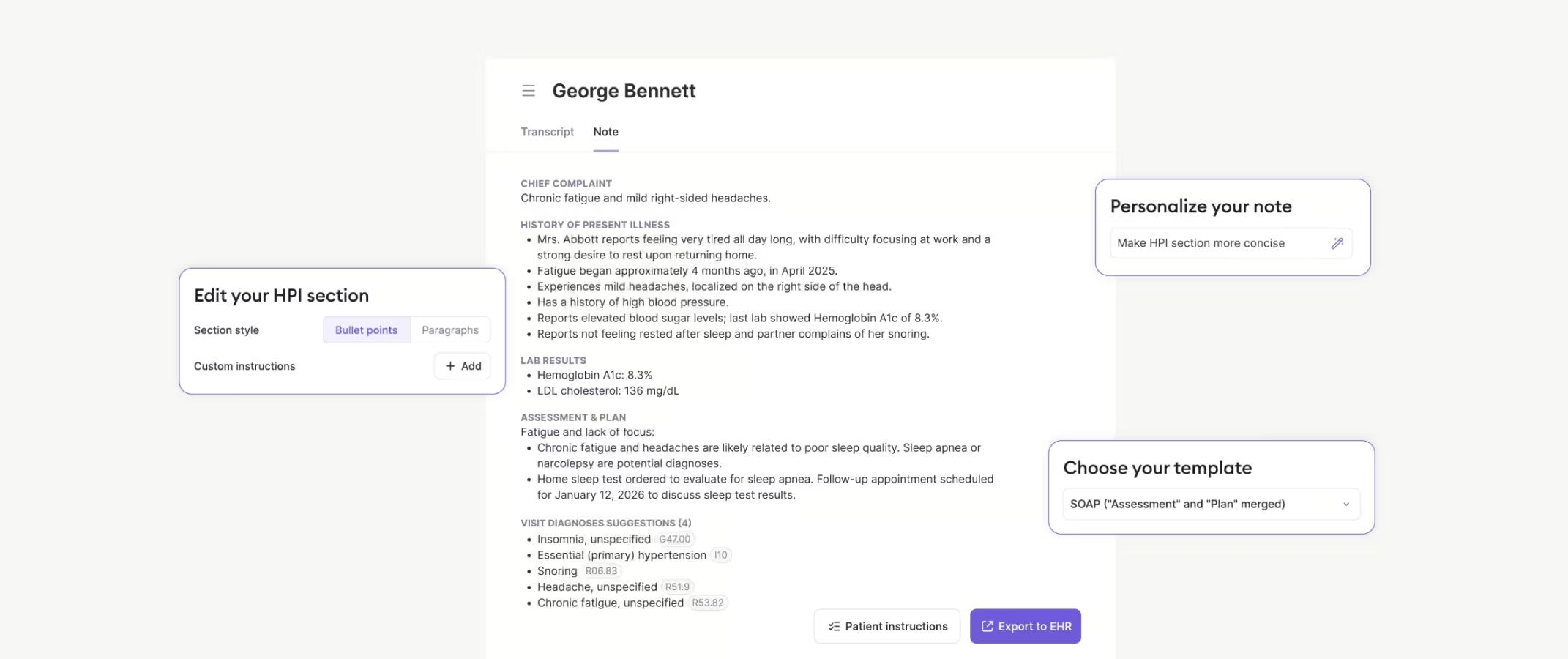
4. Nabla
Nabla is the best AI scribe for family medicine, internal medicine, and pediatrics practices when a documented grounding method and a free tier with no expiration date matter most.
Key features:
- Deployed at 130+ organizations, per the vendor.¹⁶
- In a randomized controlled trial described as among the first in this field, Nabla cut physician time-in-note by 9.5% versus control.¹⁷ The same UCLA-based trial also evaluated Dragon Copilot.¹⁸
- Its Nabla Connect module embeds in the EHR, pulls patient history in, and pushes notes back.¹⁹
- Decomposes every note into atomic facts and checks each for grounding against the transcript.² It scores 9.0 on independent third-party evidence, the highest evidence score on this list.
- Audio is discarded after processing by default. Notes default to a 14-day configurable retention window.²⁰
- ICD-10 diagnosis suggestions and E/M and CPT code suggestions are both live.²¹
- Pricing: Nabla offers a free and paid tier structure but does not publish paid pricing.
Best for: Practices that want a documented grounding method and a free tier with no expiration date. Family medicine, internal medicine, and pediatrics also get coding support.
Trade-offs: Coding is limited to family medicine, internal medicine, and pediatrics outpatient visits today.
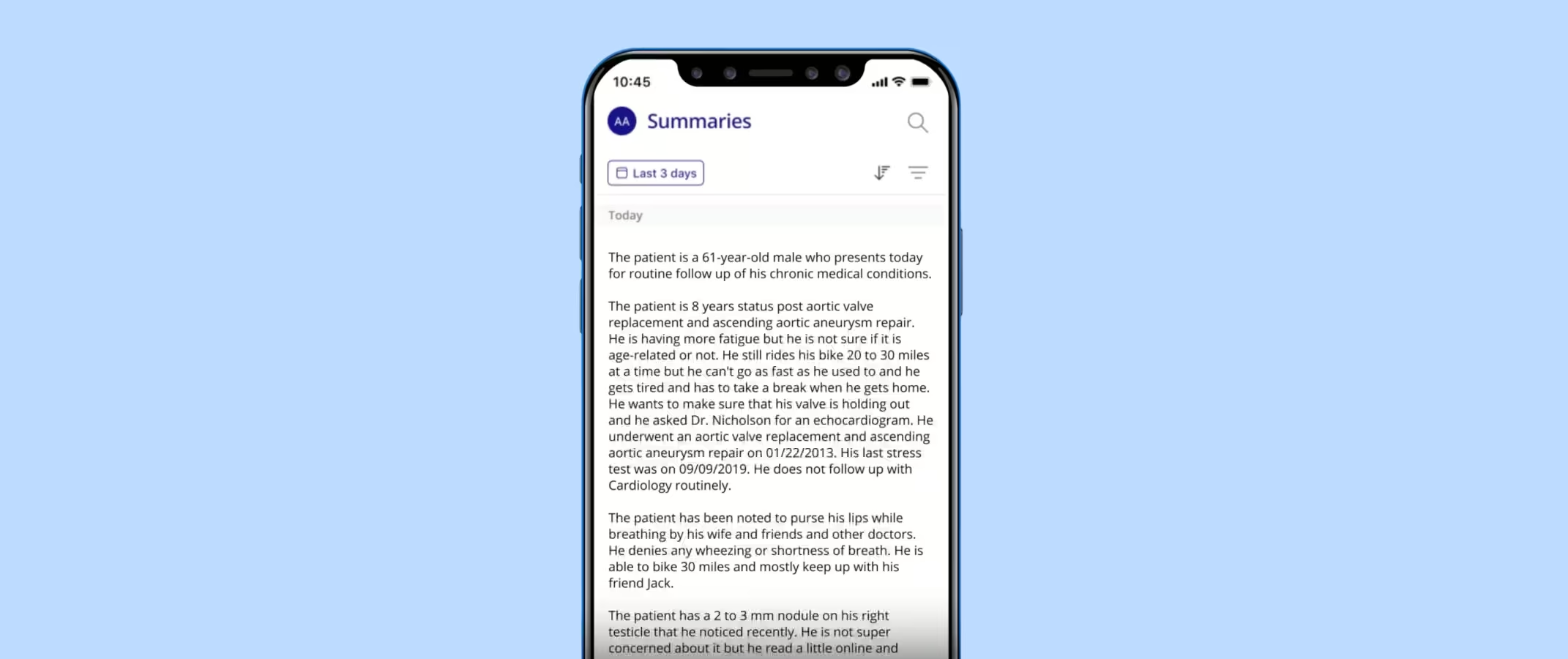
4. Microsoft Dragon Copilot
Microsoft Dragon Copilot is the best AI scribe for Epic health systems on Microsoft and Nuance infrastructure when athenahealth is an emerging second EHR option.
Key features:
- Microsoft rebranded this product from Nuance DAX Copilot to Dragon Copilot; some pages still use the earlier name.
- Sold to enterprise health systems and built on Microsoft Azure infrastructure. Its most established path is a native Epic embed.
- athenahealth announced a Dragon Copilot embed inside athenaOne in December 2025, moving from preview toward general availability in 2026.²²
- It is a separate product from the dictation-first Nuance Dragon Medical One. Microsoft's own documentation ties its HITRUST CSF certification to the Azure environment Dragon Copilot runs on, not to Dragon Copilot itself.²³
- Pricing: enterprise sales only, not published.
Best for: Epic health systems standardized on Microsoft/Nuance infrastructure, with athenahealth-based systems now an emerging second option.
Trade-offs: Dragon Copilot is sold primarily through enterprise contracts, which is why its cost, trial, and group-administration scores are low. In the UCLA randomized trial, DAX Copilot showed no statistically significant change in physician time-in-note.

6. Sunoh.ai
Sunoh.ai is the best AI scribe for practices on eClinicalWorks or a wide range of other EHRs when one scribe across every system matters more than a fully published price.
Key features:
- Built by eClinicalWorks's own affiliate healow.
- Its own site now names native integrations with eClinicalWorks, athenahealth, Cerner, Epic, ModMed, Practice Fusion, and Tebra. A free browser extension syncs notes into any other browser-based EHR on top of that.²⁵ That is the broadest named EHR footprint in this comparison.
- Pricing: $149/user/month, reduced from $199 for a limited time; additional monthly charges may apply.²⁴ Group and enterprise terms are custom.
Best for: Practices on eClinicalWorks or a wide range of other EHRs that want one scribe rather than separate tools per system.
Trade-offs: No KLAS score or published study surfaced in this evaluation. A few third-party sources describe a Sunoh coding assistant that suggests codes, but no primary Sunoh page confirms it, so coding scores at or near zero here, as does group-administration support. The published price carries a caveat that additional monthly charges may apply, which is why its cost score is 7.5, not the top band.
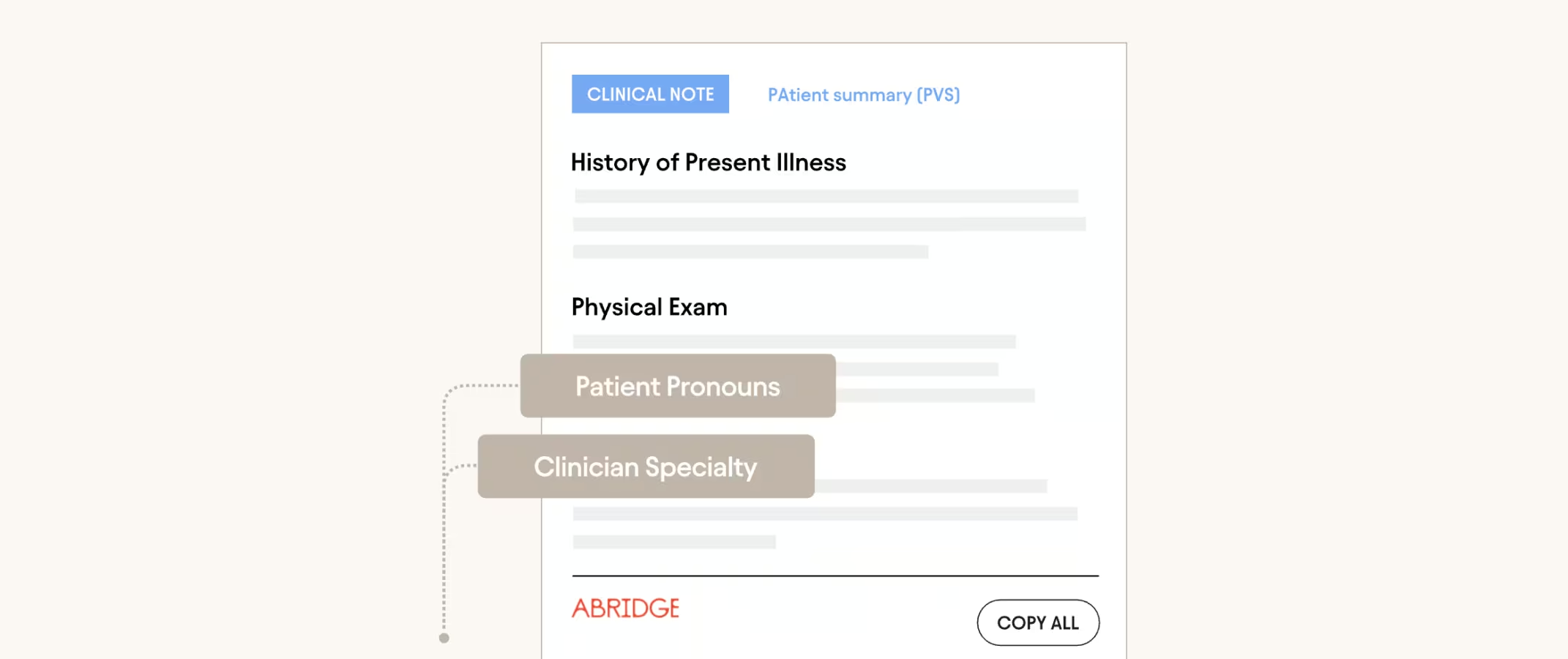
7. Abridge
Abridge is the best AI scribe for health systems on Epic or athenahealth when the deepest note-to-source traceability in the category is the priority.
Key features:
- Sold almost exclusively to health systems, with named customers Emory, Sutter, and UPMC.
- Its Linked Evidence feature lets a clinician highlight any sentence in the note and see the exact transcript segment, and the original audio, it came from. The feature is documented on a dedicated science-and-evaluation page.
- Holds a Best in KLAS 2026 win for Ambient Speech at 94.7, the strongest third-party signal of any product in this comparison.²⁸ KLAS measures reported satisfaction, not tested accuracy.
- Abridge's own product page names only a native Epic embed.²⁹ A confirmed athenahealth partnership, announced February 2025, launched in limited release to more than 160,000 athenahealth clinicians.³⁰ It puts Abridge inside athenaOne as one of several selectable vendors.
- Pricing: custom, not published; enterprise sales only. A third-party estimate puts enterprise cost near $2,500 per clinician per year.
Best for: Health systems on Epic or athenahealth that want the deepest note-to-source traceability in the category and can absorb an enterprise sales process.
Trade-offs: No other EHR is named beyond Epic and athenahealth. Abridge's privacy policy sets no fixed retention period for audio; it defers to each customer's individual contract, so retention varies by health system.³¹ ICD-10 and CPT coding support is not confirmed on the vendor's site, and there is no self-serve trial.
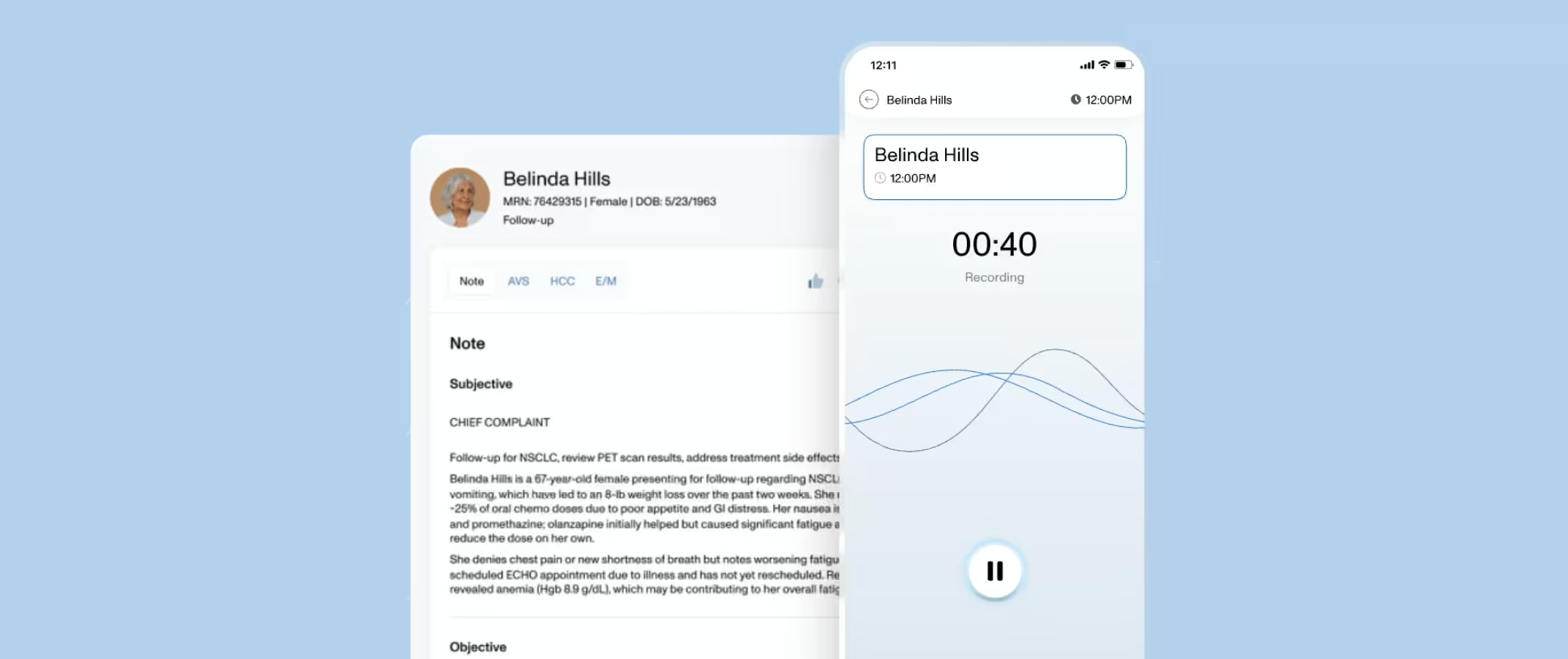
8. DeepScribe
DeepScribe is the best AI scribe for large health systems on Epic, athenahealth, or eClinicalWorks when bidirectional sync and note-to-conversation auditability are the priority.
Key features:
- Bidirectional integrations for Epic, athenahealth, and eClinicalWorks.
- Its Clinical Moments feature lets a clinician highlight note text and trace it to the source moment in the conversation.³²
- Its own product pages support ICD-10, HCC, and E/M coding; CPT is not listed.³³
- Earned a 98.8 performance score from KLAS Research in 2025, the highest KLAS score on this list.³⁴ KLAS measures satisfaction, not tested accuracy.
- Pricing: custom, not published.
Best for: Large health systems needing bidirectional Epic, athenahealth, or eClinicalWorks sync and note-to-conversation auditability.
Trade-offs: Audio retention is not disclosed in detail, and there is no self-serve trial.
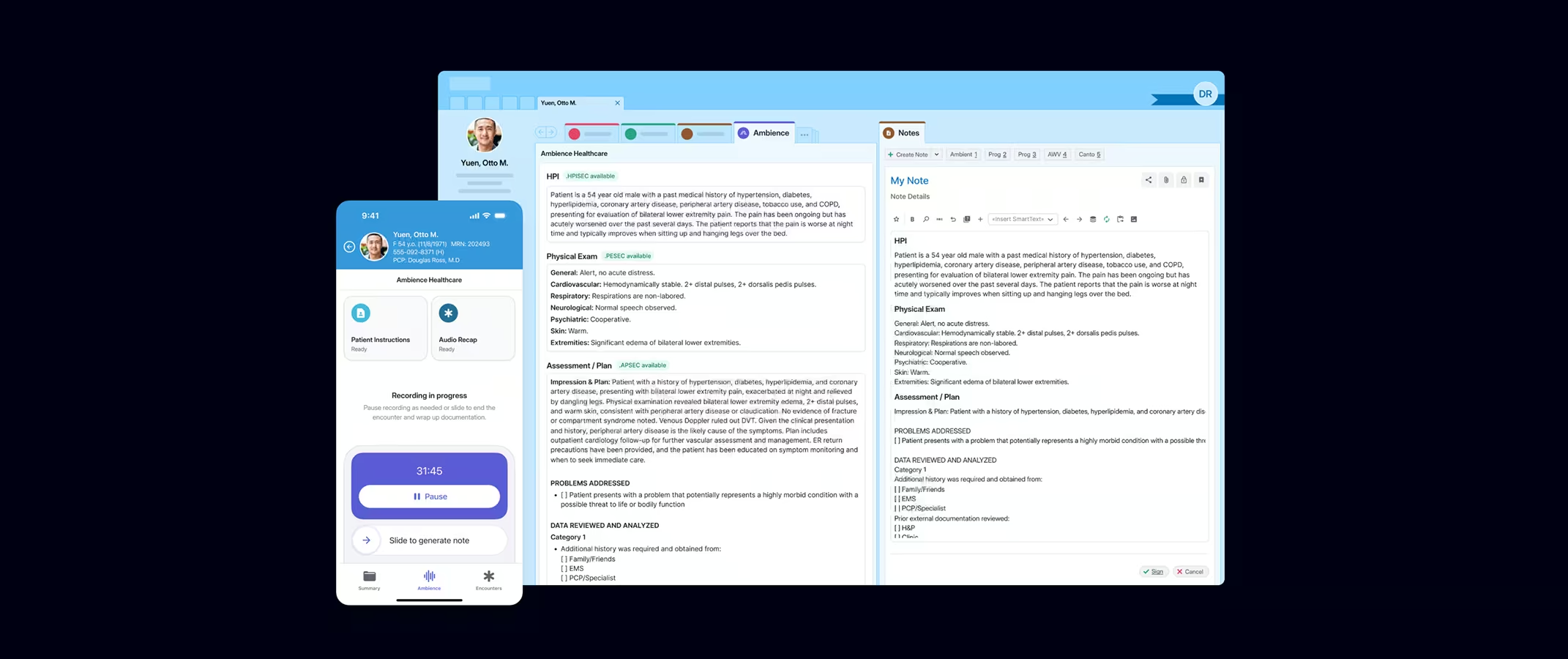
9. Ambience
Ambience is the best AI scribe for health systems already on Epic when coding-accuracy gains through the Toolbox program justify running an internal pilot.
Key features:
- Sold to health systems, distributed through Epic's Toolbox program. Ambience markets that as a native, embedded presence inside Haiku, not a bolt-on.³⁵
- Named customers include Cleveland Clinic.³⁶ John Muir Health is also named as a customer.³⁷
- Claims support across 200+ specialties, though without a named list or template-level documentation to back the count.³⁸
- A 2025 KLAS ROI Validation study of a single health-system deployment, St. Luke's Health System, surveyed 371 clinicians across 41 specialties.³⁹ It found $13,049 per clinician per year in value, attributed to enhanced HCC and E/M coding accuracy.
- Ambience's own site separately claims a 27% relative improvement in ICD-10 coding accuracy over a board-certified-physician baseline.⁴⁰
- Publishes System and Organization Controls 2 (SOC 2) and HIPAA compliance language and describes clinicians reviewing and editing notes.⁴¹
- Pricing: custom, not published; enterprise sales only.
Best for: Health systems already on Epic that want coding-accuracy gains through the Toolbox program and can run their own pilot to verify them.
Trade-offs: That KLAS figure comes from one customer's coding-intensity results, not a controlled accuracy benchmark, and revenue and accuracy gains from coding-accuracy studies can partly reflect coding-intensity changes rather than pure documentation quality. No published pricing or self-serve trial surfaced in this evaluation, and public technical detail on grounding, uncertainty handling, and a formal QA methodology was limited in the materials reviewed.
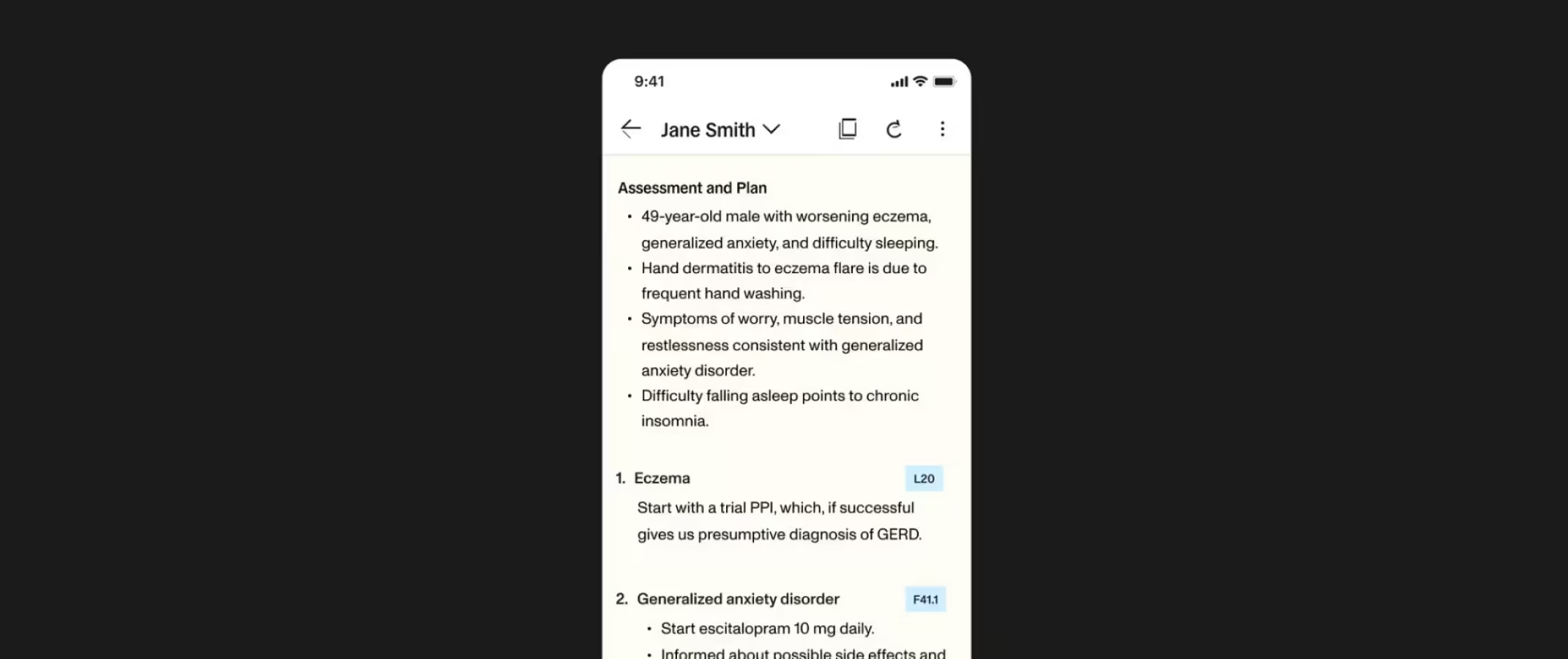
9. Suki
Suki is the best AI scribe for large health systems when voice-controlled EHR actions bundled with ambient notes are the priority.
Key features:
- Adds voice control of the EHR to ambient notes, sold under the brand Suki AI. Clinicians can pull patient data, stage orders, and ask clinical questions by voice.
- Supports ICD-10, CPT, hierarchical condition category (HCC), and E/M coding.
- The original audio and transcript are each permanently deleted after 30 days, per Suki's developer documentation.²⁶ The finished clinical note is retained for the duration of the service contract.
- Supports 80+ languages with automatic detection and 100+ specialties per the vendor. Bidirectional integrations cover Epic, Oracle Health, athenahealth, and MEDITECH.
- Pricing: Suki publishes no price, and buyers request pricing through its sales team.²⁷
Best for: Large health systems wanting voice-controlled EHR actions bundled with ambient notes.
Trade-offs: Suki sells through enterprise sales only, with no self-serve trial or signup path for a solo or 1-2 clinician practice. Suki publishes no price, minimum, contract term or implementation fee, which holds its cost score at 2.0.
How Were These AI Scribes Evaluated?
Each product was scored 0 to 10 in half-point steps against eight criteria, weighted for independent and group practices. The weights total 100. Every score traces to the vendor's own website, its documentation, a named third-party evaluation, or peer-reviewed research.
We did not identify a controlled head-to-head study that independently compares note accuracy across the products in this list. The first criterion measures what a vendor publishes about how note quality is produced and controlled, not note quality itself. Vendor-reported accuracy, satisfaction, and time-savings figures earn nothing on any criterion, for any product.
Products are scored at the tier this buyer can purchase. Capability behind a quoted enterprise contract earns nothing for a practice buying self-serve.
Cost is scored on determinability. Full cost determinable from published material, including add-ons and minimums, scores 9 to 10. A headline price with some components needing a conversation scores 7 to 8. No figure but a published range or minimum that lets a buyer self-select scores 5 to 6. Quote-only with a route at this size scores 3 to 4. Quote-only and enterprise-contracted scores 1 to 2. Nothing published and no route scores 0.
Where a vendor publishes no price, that scores zero rather than an estimate. Where no fact exists behind a criterion, the cell is marked not assessable rather than given a middle score.
Two frequently cited peer-reviewed studies in this category do not evaluate note quality. One measured clinician-reported burden, burnout, and job satisfaction across roughly 100 clinicians. Another measured cognitive load in 40 clinicians. Neither examined a note.
Where Does Commure Scribe Place?
Commure Scribe ties for first with two other tools, Freed AI, and Heidi Health. All three land at 7.1. Commure Scribe leads on EHR write-back available at a self-serve price and on cost determinability. Commure's own one-click EHR sync is available on larger group accounts; solo and small practices use copy-paste. It sits behind Heidi on specialty coverage and behind both on independent third-party evidence.
The evidence score is 3.5, the lowest of Commure Scribe's eight criteria. Commure Scribe holds no KLAS rating for this comparison and no peer-reviewed research. Its SOC 2 attestation is available on request rather than through an open portal. Abridge scores 7.0 on evidence to Commure Scribe's 3.5, the strongest third-party customer-satisfaction signal in this comparison. It ties for seventh anyway. Its main path to market is still enterprise and health-system sales, out of reach for most solo and small-group buyers.
Five scores carry the † flag. They cover grounding and quality assurance, browser-based EHR sync, specialty and template flexibility, the coding review workflow, and the group administration dashboard. Each describes capability that exists but is not documented on a page a buyer can check.
Scored strictly on what is publicly documented, each of those five flagged cells falls to 0. That is the same floor this scorecard applies to any product with nothing published behind a criterion. Only cost (8.0), trial (7.5), and evidence (3.5) survive unchanged. That recomputes to 2.9, a tie for last of ten rather than first.
Pricing and current plan details are on the Commure Scribe pricing guide. The 7-day trial needs no credit card. Larger groups scoping a structured pilot can book a Commure Scribe demo.
This article is for informational and educational purposes only. It does not constitute legal, medical, or professional advice, and it does not guarantee any particular pricing, performance, or purchasing outcome.
What Do the Other Products Do Better Than Commure Scribe?
Four things competitors document that Commure Scribe does not, each checkable in one search.
Heidi Health's template documentation includes an explicit instruction. It states: "Only include if explicitly mentioned in transcript, context or clinical note, else omit section entirely." Commure Scribe publishes no equivalent instruction.
Abridge's Linked Evidence lets a clinician highlight any sentence in a note and see the exact transcript segment and audio it came from.¹ Commure Scribe's Citations feature works similarly. It is not documented publicly; the only public reference to it is a troubleshooting article describing how to turn it off.
Nabla decomposes every note into individual factual statements and checks each against the transcript, a documented grounding method.² Commure Scribe has not published a comparable method.
Freed's coding workflow includes an editable Codes tab with alternatives per code.³ Freed states plainly that it does not submit codes to payers or billing systems, and that it does not replace clinical coding decisions. Commure Scribe has a comparable review step but has not published it.
What Do Physicians Say About AI Scribes in Practice?
Physician reports are mostly positive but mixed. Most say the tool helps with patient interactions and job satisfaction. Missed details remain the top error, and real-world use ran well below full adoption in a randomized trial. This section draws on published physician surveys.
Physicians report several positives.
- In Permanente surveys, 84% of physicians said the technology improved patient interactions; 82% reported better work satisfaction.⁴²
- 47% of patients in the same surveys said their doctor spent less time on the computer.
- In the UCLA randomized trial, fewer than 10% of patients declined to have the AI scribe used during their visit.¹⁸
Physicians also report several problems.
- UCLA trial physicians most often flagged omissions and pronoun mix-ups as note errors.¹⁸
- Inaccuracies were rated as occurring "occasionally," meaning review work on most notes.
- The AI scribe was used in only about 30% to 33% of eligible visits across both study arms, well short of full adoption.¹⁸
The UCLA authors state that ongoing physician oversight is needed to keep notes faithful to the visit.¹⁸
Why Are Clinicians Moving to AI Medical Scribes in 2026?
In 2023, 48.2% of US physicians reported at least one burnout symptom, down from 53% in 2022.⁴³ 20.9% still spent over eight hours per week in the EHR after hours, unchanged from 2022.⁴⁴ A separate, older analysis found physicians spending up to two hours on EHR work per hour of direct patient care.⁴⁵
A 2026 JAMA study followed 8,581 ambulatory clinicians at five academic medical centers; 1,809 of them adopted an⁴⁶ AI medical scribe. Adoption was associated with 16 fewer minutes of documentation time and 13.4 fewer minutes of total EHR time, per eight scheduled patient-care hours. The study measured association, not proof that the scribe alone caused the change.
Pricing, trial access, EHR fit, and coding support vary widely across the ten AI medical scribes scored on this page.
How Much Does an AI Medical Scribe Cost?
Published self-serve pricing runs from $39 to $119 per clinician per month across the tools in this comparison that publish a figure. Enterprise platforms cost several times more, and most keep pricing private.
For more on cost across the category, see our guide to AI scribe pricing.
Three cost layers matter beyond the subscription line.
- Tier gating. Coding, EHR push, or analytics are often on higher tiers. Price the tier with the features you need, not the advertised entry price.
- Setup and support. Enterprise deployments add IT, security review, and training costs.
- Contract structure. Annual billing discounts are common but lock in a tool before a care team knows whether it sticks.
A UCSF study of 1,565 physicians found adopters billed 1.81 more RVUs per week.⁴⁷ That's worth about $3,044 per physician per year at 2025 Medicare rates. Claim denials did not rise. The study authors noted the gains may partly reflect changed coding practices rather than pure productivity.
The Peterson Health Technology Institute surveyed health system leaders.⁴⁸ They see the financial impact of AI scribes as unclear once all costs are counted.
A published minimum lets a buyer self-select against a known number. That is why several products on this page score well on cost determinability despite being sold primarily through enterprise contracts.
How Do You Choose the Right AI Scribe?
Match the shortlist to your sales-model tolerance first. A solo clinician can test three self-serve AI medical scribes in a month at little or no cost. A large group choosing an enterprise AI medical scribe should demand a pilot cohort before an org-wide contract.
Design the trial around real use.
- Test on your hardest encounters, including multi-speaker visits, interpreter visits, and complex histories.
- Track edit time from recording stop to signature, not just the draft.
- Confirm the EHR path end to end and on which tier.
- Check coding output against your billing workflow.
In the Permanente deployment of 7,260 physicians, heavy users saved 2.5 times more time per note than occasional users.⁴² No link was found between physician age and adoption; users averaged about 47 years old.
Ask each vendor which templates exist for your specialty, and which need a custom build. Confirm inside the trial with your own visit types.
AI Scribe Guides by Specialty, EHR, and Vendor
These guides go deeper on how AI scribes perform in specific specialties, EHRs, and buying situations.
- AI scribes for psychiatry compares six tools on psychiatric documentation, including mental status exams and longer intake visits.
- AI scribes for family medicine ranks seven tools for high-volume primary care visits that cover several problems in one encounter.
- AI scribes for pediatrics compares five tools on visits where a parent or caregiver does much of the talking.
- AI therapy notes covers what therapists should check before using a scribe for DAP, SOAP, and BIRP notes.
- AI scribes for athenahealth compares five tools on how notes reach the athenahealth chart.
- AI scribes for AdvancedMD reviews four options for practices running AdvancedMD.
- AI scribes for SimplePractice covers scribes for behavioral health clinicians on SimplePractice.
- Freed AI review breaks down Freed's pricing, limits, and fit for small practices.
- Heidi Health review covers Heidi's features, pricing, and limitations.
- Nabla review covers Nabla's features, pricing, and EHR integration.
- Mentalyc review looks at Mentalyc for behavioral health clinicians.
- Sunoh.ai review covers the scribe that comes bundled with eClinicalWorks.
This article is for informational and educational purposes only. It does not constitute legal, medical, or professional advice, and it does not guarantee any particular pricing, performance, or purchasing outcome.
Frequently Asked Questions
The strongest third-party accuracy signals are KLAS scores, since no independent head-to-head benchmark compares vendors yet. DeepScribe leads at 98.8 and Abridge follows at 95.3. Commure's ambient AI platform holds at 93.3, all from 2025 KLAS reporting. The UCLA randomized trial is the other major signal. In that trial, physicians reported omissions as the most common error type, so clinician review remains essential with any tool.
Most leading AI medical scribes state HIPAA compliance and sign business associate agreements, but the details differ by vendor. Audio storage, retention periods, and AI training policies vary widely. Ask each vendor for its BAA, its audio retention policy, and its security certifications such as SOC 2 before contracting.
Published self-serve pricing for AI medical scribes such as Freed and Heidi Health runs from $39 to $119 per clinician per month. Enterprise platforms use custom quotes and do not publish pricing. Setup fees, training, and IT work add to enterprise totals.
Some AI medical scribes can, and tier placement matters. Commure Scribe includes suggested ICD-10 and CPT codes at its entry price. Suki and DeepScribe add HCC and E/M support. Freed gates coding to its Premier tier, Heidi to its Enterprise tier, and Nabla has no coding yet. Codes are suggestions for clinician and coder review, not automated billing.
Three tools share the top score: Freed, Heidi Health, and Commure Scribe finish level at 7.1 on a weighted scorecard. The scorecard covers published quality controls, EHR write-back, cost, trial access, specialty flexibility, coding, group administration, and independent evidence. Score Commure Scribe on published evidence alone, zeroing its five internally confirmed criteria, and it falls to 2.9, a tie for last of ten.
Sources
- Abridge Help Center. "Verify a Note With Linked Evidence." Verify a Note With Linked Evidence. 2026.
- Nabla. "Evaluating Medical Note Generation." Evaluating Medical Note Generation.
- Freed Help Center. "ICD-10 Codes in Freed." ICD-10 Codes in Freed.
- Freed. Homepage. Freed.
- Freed. "How Freed Works." How Freed Works.
- Freed. "HIPAA Compliance in AI Scribes." HIPAA Compliance in AI Scribes.
- Freed. "EHR Push." EHR Push.
- Freed Help Center. "Freed Pricing, Discounts, and Referral Program." Freed Pricing.
- Heidi Health. "Beth Israel Lahey Health Partners with Heidi." Beth Israel Lahey Health Partners with Heidi.
- Heidi Health. "AI Instructions." AI Instructions. 2026.
- Heidi Health. "Integrations." Integrations.
- Heidi Health. "Safety." Safety.
- Heidi Health. "Coding." Coding.
- Heidi Health. Template example: "Comprehensive Exam." Comprehensive Exam.
- Heidi Health. "Pricing." Pricing.
- Nabla. Homepage. Nabla.
- Mafi, J.N., et al. "Ambient AI Scribes in Clinical Practice: A Randomized Trial." NEJM AI. NEJM AI — Ambient AI Scribes in Clinical Practice. 2025.
- UCLA Health. "UCLA study finds AI scribes may reduce documentation time." UCLA study finds AI scribes may reduce documentation time. 2025.
- Nabla. "Nabla Connect." Nabla Connect.
- Nabla. Trust Center. Nabla Trust Center.
- Nabla Help Center. ICD-10 and E/M coding suggestions. ICD-10 and E/M coding suggestions.
- athenahealth. "athenahealth Collaborates with Microsoft to Offer Microsoft Dragon Copilot as Ambient Notes Option." athenahealth and Microsoft Dragon Copilot. 2025.
- Microsoft. "Dragon Copilot Security" whitepaper. Dragon Copilot Security. 2026.
- Sunoh.ai. "Pricing." Sunoh.ai Pricing.
- Sunoh.ai. "EHR Sync." Sunoh.ai EHR Sync.
- Suki. "Security & Compliance." Suki Developer Platform. Suki Security & Compliance.
- Suki. "Contact Suki: Talk to Sales or Get Customer Support." Contact Suki.
- KLAS Research. "2026 Best In KLAS Ambient Speech." 2026 Best In KLAS Ambient Speech. 2026.
- Abridge. "Abridge Announces 'Abridge Inside' with Epic Integration from Haiku to Hyperdrive." Abridge Inside with Epic Integration. 2024.
- athenahealth. "athenahealth and Abridge Partner to Bring Ambient AI Documentation to athenaOne." athenahealth and Abridge Partner. 2025.
- Abridge. Privacy Policy. Abridge Privacy Policy. 2025.
- DeepScribe. "DeepScribe Launches New and Innovative Trust and Safety Suite for its Ambient AI Technology." DeepScribe Trust and Safety Suite. 2024.
- DeepScribe. "Medical Coding AI Software: E/M, HCC, ICD-10." DeepScribe Medical Coding AI Software.
- DeepScribe. "DeepScribe Receives 98.8 Overall Performance Score in KLAS Research Report." DeepScribe KLAS Research Report. 2025.
- Ambience Healthcare. "Ambience Healthcare Joins Epic Toolbox, Unlocking Advanced AI Functionality Within Haiku for Epic Customers." Ambience Healthcare Joins Epic Toolbox. 2025.
- Ambience Healthcare. "Cleveland Clinic Announces the Rollout of Ambience Healthcare's AI Platform." Cleveland Clinic Announces Ambience Healthcare Rollout. 2025.
- Ambience Healthcare. "John Muir Health." John Muir Health.
- Ambience Healthcare. Homepage. Ambience Healthcare.
- Fierce Healthcare. "Ambience Healthcare KLAS ROI report." Ambience Healthcare KLAS ROI report. 2025.
- Ambience Healthcare. "Ambience Healthcare's AI Platform Surpasses Clinician Performance by 27% in Medical Coding, Powered by New OpenAI Breakthrough." Ambience Healthcare AI Coding Performance. 2025.
- Ambience Healthcare. "Informatics." Ambience Informatics.
- Permanente Medicine. "Analysis: AI Scribes Save Physicians Time, Improve Patient Interactions and Work Satisfaction." AI Scribes Save Physicians Time.
- American Medical Association. "Physician burnout rate drops below 50% for first time in 4 years." Physician burnout rate drops below 50%. 2024.
- American Medical Association. "Burnout way down, but 'pajama time' stands still." Burnout way down, but pajama time stands still. 2024.
- American Hospital Association. "Study: Physicians spend nearly twice as much time on EHR/desk work as patients," summarizing Sinsky, C.A., et al., Annals of Internal Medicine (2016). Physicians spend nearly twice as much time on EHR/desk work. 2016.
- Rotenstein, L.S., et al. "Changes in Clinician Time Expenditure and Visit Quantity With Adoption of Artificial Intelligence-Powered Scribes: A Multisite Study." JAMA. JAMA — AI-Powered Scribes Multisite Study. 2026.
- "Ambient Artificial Intelligence Scribes and Physician Financial Productivity." PubMed. Ambient Artificial Intelligence Scribes and Physician Financial Productivity. 2026.
- Peterson Health Technology Institute. "Leading Health Systems: AI-Powered Scribes Alleviate Clinician Burnout; Financial Impact Unclear." AI-Powered Scribes Alleviate Clinician Burnout. 2026.
- KLAS Research. "2026 Best In KLAS Speech Recognition: Front-End EHR." 2026 Best In KLAS Speech Recognition: Front-End EHR. 2026.
.jpeg)
.jpeg)
.jpeg)


.jpeg)
.jpeg)
.jpeg)