





Ambient scribing gets most of the attention when clinicians talk about AI in the exam room. And for good reason, it's one of the most tangible, immediately impactful technologies to ever enter clinical practice. But there's a quieter, equally significant problem that AI is now starting to solve: what happens before a provider ever walks into the room.
Pre-charting. And for most clinicians, it's a significant, largely invisible drain on their day.
What Is Pre-Charting, and Why Does It Matter?
Before a provider sees a patient, the provider prepares by reviewing previous visit notes, checking recent labs, scanning the problem list, and looking through active medications. The goal is to walk into the encounter fully informed, understanding what's changed, what needs follow-up, and what the priorities are for this patient.
Done well, pre-charting enables better care. A physician who's done their homework before stepping into the room can be more present with the patient, ask more targeted questions, and make more confident clinical decisions. The preparation is the foundation for everything that follows.
The problem is that it takes time. A lot of it.
In a typical outpatient setting, pre-charting for even simple patient encounters can take 10 minutes or more. For a panel of 20 or 30 patients in a day, those minutes can compound into hours. In more complex care settings (oncology, for instance), pre-charting a single patient can take up to 30 minutes! Patients may have long and complex histories, extensive labs, imaging across multiple time points, and notes from multiple specialists. Getting up to speed on where a patient stands before a visit requires synthesizing an enormous amount of information scattered across a chart.
And just like documentation at the end of the day, pre-charting often spills outside of clinical hours. Physicians are doing it at home the night before and reviewing charts in the early morning before their first patient. The same "pajama time" problem that ambient scribing addresses on the documentation side exists on the pre-charting side too, it's just less visible, and less discussed.
The Limits of the EHR for Pre-Charting
Part of what makes pre-charting so time-consuming is the nature of the tools clinicians are using to do it.
Electronic health records were designed primarily as documentation and data storage systems. They were not built to synthesize clinical information on demand. A provider trying to quickly understand a patient's current clinical status has to navigate across multiple sections (notes, labs, imaging, problem lists, medications) and do the synthesis themselves. The EHR surfaces the data. The clinician does all the interpretive work.
This is a structurally inefficient workflow. It puts the burden of information aggregation on the clinician, whose strength is clinical judgment, not data retrieval. It's the same fundamental problem that makes documentation itself so burdensome: technology that forces providers to operate at the bottom of their license rather than the top.
What a Pre-Visit Summary Actually Does
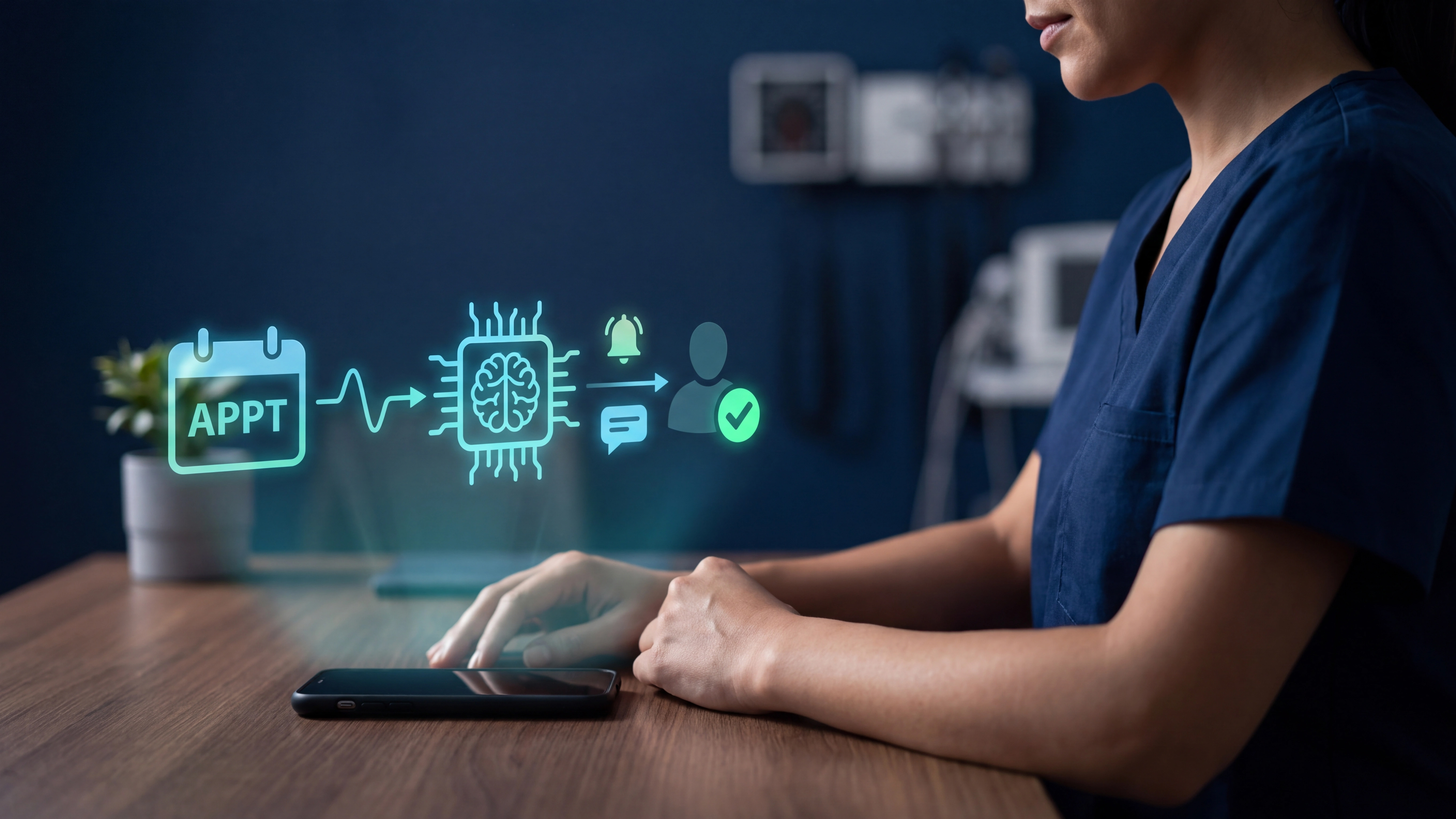
A pre-visit summary is automated pre-charting. Rather than requiring a provider to navigate through a chart and assemble the clinical picture manually, the technology pulls together the relevant information and surfaces it in a structured, readable format.
Commure’s pre-visit summary functionality is made possible by our Patient360 platform, the clinical data foundation that makes AI useful at the point of care. Patient360 unifies a patient's full EHR history into a structured, queryable data object, surfacing specialty-tailored information, source-cited AI Q&A, and longitudinal patient context at the moment it matters most.
At its best, a pre-visit summary gives a provider (before they ever enter the room) a coherent view of:
- Patient at a glance: why this patient is being seen, what makes them clinically distinctive, what the key active issues are
- Last visit summary: what happened at the previous encounter, what was assessed and planned, what follow-up was ordered
- Today's focus: relevant recent developments, outstanding labs or results, issues flagged for this visit
- Active diagnoses and medications: current problem list and medication list in a reviewable format, including when medications were started
- Social history and relevant context: information that shapes clinical decision-making but often takes time to locate in a standard chart view
This is the information a clinician is hunting for during pre-charting. A pre-visit summary delivers it in one place, automatically, before the visit begins.
The Hallucination Problem and Why It Has to Be Solved
Any clinician hearing about AI-generated clinical summaries has an immediate and legitimate concern: what if the system hallucinates a part of the history?
In clinical medicine, a hallucinated finding or fabricated lab result is a patient safety and medicolegal issue. A provider who sees inaccurate information in a pre-visit summary and relies on it in clinical decision-making is in a worse position than a provider who had to do pre-charting manually.
This is why any serious pre-visit summary technology has to solve the attribution problem, not just the synthesis problem. It's not enough to generate a summary that reads well. Every clinical claim in that summary needs to be traceable to a specific source in the patient's chart so the provider can verify the information, understand its provenance, and calibrate their confidence accordingly.
Expandable citations that link directly to the source documentation (the specific note, the specific lab result, and the specific imaging report) are what make pre-visit summaries trustworthy. The AI does the synthesis. The clinician retains the ability to verify.
Turning Pre-Visit Summaries Into Clinical Intelligence
For patients with complex, longitudinal histories (chronic illness, oncology, or multi-system disease to name a few), even a well-constructed summary may leave questions unanswered. A provider might want to know what happened to a specific lab value over the past year, or which specialist last addressed a particular issue, or whether a medication change in the last visit was associated with any documented side effects.
When a pre-visit summary is built on top of a comprehensive patient data framework, providers can ask those questions directly. Natural language queries against the patient's chart, surfacing abnormal labs since the last visit, flagging documented changes in condition, and answering specific clinical questions. All of this becomes possible without leaving the workflow.
This is a meaningful shift in how providers interact with clinical information. Instead of navigating a chart and hoping they don't miss something, they can ask specific questions and get specific answers, with the underlying documentation available for review.
Connecting Pre-Visit Preparation to Documentation
Pre-visit summaries and ambient documentation aren't separate products with separate value propositions. They're two components of a continuous clinical workflow, one that starts before the patient arrives and ends with a complete note after they leave.
A provider who has reviewed an AI-generated pre-visit summary before the encounter walks in prepared, already thinking about the clinical priorities for this visit. When the encounter begins, and ambient documentation starts capturing the conversation, the provider is already operating at a higher level, asking better questions, engaging more directly with the patient's concerns, and making more informed decisions in real time.
The downstream effect is documentation quality. The clinical picture that the ambient AI captures is richer because the encounter itself was richer. Diagnoses are more specific. The assessment and plan reflect more precise clinical reasoning. Coding suggestions that emerge from the documentation are more accurate because the documentation more faithfully reflects the complexity of the care that was actually delivered.
What This Means for Providers
The conversation about AI in healthcare has spent a lot of time on what AI can do after the clinical encounter (documentation, coding, billing). But it represents only part of the opportunity.
The administrative and cognitive burden on physicians doesn't begin when the visit ends. It begins when the workday starts. Pre-charting is where providers spend time that they can't easily account for, that doesn't show up in RVU counts, and that no one has historically built technology to address.
Pre-visit summaries change that. They return time to providers at the front of the clinical day, not just the back. They reduce the cognitive load that accumulates before a provider has even greeted their first patient. And they create the conditions for a better clinical encounter, which is ultimately what both providers and patients are there for.
The technology to automate this work exists now. Providers who are already experiencing two hours of pajama time at the end of the day shouldn't also be spending significant time on manual pre-charting at the start of it. That's a problem with a solution, and AI is ready to deliver it.
Interested in learning more about how Commure's Patient360 platform and pre-visit summaries can work for your organization? Contact Dr. Jean-Luc Neptune, Clinical Commercial Leader at Commure, at jeanluc.neptune@commure.com.
Share this story



.png)








.jpeg)
.png)